


The pandemic changed how we move, but it didn’t stop us from stepping outside. Today, distance or time of day doesn’t scare us. We travel because we know we can book a ride anytime we want.
A comfortable commute no longer depends on owning a private vehicle. Thanks to Uber-like apps, travel within and outside the city is easier than ever. Book your ride instantly, with just one click.
According to Statista, over 93 million monthly users rely on ride-hailing apps. This number shows how fast the industry is growing. It also proves that people trust these digital solutions more, especially when many still avoid public transport.
So, let’s dive into the world of Uber-like app development and explore what makes these apps so powerful.
How Does the Uber App Work?
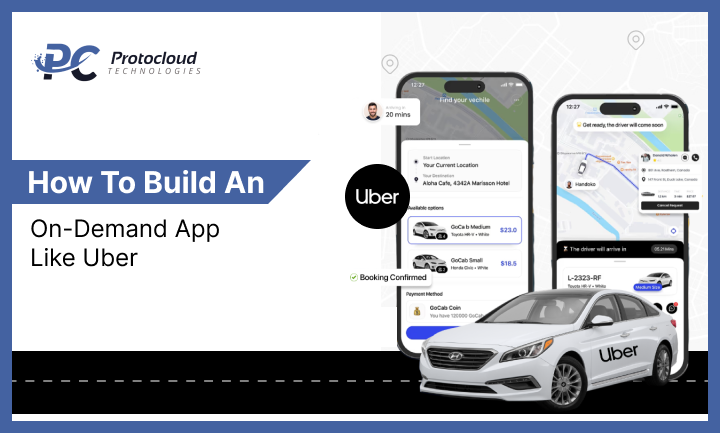
The Uber app’s working process is simple. Anyone can book a ride in seconds. The rider requests a trip, and the driver accepts it. That’s the core idea behind every on-demand taxi app.
Here’s how a modern ride booking system works:
-
Request
The rider selects a pickup location using the app. The request is sent to nearby drivers. This is where driver-rider matching systems help speed up the process.
-
Matching
Drivers can accept or decline the ride. If one driver rejects it, the system passes it to the next one. This ensures a smooth, fast booking experience for users.
-
Ride
Once the ride is confirmed, the rider sees the estimated arrival time. The real-time vehicle tracking option makes it easy to follow the car’s movement on the map.
-
Payment
The ride-hailing app payment system shows the fare upfront. Riders can choose any available payment method. This builds trust and smoothens the experience.
-
Feedback
Riders can leave ratings and share their experience after the ride. This rider-driver rating system keeps the quality in check.
This simple workflow is the foundation of the Uber app business model and the reason app-based cab services run so efficiently. It also acts as a blueprint for modern taxi app development.
Why Uber-Like Apps Are So Effective


Before these apps appeared, people waited endlessly for taxis. They wanted faster service, better pricing, and more convenience. Uber-like apps solved all of that.
They focused on three basic needs:
- Request a ride from any location
- Comfortable ride booking
- Affordability
But the success of Uber clone apps goes far beyond these basics.
-
Surge Pricing
Surge pricing in ride-hailing is one of the most debated topics. Prices rise when demand peaks. Riders get frustrated when charges jump beyond reasonable limits.
Most apps use unclear surge multipliers. This confuses and reduces trust. Developers working on taxi app development or affordable taxi app development can fix this by setting clear limits.
A transparent cap gives users confidence and improves the overall taxi app user experience.
-
Heat Maps
The heat maps feature of taxi apps is a game-changer. Drivers can see areas with high demand. These areas turn red on the map.
During the pandemic, heat maps became even more critical. They helped track micro-mobility trends, including bike and scooter movement. This helped users and businesses understand movement patterns.
Heat maps support better planning in intercity ride booking apps, intracity ride-hailing apps, and general transportation app development.
-
Safety & Security Features
Safety plays a significant role in every ride-hailing technology. Apps now include real-time location tracking, in-built calling, and secure messaging. They also use crash-mitigation technology that alerts drivers during risky moments.
Here are two must-have safety features taxi apps should include:
4.Audio Recording Feature
As crimes increase, safety becomes a priority. An audio recording safety feature lets riders and drivers record conversations. They can download the audio later if needed. This adds a strong layer of protection.
5.Quick Assistance Feature
A quick assistance feature in a taxi app is helpful when the vehicle breaks down or an emergency occurs. One tap triggers immediate help. This is vital for future ride-hailing apps and all modern taxi app development solutions.
How To Build Uber-Like Apps – A Simple Step-By-Step Guide
Building an app like Uber may seem harsh. Break it down, and the process becomes simple. You only need the right plan, the right team, and the proper execution. If you’re exploring how to build Uber-like apps, this guide will simplify everything.
Step 1: Strategy Is the Key to Success
Every successful app starts with a solid plan. Without a strategy, your goals become blurry. You lose direction fast.
Start by asking simple questions.
What features do you need? Where will you get the highest ROI? What look and feel will attract users?
These questions shape your Uber-like app strategy and guide the entire project.
Spend time understanding your competitors. Study their early steps. Learn what worked for them. Identify gaps you can fill. This is the backbone of the Uber-like app development guide and helps you build a stronger product.
Step 2: Know Your Clients
Once you have clarity, define your target audience. A target audience for a hailing app gives you direction. Talk to your customers. Ask what they expect from a ride booking app development project.
When you understand their needs, choosing the right features becomes easier.
Knowing your clients also helps you create app-based cab services development that people will actually use.
Step 3: Create a Written Plan
Now move into documentation. No one builds a serious app without writing things down. Documentation is your foundation. Work with experts to prepare the essential paperwork.
Create system designs, milestones, and workflow charts. Create app wireframes and mockups to keep everyone aligned.
This written plan shapes your transportation app development from start to finish.
Step 4: Hire an Experienced Development Team
A strong app needs a strong team. Choose experts who understand taxi app development, ride-hailing technology, and scalable architecture. Check their past work, reviews, and portfolio.
Look for the best taxi app developers who have built similar solutions. This ensures a smooth Uber clone development process.
Your team must understand the Uber app business model, real-time tracking, and secure systems.
Step 5: Testing, Testing & More Testing
Once the app is ready, testing begins. Skipping this step is risky. A dedicated QA team should test every feature.
They should check location accuracy, payment flows, performance, UI, and speed. Strong taxi app quality assurance ensures that the app works in real-world conditions.
Testing strengthens the entire ride-hailing app development process.
Step 6: Customer Feedback & Maintenance
After launch, take a breath. Then build a feedback system. User insights help you understand how the market sees your app. Fix bugs fast. Add new features often. Keep your app updated.
Regular improvements strengthen the taxi app’s maintenance and make it more engaging. You can even add gamification or small rewards to improve the user experience.
A better app means more customers for your mobile app development for the transportation business.
Step 7: Deploy for Deployment
Finally, deploy your app. This is the moment everything comes together. Your work turns into a live product that users can download and enjoy.
Launching your app means you’re ready to run a real ride-hailing startup, offer built-in intercity ride-booking app features, or expand into intracity taxi app markets.
This is your first big step toward growth.
Features That Make Uber So Effective
Understanding how Uber works is the first step in developing an Uber-like app. When you study its structure, features, and flow, you start to see why it dominates the ride-hailing market. This clarity also helps when you build Uber-like app solutions for your own business, especially if you’re planning a full-scale taxi app development project.
A smooth on-demand taxi app depends on strong features across all user roles. Each feature should improve speed, safety, and usability. This foundation is essential for any modern taxi app development strategy.
Rider App Features
- Rider-focused features must be simple, fast, and reliable. They set the first impression for your taxi booking mobile application and play a key role in the successful development of your taxi app.
- The user registration process keeps onboarding quick and easy. Riders can sign up with a phone number, an email address, or their social accounts. This fast setup boosts conversions in any Uber clone app.
- A built-in fare estimation feature helps riders check prices before booking. This avoids surprises and builds trust. Features like this shape a better customer experience in taxi app development.
- Accurate GPS tracking lets riders and drivers see real-time movement. It shows the exact location, distance, and estimated arrival time—essential elements in high-quality taxi app development.
- Split fare options let groups split the ride cost with a single tap. It makes shared rides simple and budget-friendly.
- Flexible payment methods add convenience. Riders can pay through cash, wallet, credit, or debit cards. Seamless payments are a core part of scalable taxi app development.
Driver App Features
- Drivers need an app that is simple, fast, and secure. Strong driver app features help them work efficiently and stay engaged. These features form the operational backbone of every taxi app development project.
- A clean driver registration flow keeps onboarding smooth. Drivers can upload documents, complete verification, and get started quickly.
- An availability toggle helps drivers choose when to work. They can switch online or offline based on their schedule.
- Drivers also receive instant ride notifications. They can accept or decline requests with ease. These flows remain standard in efficient taxi app development systems.
- Integrated GPS and route-optimization tools guide drivers to travel faster. This reduces delays and improves rider satisfaction.
- A real-time earnings dashboard helps drivers track income. Clear financial visibility increases trust and motivation.
Admin Panel Features
- Admins need complete control over operations. Strong admin panel features allow full supervision and long-term platform growth. These controls are vital in professional taxi app development environments.
- A detailed profile management system helps admins manage riders and drivers. This is essential for maintaining consistency and security.
- Admins can modify vehicle types and adjust pricing rules. Flexible fare management is a must in structured taxi app development models.
- Commission management tools let admins set and update commissions with transparency.
- Geo-fencing lets admins control where the service operates. They can expand or restrict zones based on demand.
- Admins also manage withdrawal requests to ensure fast and reliable payouts.
- Subscription orders can be tracked effortlessly, helping platforms manage premium services.
- Detailed analytics help admins understand user behavior, booking trends, and revenue growth. These insights guide future decisions in taxi app development.
How to Monetize Uber-Like Apps
Strong monetization ensures long-term success. These revenue models are used widely in professional taxi app development for startups and enterprises.
-
Revenue From Rides
Ride commissions remain the most significant source of income. Uber charges around 25% on each ride, plus waiting and cancellation fees. This model is effective for any taxi business app.
-
Dynamic Pricing Model
Dynamic pricing adjusts fares based on demand, traffic, or driver availability. It boosts profits and balances supply and demand.
-
Additional Services
Add-on services, such as deliveries or freight, can significantly increase revenue. Uber Connect and Uber Freight are great examples of expanding beyond rides.
-
Paid Partnerships
Brand partnerships bring marketing and revenue opportunities. Uber’s collaborations with Pepsi and Spotify boosted visibility and user engagement.
How Much Does It Take To Build An Uber-Like App?
Building an Uber-like app is exciting but requires careful planning. The cost to build an Uber-like app depends on several factors, including features, development location, and hourly rates. Understanding these factors helps you budget effectively for taxi app development and ride-hailing app development.
-
Number of Features and Functionalities
The cost of the Uber clone app is influenced by the number and complexity of its features. Rider app features, driver app features, and admin panel features, such as user authorization, in-app purchases, geolocation, API integration, and gamification, can significantly increase costs.
For taxi app development, focus on the essential features that define your on-demand taxi app and cab booking app.
-
Development Team
Your development team determines a large portion of the cost of your Uber clone script. Experienced developers charge more. Prices also vary by country and platform.
Always check their portfolio, previous projects, and client testimonials. Choosing the best taxi app developers ensures your taxi booking system or ride-sharing platform development is smooth and reliable.
-
Third-Party Integrations
Integrating third-party services speeds up Uber-style app development. Features like payment gateways, maps, and analytics tools reduce development time but increase costs.
Focus on the integrations that enhance your GPS-based taxi app, real-time tracking app, and fare estimation app for better taxi app development results.
-
App Design
Design affects mobile app development costs for the taxi business. A responsive, simple, and user-friendly interface is cheaper than a complex one.
Prioritize the taxi app’s UI/UX, intuitive navigation, and an engaging design. Your taxi app development company should ensure the app is easy for both tech-savvy and casual users.
-
Interactive Elements
Multimedia elements, such as animations or videos, enhance engagement in ride booking app development. However, adding too many interactive features raises your Uber app development cost.
Focus on essential visuals that enhance the on-demand mobility app experience without overcomplicating taxi app development.
-
Maintenance Plan
Maintenance is vital for any taxi business app. Regular updates, bug fixes, and security patches are included in a good maintenance plan for a taxi app.
Security is critical. Your custom taxi app solution must protect end-users and prevent fraud. A strong maintenance plan increases the app development budget but ensures long-term success in taxi app development.
7.Estimated Costs
Depending on platform and complexity:
- Simple build Uber-like app: $30,000 – $100,000
- Feature-rich, complex, create Uber-like app: $300,000 – $500,000+
Costs vary based on features, integrations, design, and team expertise. Your taxi app development estimate must reflect all these factors.
Conclusion
Information?
Tips?
Challenges?
Success in ride-hailing startup app development isn’t automatic. Even giants like Uber, Ola, and Lyft co-exist due to unique offerings. With thorough research, a skilled team, and a solid plan, your Uber-like app development guide can help you create a competitive taxi booking mobile application through quality taxi app development.
How Protocloud Technologies Helps You Build Your Own Uber App
At Protocloud, we specialize in on-demand taxi app development and ride-sharing app development. Our team knows how to develop Uber clone apps that are user-friendly, secure, and feature-rich.
We focus on ride-hailing app technology, taxi dispatch systems, and mobile app development for the taxi business. From ideation to launch, we work closely with clients to ensure the app fits their business needs ideally.
Even after deployment, we provide continuous support. Taxi app maintenance, updates, and enhancements are part of our service. Choosing Protocloud means getting a taxi app growth strategy and team committed to your success.
Ready to create your Uber clone app? Contact us today and transform your ideas into a ride-sharing platform development that users love. Our expertise in taxi app development ensures your app stands out in the market.















































































Leave a Reply