You’ve built your store. You’ve added products. You’re getting visitors. But here’s something most new store owners don’t realize until it’s too late:
Your payment gateway can make or break your sales. A slow checkout frustrates customers. A confusing payment page loses trust. And if your gateway doesn’t support the payment methods your customers prefer, they’ll leave without making a purchase.
The good news? There are excellent payment gateway options available today for every type of business. Whether you run a small Shopify store or a fast-growing brand, this guide will help you pick the right one.
Here’s what you’ll learn:
- What a payment gateway actually does
- How it works (step by step)
- The best payment gateways in the US right now
- How to compare your options
- Common mistakes to avoid
Let’s get into it.
What Is a Payment Gateway Provider?
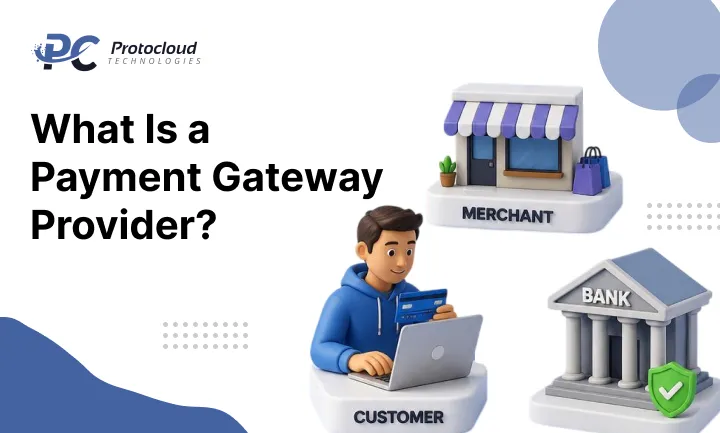
Think of a payment gateway as the digital version of a card reader at a physical store. When a customer clicks “Pay Now” on your website, the gateway instantly encrypts their payment details and sends them securely to the bank for approval. The entire process is completed in seconds.
Without a payment gateway, you simply can’t accept online payments safely.
Modern gateways support:
- Credit and debit cards
- Digital wallets (Apple Pay, Google Pay)
- ACH bank transfers
- Buy now, pay later options
- Recurring and subscription payments
- International payments
Today’s customers expect fast, smooth, and secure checkout experiences. Your gateway directly affects whether they complete the purchase — or abandon their cart.
How Does a Payment Gateway Work?
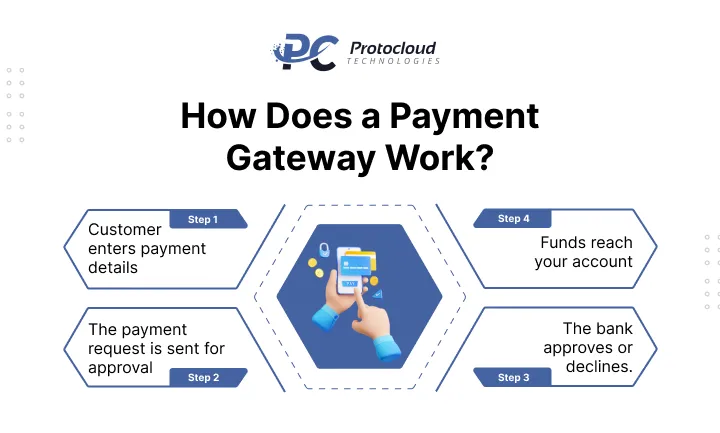
Most shoppers never think about what happens after they hit “Pay.” But a lot happens in just a few seconds. Here’s a simple breakdown.
Step 1: Customer enters payment details
The customer enters their card number or billing info, or chooses a digital wallet. The gateway immediately encrypts this data to protect it.
Step 2: The payment request is sent for approval
The payment gateway securely sends the payment details to the processor for verification. At this point, the system checks whether the card is valid, whether funds are available, and whether anything looks suspicious.
Step 3: The bank approves or declines.
The customer’s bank reviews the request and sends back an approval or decline — usually within seconds. The customer sees the result right away.
Step 4: Funds reach your account
After approval, the payment processor sends the money to your merchant account. This can take anywhere from a few hours to a couple of business days, depending on your provider.
Why Your Payment Gateway Matters More Than You Think
A payment gateway isn’t just a tool to collect money. It directly affects your customer experience, your security, and your revenue.
Faster, smoother checkout = more sales. A clunky checkout experience drives customers away. A good gateway keeps the checkout process quick and simple, leading to fewer abandoned carts and more completed orders.
Security builds trust. Online fraud is a real problem, and customers know it. The best gateways use encryption, fraud detection, tokenization, and PCI DSS compliance to protect every transaction. When customers trust your payment system, they are more likely to make a purchase and return.
Global reach. If you sell to customers outside the US, your gateway must support multiple currencies, local payment methods, and cross-border transactions. Not all gateways do this well.
Better conversion rates. When customers see a payment provider they recognize and trust (like PayPal or Stripe), they feel more confident completing their purchase. That trust translates directly into higher conversion rates.
Best Ecommerce Payment Gateways in the USA
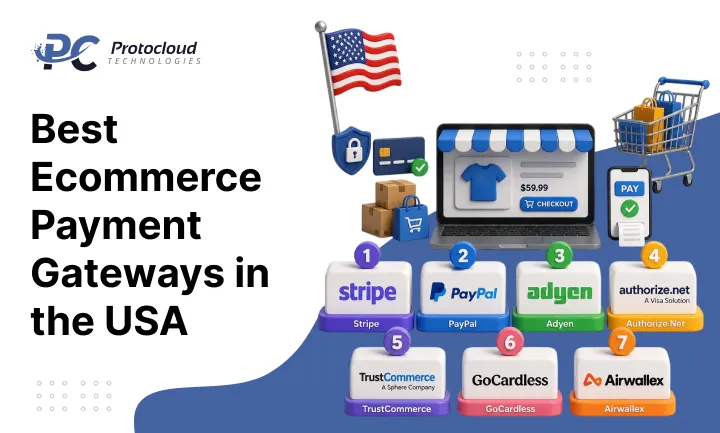
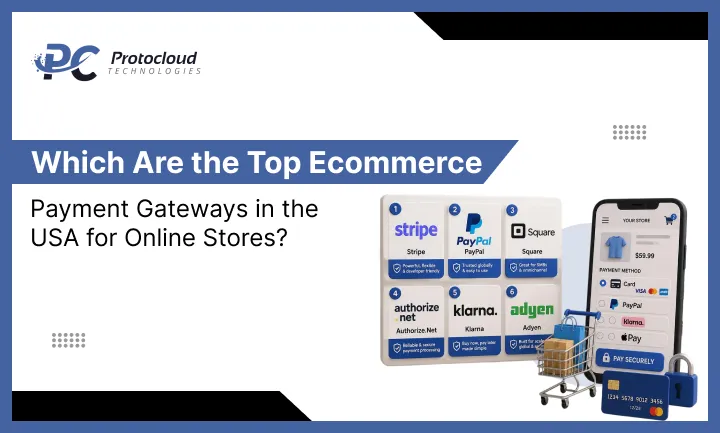
Here’s a clear look at some of the best payment gateway providers for businesses in the USA today.
01. Stripe
Best for: Startups, SaaS companies, and marketplaces
Stripe is the go-to choice for developers and tech-savvy businesses. It’s incredibly flexible, with a powerful API that lets you customize your checkout experience however you want.
Key features:
- Highly customizable payment flows
- Strong subscription and recurring billing tools
- Advanced fraud detection
- Support for 135+ currencies
- Mobile-optimized checkout
- Digital wallet support
Why businesses love it: Stripe gives you full control over how your checkout looks and works. You can create a checkout experience that feels completely native to your store.
One thing to know: To get the most out of Stripe’s customization features, you’ll likely need a developer on your team. Out of the box, it’s still solid—but its real power comes through the API.
02. PayPal
Best for: Small businesses, freelancers, and beginners
PayPal is one of the most popular and trusted online payment platforms in the world. Millions of shoppers already have a PayPal account, which means they can check out faster — and with more confidence.
Key features:
- Quick and easy setup
- Accepts PayPal balance, cards, and bank accounts
- Multi-currency support
- Mobile-friendly checkout
- Online invoicing tools
- Strong international support
Why businesses love it: PayPal’s brand recognition is a genuine sales advantage. Customers who see the PayPal logo at checkout feel an immediate sense of trust.
One thing to know: Transaction fees can add up quickly as your sales volume grows. It’s worth doing the math as your business scales.
03. Adyen
Best for: Enterprise brands and high-volume merchants
Adyen is the payment platform of choice for major global companies like Spotify, Microsoft, and Uber. It combines payments, analytics, and fraud management into a single unified platform.
Key features:
- 250+ payment methods supported
- Advanced analytics and reporting
- Built-in fraud prevention
- Multi-currency support
- In-person payment capabilities
- Real-time payment processing
Why businesses love it: Adyen’s global infrastructure is hard to beat. If you’re processing large volumes across multiple countries, it handles that complexity with ease.
One thing to know: Adyen is built for enterprise-level businesses. Smaller stores may find it more complex than they need — and pricing reflects that.
04. Authorize.Net
Best for: Retail businesses and established ecommerce brands
Authorize.Net has been around since 1996, and it’s still one of the most trusted payment gateways in the US. It supports both online and in-person payments, making it a solid choice for hybrid businesses.
Key features:
- Credit and debit card processing
- Fraud detection tools
- Subscription and recurring billing
- POS system support
- Digital wallet compatibility
Why businesses love it: Reliability. Authorize.Net has decades of experience, and its security features are rock-solid.
One thing to know: The interface looks a bit dated compared to newer platforms. It works great — it just doesn’t feel as modern.
05. TrustCommerce
Best for: Subscription businesses and healthcare companies
TrustCommerce focuses on payment security and recurring billing. It connects businesses to multiple payment processors and works particularly well for industries that handle sensitive data.
Key features:
- ACH and eCheck support
- Recurring payment management
- Customer self-service portals
- Tokenization and fraud prevention
Why businesses love it: Strong security and excellent recurring billing tools make TrustCommerce a reliable choice for subscription-heavy businesses.
One thing to know: The setup process is less beginner-friendly than some competitors. Expect a steeper learning curve.
06. GoCardless
Best for: Subscription companies and membership businesses
GoCardless specializes in bank-to-bank (ACH) payments. It’s especially effective for businesses that collect recurring payments — think subscriptions, memberships, or service contracts.
Key features:
- ACH debit support
- Automated recurring billing
- International bank payment support
- Lower transaction costs than card-based systems
Why businesses love it: ACH payments typically cost less than credit card transactions, which can make a real difference for high-volume subscription businesses.
One thing to know: ACH payments aren’t instant. If your customers expect immediate confirmation, this is worth factoring in.
07. Airwallex
Best for: International ecommerce brands and global marketplaces
Airwallex goes beyond payment processing. It combines global payments, foreign exchange management, multi-currency wallets, and business accounts in one platform — making it a powerful tool for businesses that sell across borders.
Key features:
- 160+ local payment methods
- Multi-currency wallets
- Reduced FX costs with like-for-like settlement
- Cross-border payment support
- Global business account tools
Why businesses love it: If you’re dealing with international payments regularly, Airwallex can save you a significant amount on FX fees while simplifying your global operations.
One thing to know: Some of the more advanced features may require some onboarding support to set up correctly.
Quick Comparison: Which Gateway Is Right for You?
| Gateway | Best For | Main Strength |
| Stripe | Startups and SaaS | Customization |
| PayPal | Small businesses | Customer trust |
| Adyen | Enterprise brands | Global payments |
| Authorize.Net | Retail + ecommerce | Reliability |
| TrustCommerce | Subscriptions | Security |
| GoCardless | ACH billing | Lower costs |
| Airwallex | Global ecommerce | International payments |
How to Choose the Right Payment Gateway
Here’s a simple framework to guide your decision.
- Start with security. This is non-negotiable. Look for PCI DSS compliance, encryption, fraud detection, and tokenization. A data breach or fraud problem will cost you far more than any monthly fee.
- Check which payment methods are supported: Credit cards, debit cards, Apple Pay, Google Pay, ACH, buy now pay later — the more options you offer, the fewer customers you’ll lose at checkout.
- Think about your international customers. If you’re selling globally, you need multi-currency support, local payment methods, and reasonable currency conversion fees. Not all gateways handle this equally.
- Understand the fee structure. Look at setup fees, monthly fees, per-transaction fees, and chargeback fees. Cheaper isn’t always better — weak security or poor support can cost you far more in the long run.
- Make sure it integrates with your platform. Whether you use Shopify, WooCommerce, Magento, or BigCommerce, your gateway needs to connect smoothly. A clunky integration creates headaches down the road.
- Think long-term. Your payment system should grow with your business. Switching gateways later is a painful process. Choose something that can handle higher volumes, multiple storefronts, and international expansion if needed.
Common Payment Gateway Mistakes to Avoid
Even experienced ecommerce businesses make these errors.
- Choosing based only on price. A low transaction fee looks great on paper. But if security is weak or support is slow, a single fraud incident can wipe out months of savings.
- Ignoring mobile shoppers. More than half of online shopping happens on smartphones. If your payment gateway doesn’t offer a smooth mobile checkout, you’re losing sales every day.
- For international customers, if you have them, they expect to pay in their local currency using familiar payment methods. If you don’t support that, they’ll find a store that does.
- Skipping fraud prevention. Fraud is increasing. Strong fraud detection tools aren’t optional — they’re essential for protecting your customers and your business.
- Making checkout too complicated. Long forms and too many steps kill conversions. The simpler and faster your checkout process is, the more sales you’ll complete.
Payment Trends Worth Watching in 2025
The payments industry is evolving quickly. Here’s what’s shaping the future.
- AI-powered fraud detection. Modern gateways now use machine learning to spot suspicious transactions in real time — before fraud happens, not after.
- Digital wallets are growing fast. Apple Pay, Google Pay, and similar wallets continue to grow. Customers love the speed and convenience. Make sure your gateway supports them.
- Faster settlements. Businesses increasingly expect access to their funds on the same day. Many providers are moving toward faster payout options to meet this demand.
- Embedded finance tools. Payment platforms are expanding beyond just processing payments. Many now offer FX management, business banking, and expense tools — all in one place.
- Cross-border ecommerce is booming. Global ecommerce keeps growing. Businesses that invest in strong international payment infrastructure now will have a real competitive advantage.
Best Practices to Get the Most from Your Payment Gateway
Picking the right gateway is step one. Here’s how to make the most of it.
Speed up checkout : Remove unnecessary steps. Every extra click is a chance for a customer to leave.
Offer multiple payment options: More flexibility means higher conversions.
Monitor fraud activity regularly: Review chargeback reports and flag suspicious patterns early.
Mobile test: Always run your full checkout flow on a smartphone before going live.
Use your analytics: Most gateways provide data on failed transactions, conversion rates, and customer behavior. Use it to find and fix weak spots in your checkout process.
Final Thoughts
Your payment gateway is one of the most important decisions you’ll make for your online store. The right one helps you accept payments securely, build customer trust, reduce fraud, and support your growth , whether you’re selling locally or globally.
Stripe is great if you want flexibility and customization.
PayPal works well when brand trust and ease of setup matter most.
Adyen or Airwallex is a strong choice for businesses with international ambitions.
Authorize.Net is a reliable, proven option for established retail and ecommerce brands.
Don’t just pick the cheapest option. Focus on security, supported payment methods, ease of integration, and long-term scalability. The right payment gateway doesn’t just process transactions , it helps your business grow.
Frequently Asked Questions
What is a payment gateway provider?
A payment gateway provider is a technology service that lets businesses accept online payments securely. It acts as the bridge between your customer, your website, the payment processor, and the bank.
Which is the best payment gateway for ecommerce?
Stripe, PayPal, Adyen, and Authorize.Net are among the most popular choices in the US. The best one depends on your business size, budget, and customer base.
Are payment gateways safe?
Yes. Most reputable payment gateways use encryption, fraud detection systems, and PCI DSS compliance standards to protect payment information.
Can payment gateways handle international payments?
Many can. Providers like Adyen, Stripe, and Airwallex are particularly well-suited for international payment processing and multi-currency support.
Why does payment gateway security matter?
Strong security protects your customers’ financial data, reduces the risk of fraud and chargebacks, and builds the trust that keeps customers coming back.