The logistics industry is changing fast. For years, companies followed the same old patterns. But recently, massive disruptions forced a shift. Now, artificial intelligence in logistics is driving this change. It’s no longer just an idea for the future. It is a game-changing tool that helps companies manage and optimize their entire supply chains today.
AI can handle large amounts of data in just seconds. It makes smart decisions and accurately predicts future outcomes. This makes AI in logistics a critical asset for any modern business. In fact, experts believe machine learning in logistics will be the most common tech upgrade by 2025. Still, many companies don’t get the results they expect. They often forget the most important part of a logistics digital transformation. It’s not only about the software. It requires a total shift in mindset and behaviour.
What Exactly is AI in Logistics?
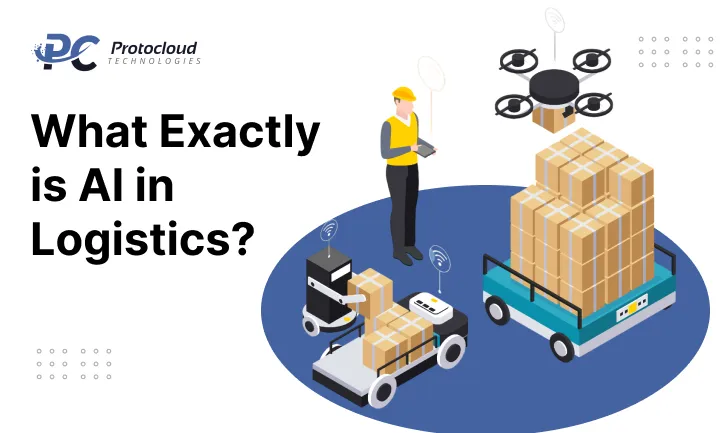
At its core, AI in logistics serves many practical purposes. Companies use it for AI demand forecasting and planning shipments. It helps optimize warehousing and provides a clear view of your routes. You can see cargo conditions and spot potential disruptions before they happen. This level of supply chain visibility AI was impossible just a decade ago.
The algorithms used in AI-based route planning help professionals predict transit times. They can find the best carrier at the lowest price. If a storm or strike hits, AI logistics solutions identify alternate routes instantly. AI also powers chatbots in logistics tools. These bots handle basic customer questions. Other tools analyze complaints and return the data to the team. This improves the overall AI in customer experience logistics.
Key Takeaways of Smart Logistics Technology
- Better Tracking: Companies use AI in supply chain systems to trace the origins of goods. This ensures suppliers comply with fair labour laws and remain sustainable.
- Faster Routes: AI route optimization accounts for traffic, weather, and even worker strikes. This helps companies move products faster while reducing fuel use.
- Easier Returns: AI logistics analytics tools find out why products are being returned. If one item has a defect, the system flags it. This allows companies to fix issues before they lose more money.
Where AI Impacts the Supply Chain Most
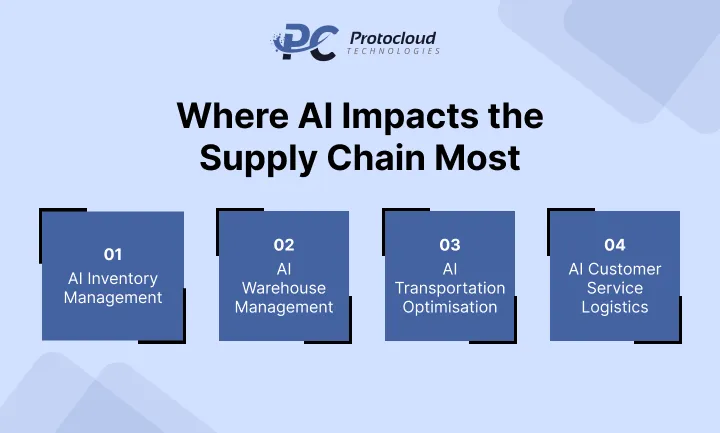
Artificial intelligence in logistics is impacting several key areas simultaneously. It is boosting efficiency in inventory, warehouses, transportation, and customer service. Each area benefits from greater accuracy and faster decision-making thanks to intelligent supply chain systems. Let’s look at how these digital logistics solutions work in the real world.
1. AI Inventory Management
Managing stock used to be a guessing game. Now, AI inventory management makes it a science. By using machine learning in logistics, businesses can predict demand with incredible precision. You will know exactly what to stock and when to stock it. This predictive power stops you from having too much or too little inventory.
Lowering overstock reduces storage costs. Avoiding stockouts keeps your customers happy. Plus, AI inventory forecasting system tools can automate the reordering process. When your stock gets low, the system orders more without you having to lift a finger. This removes human error and saves hours of manual work every week.
2. AI Warehouse Management
In the warehouse, logistics automation tools are changing the game. We are seeing a massive rise in warehouse automation, AI and robotics. These AI robotics in logistics can pick, pack, and sort items much faster than any human. They use cameras and sensors to move through the building safely. They never get tired, and they rarely make mistakes.
AI warehouse management also helps with storage space. The system analyses the size and weight of every item. It then tells you the best place to put them based on how often people buy them. Furthermore, AI predictive maintenance logistics can spot a broken belt or motor before it fails. This keeps your smart warehousing solutions running smoothly without costly downtime.
3. AI Transportation Optimisation
Transportation is the backbone of the industry. AI transportation optimization strengthens this backbone. Algorithms analyze traffic patterns and weather in real time. They find the most efficient paths for every vehicle. This leads to massive AI-driven cost reductions in logistics, because you spend much less on fuel and maintenance.
We are also seeing the rise of autonomous delivery vehicles and drone delivery logistics. These technologies are becoming more viable every day. They promise to make the “last mile” of delivery much cheaper. When you combine this with an AI-based shipment-tracking system, everyone wins. Both the company and the customer receive live updates on the package’s location.
4. AI Customer Service Logistics
Customer service used to be a bottleneck. Now, AI customer service logistics has cleared the path. AI-powered supply chain tools use natural language processing to talk to customers. They provide fast replies to common questions. This creates a much more personalized experience for the user.
But it does more than just answer questions. AI-driven logistics solutions analyze data to identify problems before customers even notice. If a shipment is going to be late, the system can alert the customer early. It can even automatically offer a solution or a discount. This proactive approach builds massive trust and loyalty.
The Main Benefits of AI Logistics Solutions
The growth of AI in logistics is not slowing down. Some experts say that by 2035, AI will boost productivity by over 40%. It helps startups and big enterprises stay organized. Here are the core AI logistics benefits driving the sector forward today.
Enriching Data Quality
Data is the new oil. Machine learning in logistics helps you refine that oil. AI tools like NLP help gather and organize the massive piles of information that flow into a company. They understand jargon and phrases that humans might miss. This leads to improvements in logistics efficiency across the board. Better data means better shipping decisions and fewer risks.
Enhanced Safety and Compliance
Smart supply chain solutions keep workers safe. AI can monitor a warehouse and alert managers to dangers. It records how items are stocked and suggests safer ways to work. It also handles AI predictive maintenance logistics for heavy machinery. This ensures your facility stays compliant with safety laws and avoids accidents.
Timely Delivery and Efficiency
The biggest promise of AI in supply chain management is timely delivery. By reducing the need for manual data entry, the whole process becomes faster. Logistics performance optimization ensures you meet your deadlines every time. Automated systems work through the night to make sure packages stay on schedule.
Reducing Operational Costs
Errors are expensive. Logistics automation reduces mistakes from the office to the warehouse floor. Since robots and AI don’t get distracted, they remain productive for longer. Using an AI delivery management system helps you find the cheapest shipping routes. Over time, these small savings add up to huge profits.
Better Transportation Prediction
Predictive analytics logistics can tell you when shipping prices will go up. This allows you to book your capacity early at a lower rate. AI shipping optimization collects market data from around the world. It shortens the time you spend on planning and increases your success with AI freight management.
The Big Challenges of AI in Logistics
The benefits of artificial intelligence in logistics are massive. But moving to these new systems isn’t always easy. Every business faces hurdles before seeing a full return on investment. The biggest issues involve high costs, data safety, and how automation affects workers. Companies must also look at ethical and legal rules. If you address these challenges early, you can leverage AI logistics solutions while keeping risks low.
High Implementation Costs
One of the tallest hurdles is the initial investment. Building and launching AI in logistics systems costs a lot of money. You have to buy advanced hardware and expensive software. You also need to spend time and money training your staff to use these new tools. Integrating smart logistics technology into your old systems can be very complex. This often leads to extra expenses that small businesses might find hard to pay. Plus, you have to pay for ongoing updates to keep the system safe and effective.
Data Privacy and Security
Data is the fuel for every AI delivery management system. Because these systems require so much data, they create large targets for hackers. You have to protect sensitive details about your supply chain and your customers. This means using strong encryption and tight access controls. Following laws like the GDPR is not optional; it is a requirement. Logistics companies must also establish clear rules for collecting and storing data. You need to ensure your logistics data analytics remain private without slowing down the AI.
Regulatory and Ethical Issues
Using AI in supply chain management means navigating a maze of laws. You must comply with safety standards and labour laws in every country where you operate. If you ignore these regulations, you could face heavy fines. It is also important to use AI fairly. You don’t want your algorithms to have hidden biases that discriminate against certain groups. Creating a clear ethical framework helps foster public trust in your AI-driven logistics solutions. When people see that your smart supply chain solutions are fair, they are more likely to support your brand.
Use Cases of AI in Logistics: Key Applications Explained
Predictive Analytics for Demand Forecasting
How do you know what customers will buy next month? AI demand forecasting is the answer. By analyzing past sales and market trends, AI can accurately predict future needs. This helps businesses keep their AI inventory management on track. You won’t run out of stock during busy seasons, and you won’t have too many leftovers. Retailers use predictive analytics logistics to plan for seasonal spikes perfectly, ensuring they are always ready to fulfil orders.
Route Optimization
Finding the best path from A to B is a math puzzle. AI route optimization solves it in seconds. The system looks at real-time traffic, weather conditions, and past delivery data. Large companies use this AI-based route-planning to reduce travel time and fuel costs. This leads to massive logistics cost reduction, AI, because trucks spend less time on the road. It speeds up deliveries and improves your overall service quality.
Warehouse Automation
Efficiency is the name of the game in a warehouse. Warehouse automation AI uses robots to handle the heavy lifting. These machines handle tasks like sorting, picking, and packing items. AI robotics in logistics is faster and more accurate than manual work. This speeds up the entire process while significantly reducing your labour costs.
Real-Time Tracking and Visibility
Clear visibility keeps the supply chain running smoothly. Real-time tracking logistics gives everyone a clear view of where goods are. AI platforms enable stakeholders to monitor goods in transit and respond quickly to issues. This supply chain visibility AI ensures that everyone stays informed from the warehouse to the front door.
Autonomous Vehicles and Drones
The way we move goods is shifting toward autonomous delivery vehicles. These self-driving trucks and drone delivery logistics are the future of efficient delivery. They offer a sustainable alternative for moving goods without relying entirely on human drivers. This is a massive part of the logistics digital transformation happening right now.
Real-World Examples of Businesses Leveraging AI
Amazon
Amazon leads the way in logistics artificial intelligence. They use highly automated systems in their warehouses and during delivery. The company uses AI to predict what customers will buy and find the fastest delivery routes. They even use generative AI in logistics to deploy smarter robots. This has helped them set new standards for same-day shipping speed and sustainability.
DHL
In 2024, DHL Supply Chain focused on three big priorities: Orchestration, Robotics, and AI.
- Orchestration: They use machine learning in logistics to create a centralized system. This system adapts to real-time changes in demand.
- Robotics: DHL uses over 7,000 robots globally to scale their operations and improve warehousing.
- Artificial Intelligence: They plan to integrate AI logistics solutions into every part of their work to unlock the full potential of their robots.
FedEx
FedEx is a leading example of AI in logistics. They focus on AI predictive maintenance logistics for their vehicles. They also use robots for sorting in their distribution centres. Their “FedEx Surround” initiative uses AI in transportation and logistics to track shipments in real time, making their entire network more efficient.
UPS
UPS uses AI-powered supply chain tools to optimize delivery routes. Their ORION system uses AI to determine the best delivery routes based on traffic and weather conditions. This helps them reduce driving distances and save millions of gallons of fuel every year. It is a perfect example of AI reducing carbon emissions while saving money.
The Future of AI in Logistics
The future of logistics AI will transform how supply chains work. We can expect even more autonomous delivery vehicles and drones. These will make deliveries cheaper and faster, especially in crowded cities. By reducing traffic delays, these digital logistics solutions will make the whole process seamless.
AI demand forecasting will also become much more advanced. Using AI logistics analytics tools, companies will perfectly balance supply and demand. This means better AI-based inventory forecasting and less wasted stock. Your business will be able to plan routes based on real-time data and consumer behaviour insights.
Smarter Warehouses and Better Experiences
Warehouses will soon be fully “smart.” Logistics industry innovation will lead to robots that can adjust to new orders in a heartbeat. This ensures customers get exactly what they ordered much faster. AI in customer experience logistics will also become more personal. AI might even predict what you need before you order, offering customized delivery options that keep customers happy.
Sustainability and Blockchain
AI sustainability logistics will help make the industry greener. By planning better routes, AI helps reduce fuel use and pollution. We will also see blockchain integration working with AI. This will make shipping more transparent and secure. AI can analyze data to verify that goods are genuine and comply with legal standards.
Real-Time Decision Making
Finally, AI will allow for instant decision-making. If there is a sudden change in weather or demand, the system reacts immediately. This means your logistics performance optimization stays high even during disruptions. The digital transformation of logistics is making supply chains more adaptive and efficient every day.
Why Protocloud Technologies Is the Right Partner for AI in Logistics
In today’s logistics world, speed and smart decisions matter. Whether you’re a startup or an established business, AI can help you grow faster—and Protocloud Technologies can help you make it happen.
Why Choose Protocloud Technologies?
Custom AI Solutions: We build AI solutions that fit your business and work smoothly with your current systems.
Industry Experience: Our team understands logistics challenges and delivers practical, result-driven solutions.
Smart Data Insights: We turn your data into simple insights to improve decisions and efficiency.
Scalable Solutions: Our AI systems grow with your business and adapt to market changes.
Ongoing Support: We provide continuous support to keep your systems running at their best.
Real Results
We developed an AI-based solution for a global equipment company that helped:
- Improve supply chain visibility by 60%
- Increase operational efficiency by 30%
Conclusion
AI in logistics is making operations faster, smarter, and more efficient. It helps reduce errors, improve decisions, and scale businesses with ease.
But success needs the right strategy. Companies must carefully manage costs, security, and compliance.
The future is clear. With smarter systems and better technology, artificial intelligence in logistics will continue to reshape the industry.
Those who adapt early will lead.