Think about the last time you ordered food online.
Chances are, it didn’t come from a restaurant you could walk into, sit down at, or even find on a street map. It came from a dark kitchen a professional cooking facility that exists only to fulfill delivery orders, with no dining room, no waitstaff, and no sign above the door.
You may not have known that. Most people don’t.
But dark kitchens are quietly reshaping the entire food industry. And the technology powering them is changing what “going out to eat” even means anymore.
In this guide, we break down exactly what dark kitchens are, how they stack up against traditional restaurants, and why technology is the engine making this whole shift possible.
What Is a Dark Kitchen?
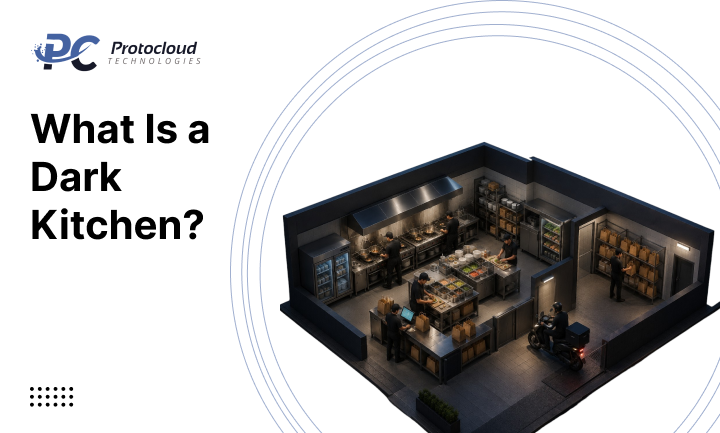
A dark kitchen also called a ghost kitchen or cloud kitchen is a commercial cooking space built entirely for delivery. No tables. No walk-in customers. No front-of-house staff. Just a kitchen, a ticket printer, and a stream of incoming orders from apps like Uber Eats, DoorDash, or Deliveroo.
The idea is simple: strip away every cost and complexity that doesn’t contribute to the food itself. No expensive high-street rent. No interior design budget. No hosts or servers. Just cooking, packaging, and dispatching.
Dark kitchens can take many forms. Some are run by a single brand. Others house multiple brands under one roof a burger concept and a sushi concept sharing the same kitchen, staff, and equipment but appearing as separate restaurants online. Some delivery platforms, like Uber Eats and Glovo, even operate their own shared kitchen spaces that restaurants can rent by the week.
What they all have in common is this: they exist because consumer behavior has fundamentally changed. And technology made that change possible.
The Numbers Behind the Shift
This isn’t a niche trend. It’s a market transformation.
The global food delivery market was valued at over $242 billion in 2023, and projections suggest it will surpass $746 billion by 2033 a compound annual growth rate of nearly 12%. Mobile apps account for 82% of all orders placed on delivery platforms. In the Asia-Pacific region alone, food delivery commands 41.5% of global market revenues.
In markets like Spain, Uber Eats reported 40% growth in food delivery orders in 2024 compared to the year before. Statista projects the wider food delivery segment to grow another 27% by 2028.
The message is clear: people are ordering more food online, more often, from more places. And that growing demand needs infrastructure designed to meet it not adapted from a model built for sit-down dining.
That’s the gap dark kitchens fill.
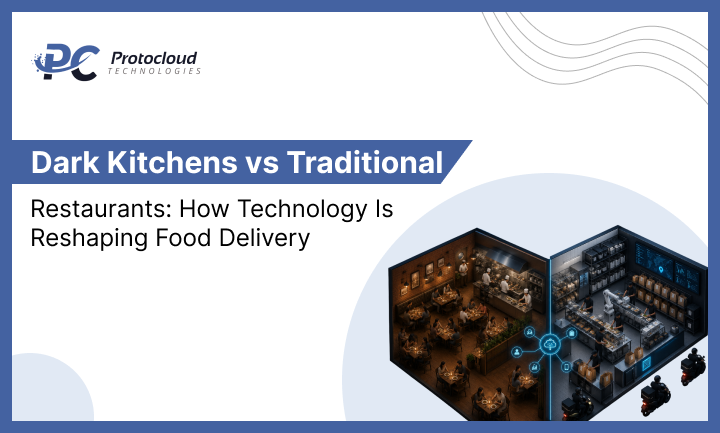
Dark Kitchens vs Traditional Restaurants: A Direct Comparison
Let’s be honest about both models.
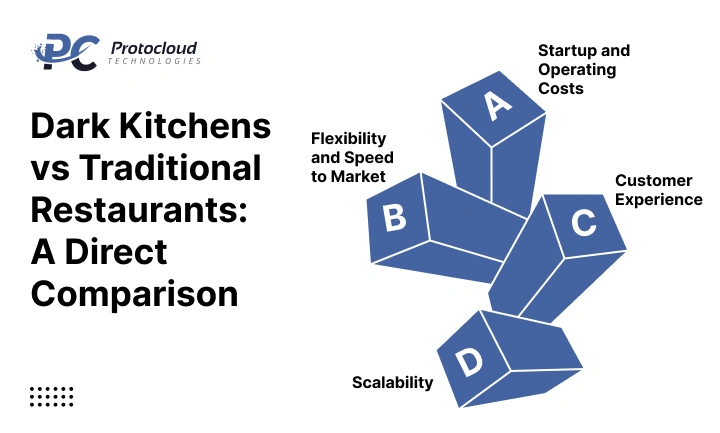
Startup and Operating Costs
Opening a traditional restaurant is expensive. You need a lease on a visible, high-foot-traffic location. You need furniture, décor, signage, kitchen equipment, a bar setup, tableware, and a team large enough to cover both front-of-house and back-of-house operations. Before a single customer walks in, you’ve often spent hundreds of thousands.
A dark kitchen flips that math. Without a dining room, you don’t need a premium location. A space in a light industrial area or a shared kitchen facility costs a fraction of traditional restaurant rent. You skip the furniture, the décor, the host stand, and the full front-of-house team. Overheads drop significantly and that gap goes directly to margin or reinvestment.
This lower barrier to entry is one reason dark kitchens have become so popular with both established restaurant groups and new food entrepreneurs testing concepts.
Flexibility and Speed to Market
Traditional restaurants are slow to change. Updating the menu, opening a new location, testing a new concept all of it takes time, capital, and risk.
Dark kitchens are designed for agility. A multi-brand dark kitchen can add or drop a brand concept in weeks, not months. If a new food trend is gaining traction say, Korean BBQ wraps or high-protein bowls a dark kitchen can launch a brand around it quickly, test demand through delivery platforms, and either scale or pivot based on real data.
Traditional restaurants need reservations, dining room renovations, and staff retraining to pull off the same kind of shift.
Customer Experience
This is where traditional restaurants have a clear, legitimate edge.
The experience of going to a restaurant the ambiance, the service, the ritual of a meal shared with someone is something a delivery box simply cannot replicate. For many people, dining out is not about the food alone. It’s about the occasion. The atmosphere. The human interaction.
Dark kitchens compete on a completely different playing field: convenience, speed, price, and consistency. They’re not trying to replace the restaurant experience. They’re serving a different need entirely the person who wants great food at home on a Tuesday night without the effort of cooking.
Both models can coexist because they serve different moments in a customer’s life.
Scalability
This is where dark kitchens have a structural advantage that traditional restaurants simply can’t match.
A restaurant chain expanding into a new city needs to find a location, sign a long lease, fit out the space, hire a local team, and build brand awareness from scratch. That process takes 12–18 months minimum and costs a significant amount per location.
A dark kitchen brand can enter a new city by renting space in an existing shared kitchen facility and going live on delivery platforms within weeks. The same menu, the same brand, the same operational playbook deployed rapidly at a fraction of the cost.
This is why many large restaurant groups now operate hybrid models: a flagship dining room that builds brand identity, and dark kitchen locations that handle delivery volume at scale.
How Technology Powers Dark Kitchens
Here’s the thing about dark kitchens they don’t work without technology. They are technology-first operations from the ground up.
Order Management Systems
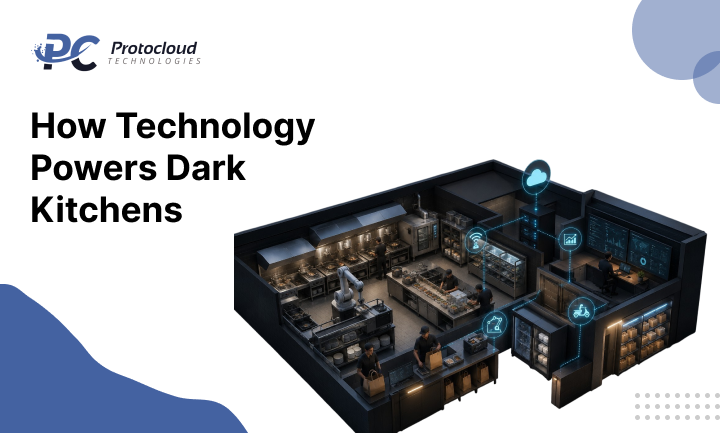
A traditional restaurant gets orders from customers at the table. A dark kitchen gets orders from five different delivery platforms simultaneously Uber Eats, DoorDash, Deliveroo, Grubhub, and potentially its own app. Without a centralized order management system aggregating all of those into a single kitchen display, operations fall apart fast.
Modern order management technology consolidates every incoming order, routes it to the right station, tracks preparation time, and flags delays before they become problems.
Route Optimization and Last-Mile Delivery Tech
Getting the food from the kitchen to the customer quickly and in good condition is one of the biggest operational challenges in delivery. Last-mile logistics technology is what makes it work.
AI-powered route optimization tools calculate the fastest delivery path in real time, accounting for traffic, multiple stops, order timing, and driver availability. This isn’t just about speed. It directly affects food quality. A burger delivered in 18 minutes is a different product than one delivered in 45.
Last-mile technology also enables real-time tracking, which has become a baseline customer expectation. Nobody wants to wonder where their food is. Live tracking powered by GPS and delivery management platforms keeps customers informed and reduces support contacts.
Data Analytics and Demand Forecasting
Dark kitchens live and die by efficiency. Wasted ingredients and idle kitchen time are profit killers.
Advanced analytics tools help dark kitchens predict demand by time of day, day of week, season, and local events. If a football match is scheduled on Saturday night, the system flags it as a high-demand window and adjusts ingredient prep, staffing levels, and capacity accordingly.
This kind of data-driven operation would be unusual in a traditional restaurant. In a dark kitchen, it’s standard practice.
Multi-Brand Management Platforms
One of the most powerful things a dark kitchen can do is run multiple virtual brands from a single physical location. A platform like Otter or Deliverect lets operators manage menus, pricing, availability, and reviews across multiple brands and multiple delivery platforms from one dashboard.
This is the engine behind the multi-brand dark kitchen model where the same kitchen, staff, and equipment serve five different “restaurants” that customers see as completely separate concepts online.
Automated Kitchen Equipment
Technology isn’t just in the software. Smart ovens, automated fry systems, and connected kitchen equipment are reducing prep times and improving consistency in dark kitchen operations. When you’re cooking at volume for delivery, consistency matters more than it does in a traditional restaurant where a skilled chef can adjust on the fly.
The Different Types of Dark Kitchens
Not all dark kitchens operate the same way. The model has evolved into several distinct structures:
Traditional dark kitchen one brand, one operator, all delivery. The simplest model and the most common entry point.
Multi-brand dark kitchen one operator running multiple food brands from a single kitchen, sharing staff and equipment across concepts.
Aggregator-owned kitchens facilities built and operated by delivery platforms like Uber Eats or Deliveroo, rented to restaurant brands looking to expand without infrastructure investment.
Hybrid pickup model dark kitchens that add a small pickup window for customers who want to collect their order and avoid delivery fees.
Outsourced production kitchens where most preparation is handled centrally or externally, with only final assembly done on-site. Common for brands scaling quickly across many locations.
Each model suits a different type of operator, budget, and growth ambition.
What Dark Kitchens Mean for Traditional Restaurants
It would be a mistake to frame this as dark kitchens “winning” and traditional restaurants “losing.” The reality is more nuanced.
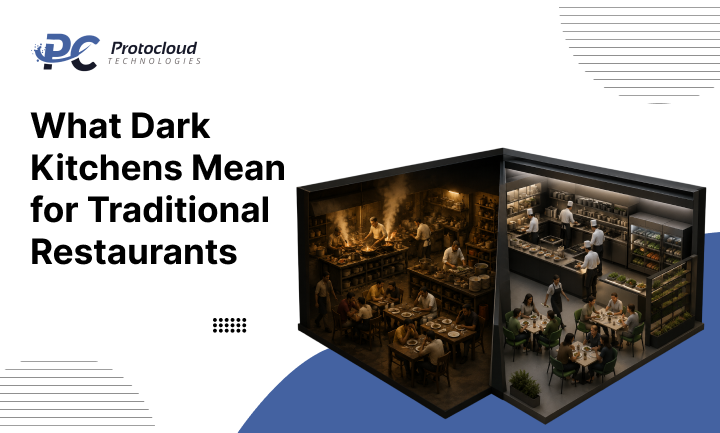
Traditional restaurants that ignore delivery are leaving revenue on the table. Consumers who might have come in for a Thursday dinner are increasingly ordering from home instead. That demand doesn’t disappear it just goes somewhere else.
The smartest traditional restaurant operators are responding in one of two ways. Some are adding a dark kitchen arm to their existing operation using their existing kitchen capacity during off-peak hours to fulfill delivery orders under a separate brand. Others are partnering with aggregator-owned facilities to expand their delivery reach without opening new dining locations.
The restaurants that struggle are the ones treating delivery as a side channel rather than a core business model. The volume is too large, and the competition too well-organized, for a passive approach to work.
Challenges Dark Kitchens Still Face
Dark kitchens are not without their challenges and it’s worth being clear about them.
Brand building is harder without physical presence.
A restaurant on a busy street gets passive exposure every single day. A dark kitchen has to earn every customer through delivery platforms, reviews, and digital marketing. Building loyalty without a physical touchpoint takes more effort and smarter strategy.
Platform dependency is a real risk
Most dark kitchens depend heavily on Uber Eats, DoorDash, or similar platforms for discovery and orders. Those platforms charge significant commission fees typically 15–30% per order and can change their algorithms, their fee structures, or their terms at any time. Dark kitchens that haven’t built their own direct ordering channel are exposed.
Food quality over distance remains a challenge
Some food simply doesn’t travel well. A perfect steak or a delicate soufflé loses something on a 30-minute journey. Dark kitchen menus need to be designed specifically for delivery with packaging, travel time, and heat retention built into the product design.
Regulatory and zoning issues are emerging in some markets as city planners grapple with how to classify and license kitchen-only operations.
Frequently Asked Questions
What is a dark kitchen and how does it differ from a traditional restaurant?
A dark kitchen is a commercial cooking space designed exclusively for delivery orders. It has no dining room, no front-of-house staff, and no walk-in customers. Traditional restaurants serve customers in person and may offer delivery as a secondary service. Dark kitchens make delivery the entire business model.
Are dark kitchens more profitable than traditional restaurants?
They can be, because their overheads are significantly lower. Without dining room rent, interior design, or front-of-house staff costs, margins can be stronger. However, platform commission fees (15–30%) and the challenge of building direct customer relationships can offset those savings if not managed carefully.
How does technology help dark kitchens operate?
Technology is central to every layer of a dark kitchen from order aggregation across multiple delivery platforms, to route optimization for last-mile delivery, to data analytics for demand forecasting and ingredient planning. Without modern food tech, the dark kitchen model doesn’t work at scale.
Can traditional restaurants compete with dark kitchens?
Yes especially when they leverage their brand equity and existing kitchen infrastructure to add a delivery operation. Many successful restaurant groups now run both models: a flagship dining experience and dark kitchen delivery capacity operating in parallel.
What is the future of dark kitchens?
The trajectory is clear: more automation, more data-driven operations, deeper integration with delivery platforms, and growing adoption by both independent operators and major restaurant chains. As delivery demand continues to grow globally, dark kitchens will become a standard part of the food industry infrastructure not an alternative to restaurants, but a complement to them.
The Bottom Line
Dark kitchens are not a threat to great restaurants. They’re an answer to a different question.
When someone wants a memorable dinner with a partner, a great atmosphere, and attentive service a traditional restaurant is the answer. That experience isn’t going anywhere.
But when someone wants great food at home on a weeknight without cooking, without going out, and without waiting dark kitchens are the answer. And technology is what makes them capable of delivering on that promise at scale.
The food industry is not choosing between these two models. It’s learning to operate both and the operators who understand that are the ones building the most resilient businesses in food today.
Technology didn’t just change how food gets delivered. It changed what a food business can look like in the first place.