Hospitals, clinics, and insurance companies all rely on Software to manage patient records, handle billing, run video visits, and connect different care teams.
But healthcare software is different from regular apps. It has to follow strict rules, connect with other complex systems, and protect very sensitive patient data. Picking the wrong company can cost you hundreds of thousands of dollars and many months of delays.
This guide explains what to look for, what to ask, and what warning signs mean you should walk away.
What Does a Healthcare Software Company Do?
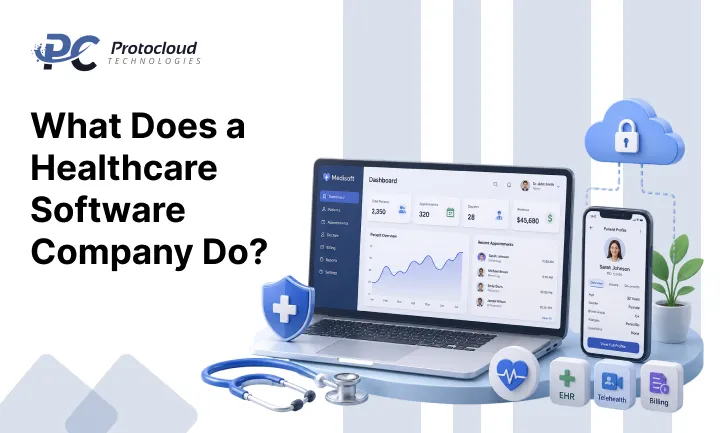
These companies build digital tools made specifically for healthcare. Unlike general app developers, they understand healthcare rules, hospital workflows, and the technical standards the industry requires.
Common projects include:
- Electronic Health Record (EHR) systems – digital charts shared across providers
- Telemedicine platforms – secure video visits between doctors and patients
- Healthcare mobile apps – for appointments, reminders, and patient communication
- Claims and billing software – automates insurance paperwork
- Patient management systems – handle scheduling, records, and lab results
- Healthcare analytics platforms – turn data into useful insights
- Workflow automation tools – cuts down on paperwork for staff
- Remote patient monitoring (RPM) Software – tracks data from medical devices
A good healthcare software company knows about HL7 and FHIR (data-sharing standards), HIPAA rules, and what it takes to pass a security review at a hospital.
Why the Wrong Choice Is So Costly
Many organizations focus only on price and timeline, then run into trouble months later. Common problems with the wrong vendor:
- Compliance failures – software that breaks HIPAA rules, leading to fines or a costly rebuild
- Security gaps – weaknesses that expose patient data and create legal risk
- Integration problems – software that won’t connect to your EHR, billing, or insurance systems
- Poor performance – works in testing but crashes with real users
- No support after launch – the vendor disappears, leaving your team to fix bugs alone
According to IBM’s Cost of a Data Breach Report, a healthcare data breach costs about $10.9 million on average, the highest of any industry.
6 Key Factors to Consider When Choosing a Healthcare Software Development Company
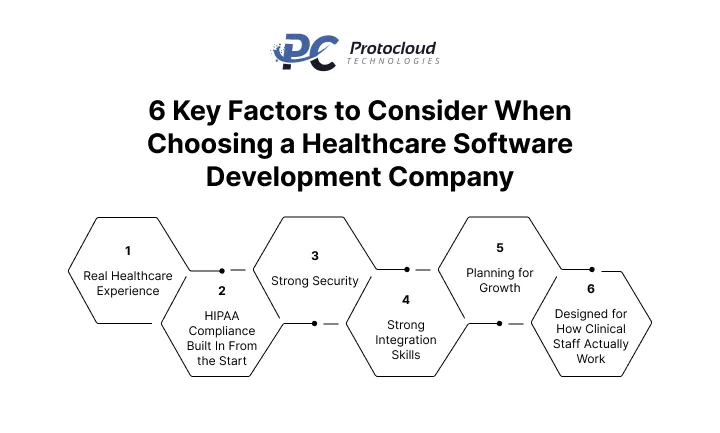
1. Real Healthcare Experience
This is the most important factor. A company that mostly builds online stores or marketing sites won’t understand healthcare’s special rules.
Questions to ask:
- Have they built Software that connects with Epic, Cerner, or other major EHR systems?
- Have they been through a HIPAA compliance review with a healthcare client?
- Do they understand HL7 and FHIR data standards?
- Can they share real case studies with measurable results, not just screenshots?
2. HIPAA Compliance Built In From the Start
HIPAA compliance should be part of how a company works, not an afterthought. A proper process includes:
- A Security Risk Assessment at the start of every project
- Strong data encryption, both stored and in transit
- Detailed logs of who accesses patient data and when
- Role-based access, so staff only see what they need
- Signed Business Associate Agreements (BAAs) with all subcontractors and cloud providers
- Regular security testing
If a vendor can’t explain their compliance process clearly, that’s a warning sign.
3. Strong Security
Healthcare organizations are a top target for hackers. In 2023, over 133 million health records were exposed in breaches – a record high. Look for:
- Multi-factor authentication for all logins
- End-to-end encryption of patient data
- Secure cloud setup (such as AWS GovCloud or Azure Health Data Services)
- Automated security monitoring and alerts
- Regular outside security audits
- A tested plan for responding to security incidents
If they host your Software, ask for their SOC 2 Type II report. It shows their security has been independently checked over time.
4. Strong Integration Skills
Your new Software will need to talk to your EHR, billing system, lab systems, insurance databases, and possibly medical devices. Poor integration is one of the biggest reasons projects fail. Look for experience with:
- HL7 FHIR and HL7 v2 messaging standards
- Direct EHR connections (Epic, Cerner, Athenahealth, Allscripts)
- Insurance claims APIs (ANSI X12 EDI)
- DICOM for medical imaging
- Lab and pharmacy system connections
Ask them to walk you through a complex integration they’ve done , what the challenge was, what standards they used, and how they tested it.
5. Planning for Growth
Software that works fine now may break down as you grow. Building for growth from day one is much cheaper than fixing it later. Good signs include:
- A cloud-based design, not a single-server setup
- A modular design (microservices) that can scale piece by piece
- Auto-scaling, so resources adjust automatically with demand
- Load testing before launch, not just basic functional testing
- A clear plan for handling large amounts of clinical data
Good question to ask: “If our number of users grew 10 times next year, what would break – and what would we do about it?”
6. Designed for How Clinical Staff Actually Work
Doctors, nurses, and billing staff work under pressure. Hard-to-use Software leads to mistakes and workarounds. Good healthcare design includes:
- Fewer clicks for common tasks, like documenting a visit or filing a claim
- Clean dashboards showing the most important information first
- Mobile-friendly design for tablets and phones
- Accessibility for staff with disabilities (WCAG 2.1 AA)
- Different views for different staff roles
Ask if they talk to real clinical staff during development. Skipping this often results in Software that’s technically correct but unpleasant to use.
Questions to Ask Every Vendor
- What healthcare projects have you completed, and can I speak with those clients?
- How do you handle HIPAA compliance on a new project?
- What EHR systems have you integrated with, and how did you handle the challenges?
- What security certifications do you have – SOC 2, ISO 27001, HITRUST?
- How do you handle support, bug fixes, and security patches after launch?
- What does your load testing process look like before going live?
- How do you price ongoing maintenance, and what’s included?
A confident, specific answer to each question is a good sign. Vague or overly sales-y answers are a warning sign.
Red Flags – Walk Away If You See These
- No healthcare-specific case studies
- Can’t clearly explain their HIPAA compliance process
- Unclear pricing, with hidden costs appearing later
- No mention of security testing, audits, or certifications
- Reluctant to sign a Business Associate Agreement (BAA)
- No support plan after launch
- Slow or unclear communication during sales – this usually gets worse during the project
Common Types of Healthcare Software
| Type of Software | Who It’s For | Main Rule to Follow |
| EHR / EMR Systems | Hospitals, clinics, multi-provider practices | HIPAA, HL7, FHIR (for sharing data) |
| Telemedicine Platforms | Remote visits, specialist calls, ongoing care | HIPAA-secure video/audio, state licensing rules |
| Healthcare Mobile Apps | Patient engagement, remote monitoring, medication reminders | HIPAA (if it handles patient data); FDA rules if it counts as a medical device. |
| Claims Management Software | Insurance companies, billing teams | ANSI X12 EDI standards, insurer-specific rules |
| Patient Management Systems | Outpatient clinics, specialty practices | HIPAA and state privacy laws |
| Healthcare Analytics Platforms | Health systems, population health programs | HIPAA Safe Harbor rules for de-identified data |
How Healthcare Software Is Changing in 2026
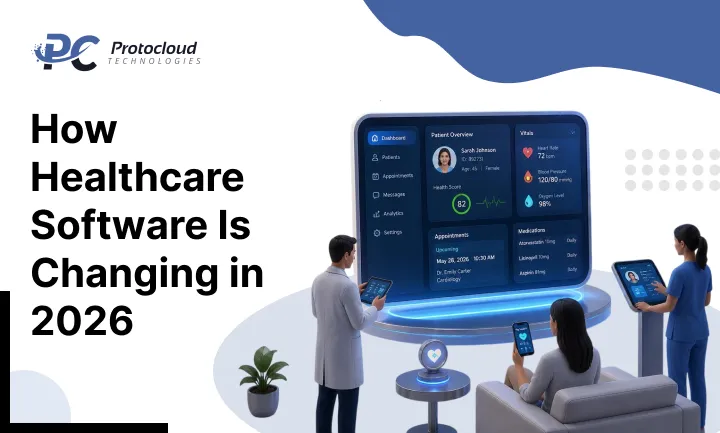
- AI-assisted tools: AI is being used for clinical documentation, prior authorization, and decision support. Companies must understand FDA rules for Software as a Medical Device (SaMD).
- Data-sharing rules: The CMS Interoperability and Patient Access Rule requires health plans and providers to share data using FHIR APIs. Software not built for this is already falling behind.
- Remote patient monitoring: Demand has grown a lot since the pandemic. It requires skills in connecting medical devices, handling real-time data, and alerting staff.
- Moving to the cloud: Large health systems are shifting old on-site systems to the cloud. Vendors with cloud migration and compliance experience are in high demand.
What Does It Cost?
Costs vary a lot depending on complexity, integrations, and compliance needs. Here are general ranges:
| Project Type | Typical Cost | Typical Timeline |
| Basic patient portal or scheduling app | $30,000 – $80,000 | 3 – 5 months |
| Telemedicine platform (medium complexity) | $80,000 – $150,000 | 5 – 9 months |
| Custom EHR or practice management system | $150,000 – $400,000+ | 9 – 18 months |
| Enterprise platform with many integrations | $300,000 – $1,000,000+ | 12 – 24 months |
These are estimates, not quotes. Always get a detailed project scope before agreeing to a budget. Be cautious of any vendor offering a fixed price before fully understanding your needs.
Frequently Asked Questions
What’s the difference between EHR and EMR Software?
An EMR (Electronic Medical Record) is a digital chart used within one practice. An EHR (Electronic Health Record) is designed to be shared across multiple providers, following standards like HL7 FHIR.
What is a Business Associate Agreement (BAA), and do I need one?
Yes. A BAA is a legally required contract under HIPAA between you and any vendor that handles patient data on your behalf. Any legitimate healthcare software company will sign one without hesitation.
How do I know if a company is HIPAA compliant?
Ask about their security policies, how they do Security Risk Assessments, whether they sign BAAs, and whether they’ve had outside security audits. HITRUST CSF certification is considered the gold standard.
Can I use an offshore development team?
Yes, but it adds risk – data location laws, time zone differences, and varying familiarity with HIPAA can create compliance gaps. If you go offshore, make sure a US-based compliance and project management team is involved.
How long does healthcare software take to build?
- Simple apps: 3-6 months
- Mid-complexity platforms: 6-12 months
- Enterprise systems with many integrations: 12-24 months
Rushing the timeline usually creates technical problems and compliance gaps that cost more to fix later.
Final Thoughts
Choosing a healthcare software company is one of the most important decisions your organization will make. The wrong choice can put patient data at risk, create legal trouble, and waste months of budget. The right choice gives you a strong foundation that improves care and grows with your organization.
Focus on these four things above all: healthcare experience, HIPAA compliance, security, and integration skills. Ask specific questions, check references, and treat vague answers as a warning sign.
The best healthcare software partners don’t just deliver code – they understand the environment your software runs in, and they build accordingly.