Introduction
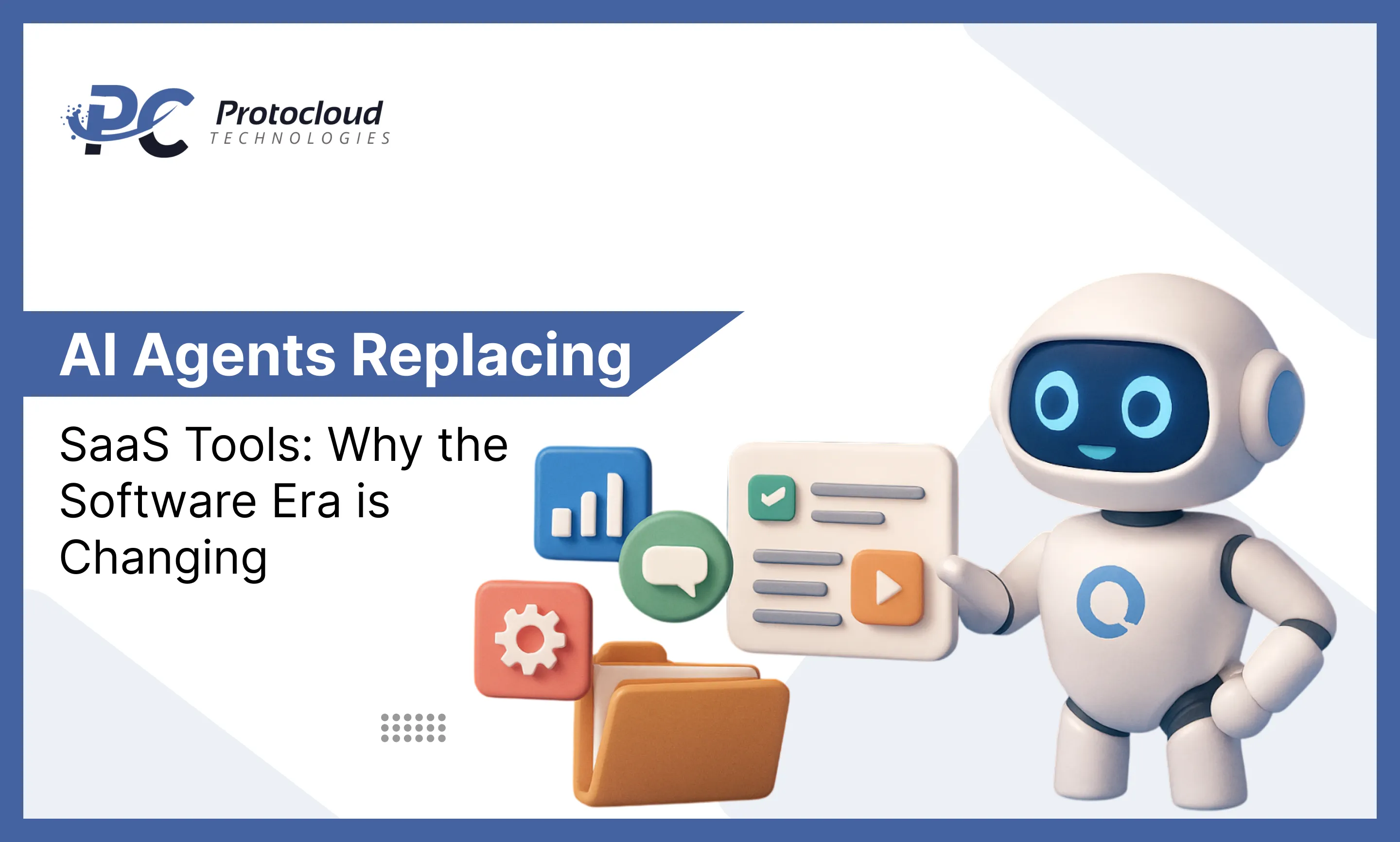
What if you never had to log into ten different apps again? Imagine one smart helper doing all that work for you. This marks a major transformation unfolding at the moment. For years, businesses relied on a giant stack of software. We used one tool for email, one for sales, and another for support. Each tool solved one tiny problem. But together, they created a massive headache. This is why we are seeing AI agents replacing SaaS tools at a record pace.
In the past, you managed software. Today, you manage outcomes. You don’t just look at a dashboard anymore. You give a goal to an agent, and it executes. It doesn’t just show you data; it makes decisions. This isn’t just a tech trend. It is a total evolution of how we work. AI agents for business are not just helping us do tasks. They are taking over the tasks entirely. This change is reshaping every department from marketing to finance.
What Exactly Are AI Agents?
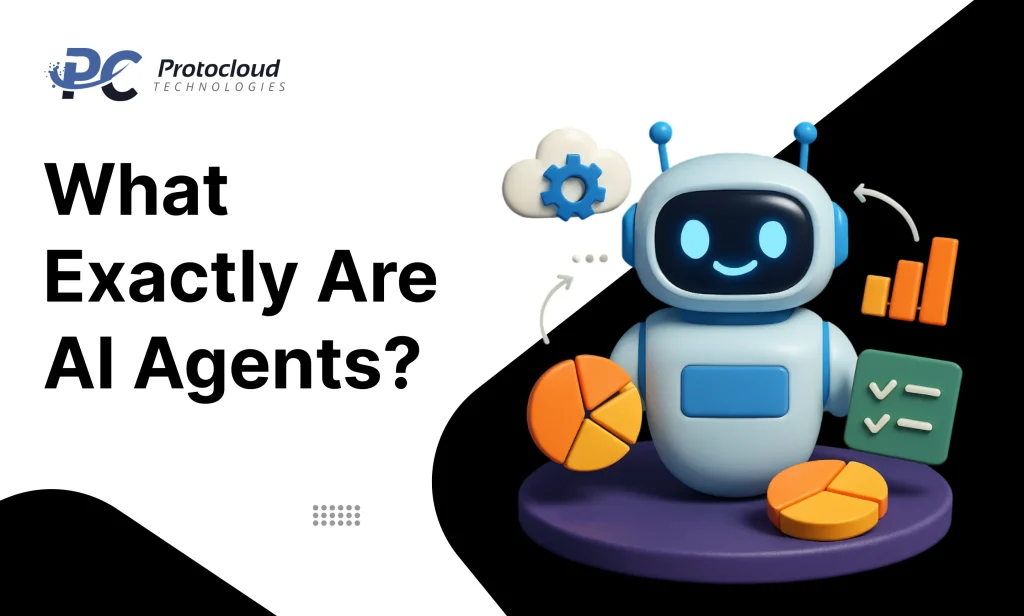
Autonomous AI agents are software systems that can think and act on their own. You set the objective, and they determine the path to achieve it. This is much smarter than a simple chatbot. A chatbot just talks to you. An agent actually does the work across different systems. It can log into your CRM, send an email, and update a spreadsheet without you clicking a single button. This is a huge part of AI-powered business automation.
There is a big difference between old tools and agentic AI systems. Old automation followed a set of rigid rules. If “A” happens, do “B.” But AI agents are flexible. They can adapt to new information. If a customer sends a weird email, the agent understands the tone. It decides the best way to respond. It moves work forward without waiting for you to tell it what to do next. This level of autonomy is why AI agents replacing SaaS tools is such a hot topic.
Why Traditional SaaS Tools Are Breaking
Traditional software isn’t failing because it’s bad. It’s breaking down simply because there’s an overload of it. Most companies suffer from SaaS fatigue. Teams spend all day switching tabs and logging in and out. This creates a mess of data that is hard to track. When you have twenty tools, you spend more time managing the tools than doing real work. This tool sprawl in businesses is killing productivity.
Another problem is that manual work still exists between these tools. Your sales team might have to copy data from a lead form into a CRM manually. Or your marketing team has to export a list to send an email. This “glue work” is slow and prone to errors. Plus, the costs of all these subscriptions add up fast. You pay for features you never even touch. AI agents replacing SaaS tools solves this by cutting out the middleman. It focuses on the result, not the software.
How AI Agents vs SaaS Compare
When we look at AI agents vs SaaS, the difference is clear. Traditional SaaS is “feature-based.” You buy it for what it can do. AI agents are “outcome-based.” You use them for what they can achieve. Instead of clicking through five menus to generate a report, you just ask for it. The agent handles the clicks, the data fetching, and the formatting. It turns a ten-step process into a one-step conversation.
- Traditional SaaS: Requires training, manual workflows, and multiple tools.
- AI Agents: Use natural language, offer autonomous task execution, and work as a single intelligent partner.
This shift is a major part of SaaS replacement with AI. One agent can often replace three or four specialized apps. You no longer need a separate tool for follow-ups if your agent can handle the whole sales cycle. The agent becomes the “brain” that connects everything. This is why many leaders are moving toward an AI-first business stack. They want intelligence, not just more buttons to click.
Real Business Use Cases for AI Agents
We are already seeing AI agents in enterprise settings doing amazing things. In sales, these agents can qualify leads and schedule meetings while you sleep. They don’t just send a template; they write a personal note based on the lead’s LinkedIn profile. In customer support, AI agents for workflow automation are resolving tickets instantly. They don’t just give a generic FAQ answer. They can actually process a refund or update a shipping address in the system.
Marketing is another area seeing a big change. Agents can now generate content, run ads, and analyze the results in real-time. If an ad isn’t working, the agent can tweak the budget or the copy on its own. In finance, agents are being used for business process automation to reconcile bank statements. They catch errors that humans might miss. The goal is always the same: move faster with fewer manual steps. This is the future of SaaS in action.
The Benefits of AI-powered Business Automation
The main reason for AI agents replacing SaaS tools is the massive boost in efficiency. When you cut down on the number of tools, you save a lot of money. But the real win is time. Your team can focus on big ideas instead of data entry. AI-driven workflows allow a small team to produce the output of a much larger company. This levels the playing field for startups and small businesses.
- Lower Costs: You stop paying for dozens of unused software seats.
- Faster Speed: Agents act the second a trigger happens, 24/7.
- Less Complexity: You don’t have to train your staff on twenty different interfaces.
- Better Decisions: Agents analyze data across all your systems at once to give you the best advice.
Risks and the Human-in-the-Loop AI Approach
Even though AI agents replacing SaaS tools is exciting, there are risks. Data security is a huge concern. You need to make sure your agents are following privacy laws. There is also the risk of “hallucination,” where the AI makes a mistake. This is why we still need human-in-the-loop AI. A human should still oversee the most important decisions. You wouldn’t let an agent sign a million-dollar contract without checking it first.
These agents also need strong connections to your existing data. If the data is messy, the agent won’t work well. You have to prepare your business for this change. It’s not a magic wand that fixes a broken process. You still need clear goals and good workflows. But once the foundation is set, the agent can scale your efforts ten times over. It is about intelligent automation, not just replacing people.
Who Should Start Using AI Agents Now?
If you are a lean startup, AI agents for business are a must-have. You don’t have the budget to hire a person for every single task. An agent can act as your assistant, your researcher, and your support lead. Middle-sized businesses that feel overwhelmed by tool sprawl should also look into this. It is a way to clean up the mess and get back to growing the company.
Large companies can also benefit from AI agents in enterprise by using them for specific departments. They can start with support or basic data entry. However, if your company doesn’t have clear workflows yet, you should wait. You need to know how your business works before you can teach an agent to do it for you. Preparation is the key to success with AI replacing traditional software.
How to Build Your AI-First Business Stack
Ready to start? Don’t try to change everything at once. Start small. Pick one repetitive task that your team hates doing. Maybe it’s cleaning up lead lists or filing expense reports. Find an agent tool that specializes in that one thing. This helps you see the value of AI agents replacing SaaS tools without the risk of breaking your whole company.
Once you see success, you can expand. Move to the next department. Always keep a human involved to check the work. Measure the outcomes, not just how often the tool is used. Are you saving time? Is the quality of work higher? These are the questions that matter. This approach helps you build a modern, AI-driven workflow that will last for years.
The Future of the Software Market (2026-2030)
As we look toward 2030, the world of software will look very different. AI agents replacing SaaS tools will be the norm. Most SaaS companies will have to change. They will stop being “tools” and start being “platforms” that agents can plug into. We will see a huge drop in the number of separate apps a business uses. Instead, we will have a few core platforms managed by dozens of smart agents.
The businesses that win will be the ones that adapt early. They will have the lowest costs and the fastest response times. They won’t be slowed down by “software work.” They will be focused on their customers and their products. The era of clicking buttons is ending. The era of giving instructions is just beginning. This is why AI agents replacing SaaS tools is the most important trend to watch this year.
Conclusion: The New Era of Outcome-Based Business
The shift from AI agents replacing SaaS tools is not just a change in technology—it is a change in mindset. For decades, we measured productivity by how well we could use software. We logged in, clicked buttons, and managed dashboards. In 2026, the focus has shifted to outcome-based software. We no longer care about the number of features in a tool; we care about the agent’s ability to cross the finish line autonomously.
By adopting AI agents for business, you are moving away from SaaS fatigue and toward a more streamlined, intelligent future. This transition allows your human team to stop acting as “data bridges” between apps and start acting as strategic supervisors. The future of SaaS isn’t about the disappearance of software, but its evolution into a silent, supportive infrastructure managed by a digital workforce. Those who build an AI-first business stack today will be the ones leading their industries tomorrow.
FAQs: Everything You Need to Know About AI Agents
1. Will AI agents completely replace all my SaaS tools?
Not exactly. While we see SaaS replacement with AI for many repetitive workflows, core platforms (like your “System of Record”) often remain. However, the way you interact with them changes. Instead of humans using the interface, autonomous AI agents handle the tasks. By 2030, experts predict over 35% of niche SaaS tools will be fully replaced or absorbed by these agent ecosystems.
2. Are AI agents secure enough for enterprise data?
Yes, but you must choose “enterprise-grade” solutions. AI agents in enterprise environments now use Zero Trust controls and Role-Based Access (RBAC) to ensure they only touch authorized data. Always look for tools that provide full audit logs, so you can see every decision the agent made and why.
3. Do I need a developer to set up these agents?
Not necessarily. The rise of no-code and low-code AI means many agents can be built using natural language prompts. However, for complex AI-powered business automation that connects several systems, having a technical “AI orchestrator” or a specialized partner can help ensure the integrations are seamless and secure.
4. How much do AI agents cost compared to traditional SaaS?
The pricing model is shifting. While traditional SaaS uses “per-seat” pricing, many agent platforms are moving toward usage-based or outcome-based pricing. You pay for the work done (e.g., tickets resolved or leads qualified) rather than the number of people logged in. This often reduces the total tool sprawl in businesses and lowers overall costs.
5. What happens if the AI agent makes a mistake?
This is where the human-in-the-loop AI model is critical. Most businesses set “guardrails” or “checkpoints.” For example, an agent can draft a complex financial report, but a human must click “approve” before it is sent. As agents learn from your feedback, the need for these checks often decreases over time.