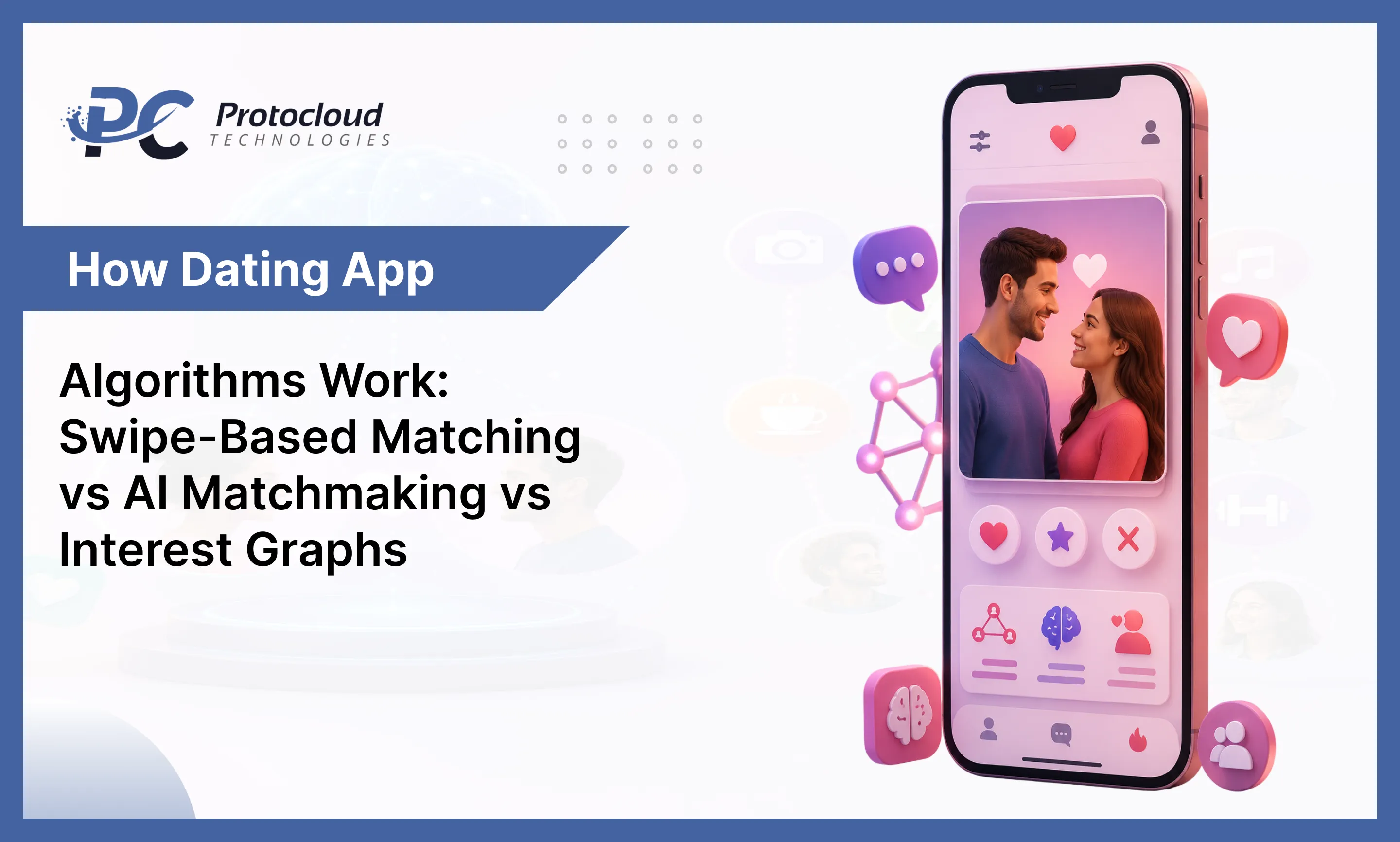
Dating apps may seem simple at first glance.You swipe right.
You swipe left.
You get a match.But behind every swipe is a powerful dating app algorithm working in real time. In fact, modern dating app algorithms are some of the smartest systems in consumer technology today. They study behavior, analyze preferences, and predict compatibility using AI and machine learning.
That’s why apps like Tinder, Hinge, and OkCupid feel so personalized.
Here’s the deal:
These apps are not randomly showing profiles. They use a complex dating app recommendation engine to decide who appears on your screen and when.
For businesses planning dating app development, understanding this technology is extremely important. A strong dating app matching algorithm can improve user engagement, increase retention, and create better user experiences.
Let’s dive in.
What Is a Dating App Algorithm?
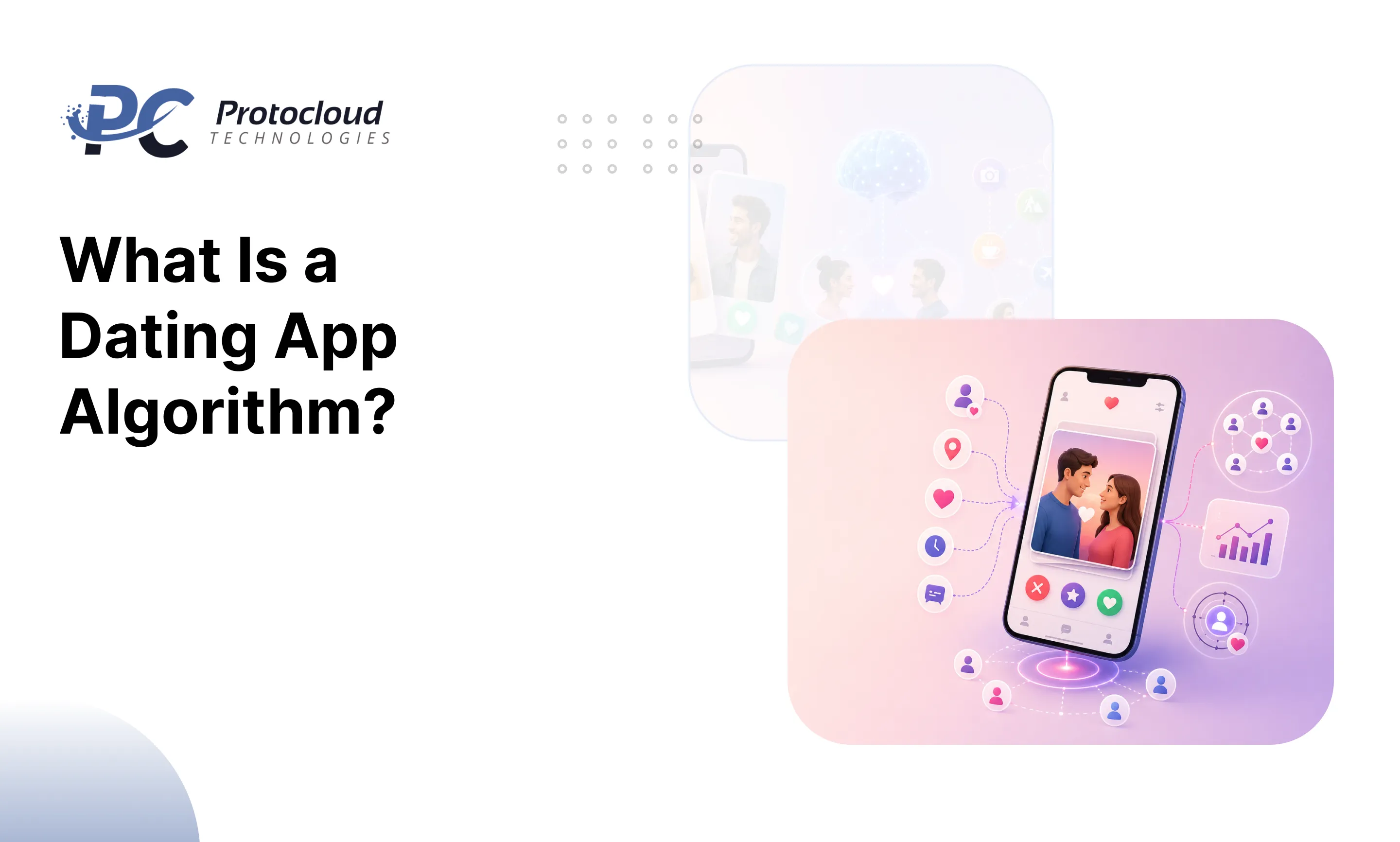
A dating app algorithm is a system that studies user data and behavior to suggest compatible matches. In simple terms, it helps users find people they are more likely to connect with.
The algorithm looks at things like:
- Age
- Location
- Interests
- Swipe behavior
- Messaging activity
- Profile preferences
- Match success rate
The goal is simple: Show users profiles they are likely to like and who are likely to like them back.
This helps users get more personalized matches instead of random suggestions. And honestly, this is what keeps people coming back to these apps daily.
Why Dating App Algorithms Matter
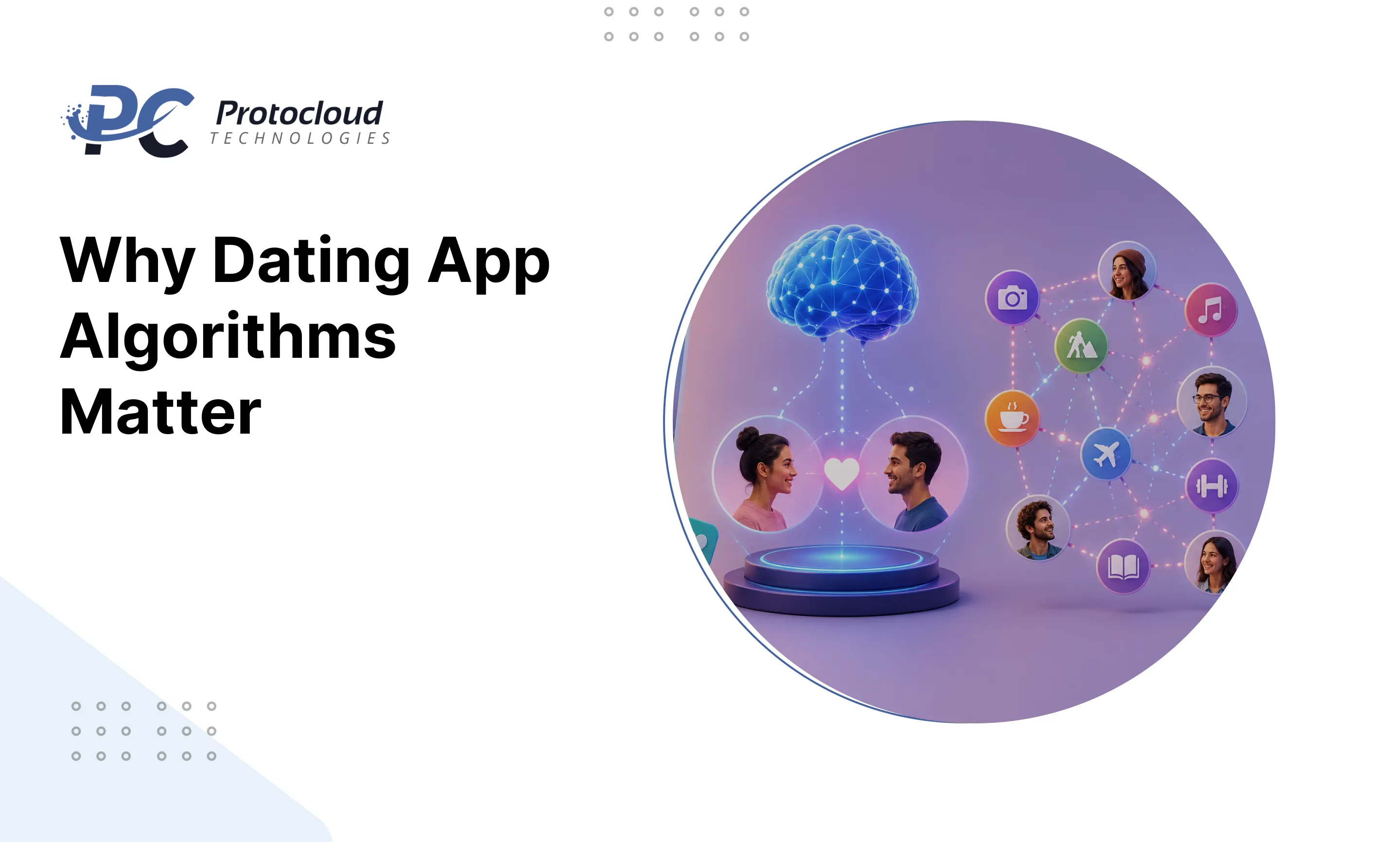
A smart online dating algorithm is not just good for users. It is also important for business growth. Apps with better AI-powered dating app systems often see higher engagement and longer session times. That means users stay active longer and interact more frequently.
For platform owners, this creates several advantages.
Better User Engagement
When users see relevant matches, they spend more time on the app. This improves dating app user retention and increases activity.
Smarter Recommendations
AI-based matchmaking helps apps understand what users actually want. Over time, recommendations become more accurate.
Scalable Technology
A strong dating app recommendation system can handle millions of profiles without manual work. This is important for businesses planning to scale fast.
Data-Driven Insights
Dating app analytics help companies understand trends and user behavior.
This improves future updates and dating app optimization.
How Dating App Algorithms Work
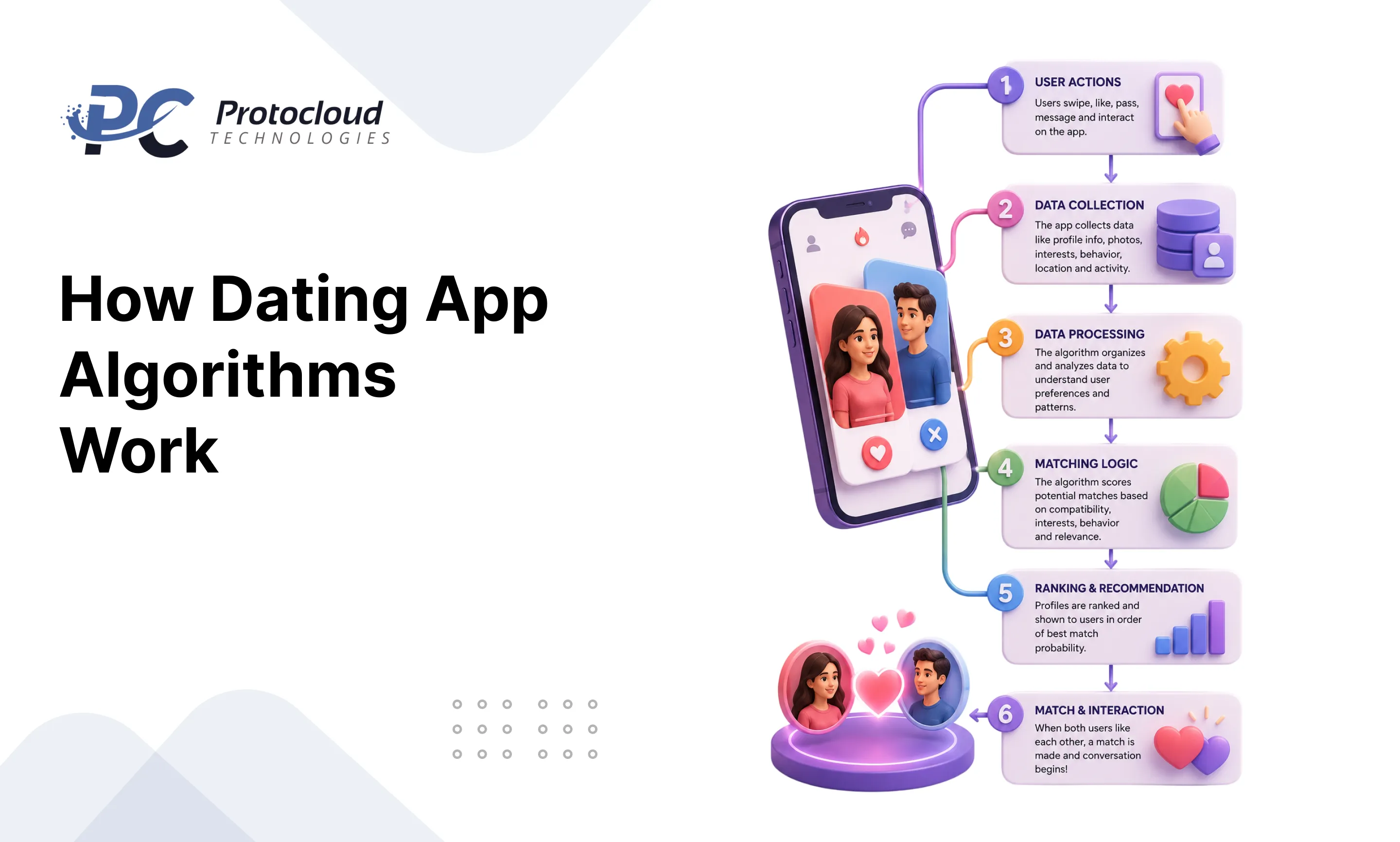
Now let’s look at how dating app algorithms work step by step.
Step 1: Data Collection
The process starts the moment a user creates an account. The app collects information like:
- Age
- Gender
- Interests
- Photos
- Bio
- Location
- Preferences
But there’s a catch. The app also studies behavior. This is called dating app user behavior analysis.
For example:
- Which profiles do users swipe right on?
- Which profiles do they ignore?
- How quickly do they swipe?
- Do they send messages after matching?
All this data feeds the dating app machine learning system.
Step 2: Matching Logic and Ranking
Next comes the dating app matching logic. The app compares one user’s data with another user’s profile. It checks for:
- Shared interests
- Similar behavior patterns
- Mutual attraction
- Activity levels
- Compatibility signals
The system then ranks profiles based on match potential. This is known as a compatibility matching algorithm. Different apps use different strategies. Some focus on attraction. Others focus on long-term compatibility.
Step 3: Continuous Learning
This is where AI in dating apps becomes powerful. The algorithm keeps learning after every interaction. Every swipe and message teaches the system something new. Over time, the recommendations improve.
This creates real-time dating app recommendations that feel more personal. In many cases, the app starts predicting preferences very accurately. That’s why modern dating app algorithms feel smarter the longer you use them.
Types of Dating App Algorithms Explained
Not all dating apps work the same way. Different platforms use different systems depending on their goals.
Let’s look at the most common models.
ELO-Based Ranking Algorithm
Early versions of the Tinder algorithm used the ELO dating app algorithm model. The system came from chess rankings.
Each user received a hidden Tinder ELO score based on profile popularity.
Here’s how it worked:
- More right swipes increased your score
- More left swipes lowered your score
- Popular profiles were mostly shown to other popular profiles.
In simple terms, it worked like a popularity ranking system. Although Tinder changed its model later, many developers who want to make an app like
Tinder still study this approach. It influenced modern swipe algorithm dating apps heavily.
Compatibility-Based Matching
Apps like OkCupid use a different strategy. Instead of focusing mostly on appearance, they focus on compatibility. The OkCupid compatibility algorithm asks users many questions about:
- Lifestyle
- Beliefs
- Habits
- Relationship goals
- Personal values
The app then calculates a dating app compatibility score. Users with similar answers receive higher match percentages. This creates more intentional and meaningful matches. For users looking for serious relationships, this system often works better.
Behavioral and AI-Driven Algorithms
The Hinge AI algorithm focuses heavily on user behavior. It studies actions beyond simple swipes.
For example:
- Did users start conversations?
- Did they continue chatting?
- Did they unmatch quickly?
- Did they exchange contact details?
This behavioral matching algorithm uses AI matchmaking technology to predict genuine chemistry. The good news is:
As users keep using the app, the system keeps learning and improving. This creates behavior-driven matchmaking that feels more natural and personal.
How is AI & Machine Learning transforming Dating Apps
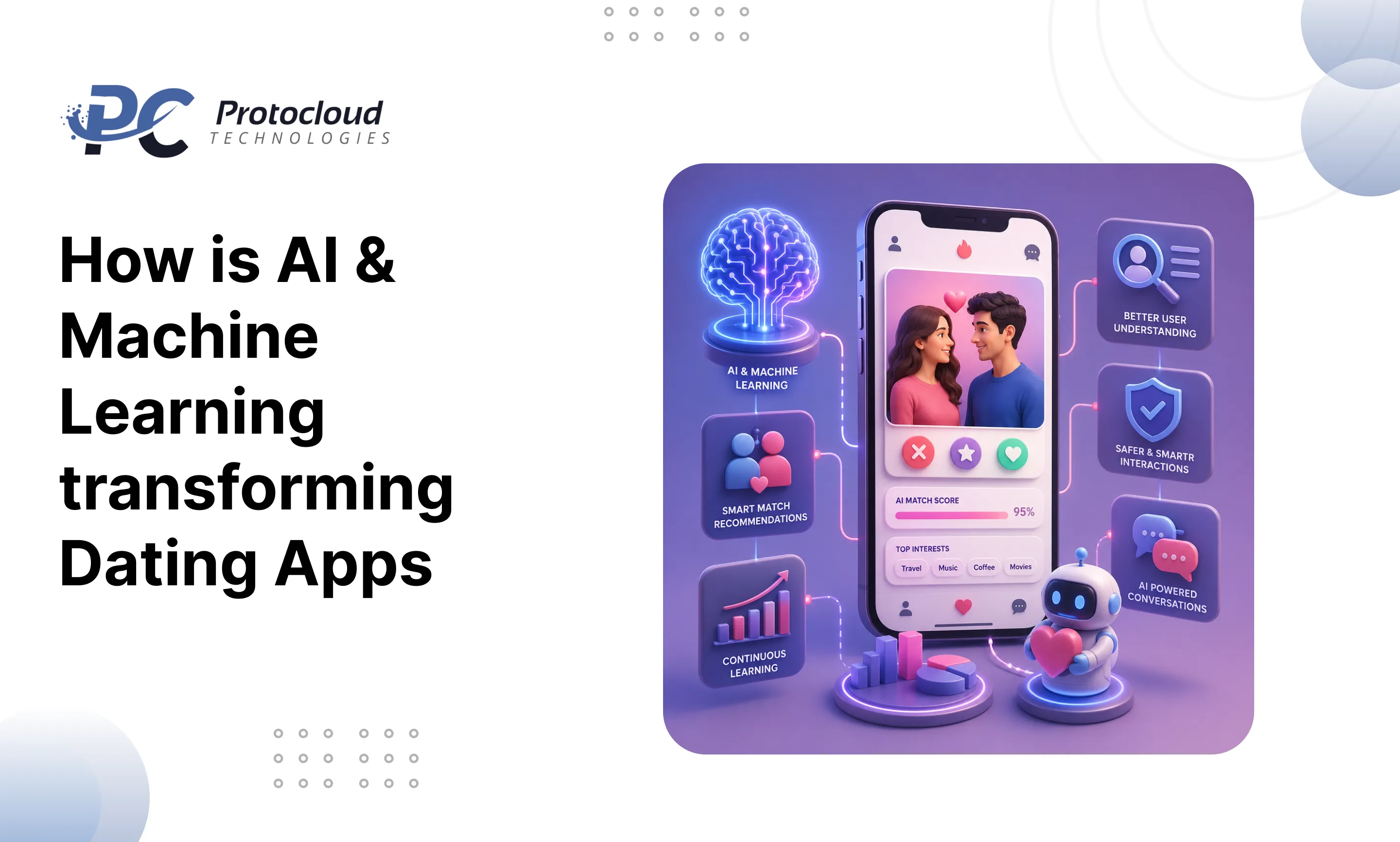
Dating apps have come a long way from simple profile browsing. Today, the most successful platforms use AI-powered dating app systems to improve user experiences and increase engagement.
Modern dating app algorithms study behavior in real time. They analyze swiping patterns, profile interactions, messaging habits, and user preferences.
This helps apps create smarter recommendations and stronger matches.
Smart Recommendations and Personalization
When users open a dating app, the dating app recommendation engine starts working immediately. The system tracks:
- Which profiles get attention
- How long users stay on a profile
- Which bios users read carefully
- Swiping behavior patterns
- User interaction history
This dating app user behavior analysis creates a personalized match feed instead of random suggestions. In simple terms, users see profiles that fit their interests and behavior patterns.
That is why modern dating app personalization feels much smarter today.
The good news is:
Personalized recommendations also improve dating app user engagement and retention.
Predicting User Preferences
Machine learning in dating apps helps platforms predict what users may like next. The system studies millions of interactions and behavioral signals daily.
It looks at things like:
- Communication style
- Shared interests
- Activity patterns
- Relationship goals
- Matching behavior
Over time, the AI recommendation engine creates a detailed preference profile for every user. Sometimes, the app understands user preferences before users fully understand them themselves.
That is the power of AI-based matchmaking.
How Dating Apps Keep Users Engaged
If you are planning mobile dating app development, user retention should be your biggest focus. Most successful apps are built around dating app engagement mechanics that turn casual users into daily users.
Here’s how they do it.
01. The Variable Reward Loop
Users continue swiping because they do not know what match might appear next. That unpredictability creates excitement.
Apps like Tinder and Hinge use swipe algorithm dating app systems based on variable rewards. This makes opening the app feel automatic instead of intentional.
02. Push Notifications That Drive Action
Dating app push notifications help bring users back at the right moment. Bumble’s 24-hour match expiry is a strong example. It creates urgency without feeling too aggressive.
This strategy improves dating app user retention and encourages faster interactions.
03. Daily Habits and Gamification
Strong dating app gamification features help create daily habits. These include:
- Daily like limits
- Match refresh systems
- Timed interactions
- Curated recommendations
These mechanics support long-term dating app product retention.
04. Social Proof That Keeps Users Invested
Users stay active when they feel the platform works for them. Many apps show profile activity signals and engagement updates to encourage participation.
This also improves premium conversion rates. It is a smart dating app growth strategy used by many successful platforms.
05. Onboarding That Creates an Early Win
Most apps lose users within the first few days. The apps that survive create an early success moment quickly.
This could be:
- A match
- A profile like
- A meaningful conversation
Strong dating app onboarding strategy improves first impressions and keeps users engaged longer.
How to Build a Dating App Algorithm That Users Love
The dating app matching algorithm is the heart of the platform. If the algorithm works well, users stay active. If it fails, users leave and rarely return.
Here are the most important things successful apps get right.
Match on Behavior, Not Just Preferences
Users often say one thing but behave differently. That is why behavior-driven matchmaking is so important. A strong online dating algorithm studies:
- Swipes
- Messages
- Engagement time
- Interaction frequency
This data helps improve match quality over time.
Prioritize Mutual Compatibility Signals
Apps like Hinge focus heavily on mutual compatibility signals. If two users interact similarly with profiles, the system may recommend them to each other. This creates stronger real connection matching.
Compatibility is not only about filters. It is also about behavior patterns.
Keep the Match Feed Fresh
A stale feed reduces engagement quickly. Modern dating app optimization systems balance:
- New profiles
- Compatible matches
- Active users
- Trending recommendations
This keeps users interested.
Factor in Activity Levels
Matching active users with inactive users creates frustration. That is why user activity-based matching matters. The best dating app algorithms prioritize users who are recently active.
Improve Continuously With Feedback Loops
Every swipe and every conversation creates valuable data. Advanced dating app feedback loops help systems learn continuously.
This improves dating app AI matching and recommendation quality over time. That is what separates average apps from scalable dating app technology.
How Protocloud Technologies Helps Build Smarter Dating Apps
Most dating apps fail because their algorithms cannot scale or retain users.
That is where Protocloud helps.
Protocloud’s dating app development services focus on building smart matchmaking systems designed for growth and engagement. From matchmaking logic to AI matchmaking technology, the team builds every feature with retention in mind.
The focus is not only on launching an app. The focus is building a platform users continue using long-term.
Conclusion
Modern dating app algorithms are much more than technical systems. They are the core of the user experience. From dating app personalization to predictive matchmaking algorithms, AI now powers the future of online connections.
And as dating app trends 2026 continue evolving, smarter algorithms will become even more important. If you want to make an app like Tinder or build a successful platform, start with the algorithm first.
Because in today’s market, the apps that grow fastest are the ones with the smartest matchmaking systems behind them.
FAQs
How does AI improve dating apps?
AI improves matchmaking by analyzing user behavior, preferences, and interactions to create better recommendations.
Why is machine learning important in dating apps?
Machine learning helps dating apps learn from user activity and improve compatibility predictions over time.
What is a dating app recommendation engine?
A dating app recommendation engine suggests profiles based on compatibility, behavior, and engagement patterns.
How do dating apps keep users engaged?
Dating apps use gamification, personalized recommendations, push notifications, and reward loops to increase retention.
What makes a successful dating app algorithm?
A successful dating app algorithm focuses on behavior analysis, compatibility signals, personalization, and continuous learning.