Mobile banking stopped being just a convenient alternative to traditional branch service a long time ago. Today, the question is Large financial technology providers such as https://dxc.com/industries/financial-services are actively developing solutions that help banks embed AI into existing infrastructure without having to completely rebuild their core platforms. This is critical, because most traditional banks still rely on aging systems that are difficult and expensive to modernize. o longer whether banks should move to digital channels, but which innovations will define the coming years. Technology is moving so fast that banks are forced to adapt constantly just to stay competitive.
There is a clear paradox here: customers want ultra-simple interfaces, yet at the same time, they expect deeply personalized, complex services in the background. In this article, we will look at the key trends in mobile banking that are already reshaping the industry and try to understand what lies ahead for users in the near future. From artificial intelligence to biometric authentication, every new feature in mobile apps brings not only fresh opportunities but also serious challenges around security and privacy.
Artificial intelligence and personalization

The first thing that stands out when analyzing future trends in mobile banking is the scale of AI adoption. Banks have finally learned to use machine learning not as a box‑ticking exercise, but as a real value driver. Take Bank of America’s virtual assistant Erica as an example: in just three years, it has handled more than a billion user requests. The system does much more than answer basic questions about balances. It analyzes spending, warns about suspicious transactions, and suggests saving options based on individual habits.
Large financial technology providers such ashttps://dxc.com/industries/financial-services are actively developing solutions that help banks embed AI into existing infrastructure without having to completely rebuild their core platforms. This is critical, because most traditional banks still rely on aging systems that are difficult and expensive to modernize.
Even more interesting is the way AI is starting to predict financial needs. Modern systems can already anticipate when a customer will need credit, based on their purchases and payment history. If a person regularly spends a certain amount on car repairs, the algorithm can proactively offer a tailored auto loan or refinancing program long before the user starts searching for such options.
Hyper-personalization of financial products
Personalization is no longer limited to simple recommendations. Banks are building dynamic products that adapt to a specific individual in almost real time:
- Individual interest rates: the system analyzes credit history, current income, and even in‑app activity to offer the most suitable terms.
- Personalized investment portfolios: algorithms take into account not only risk profile but also the customer’s ethical preferences, for example excluding oil companies for climate‑conscious users.
- Dynamic limits and bonuses: a card can automatically increase cashback for categories of goods and services that a user spends on most frequently.
Biometrics moves to the next level
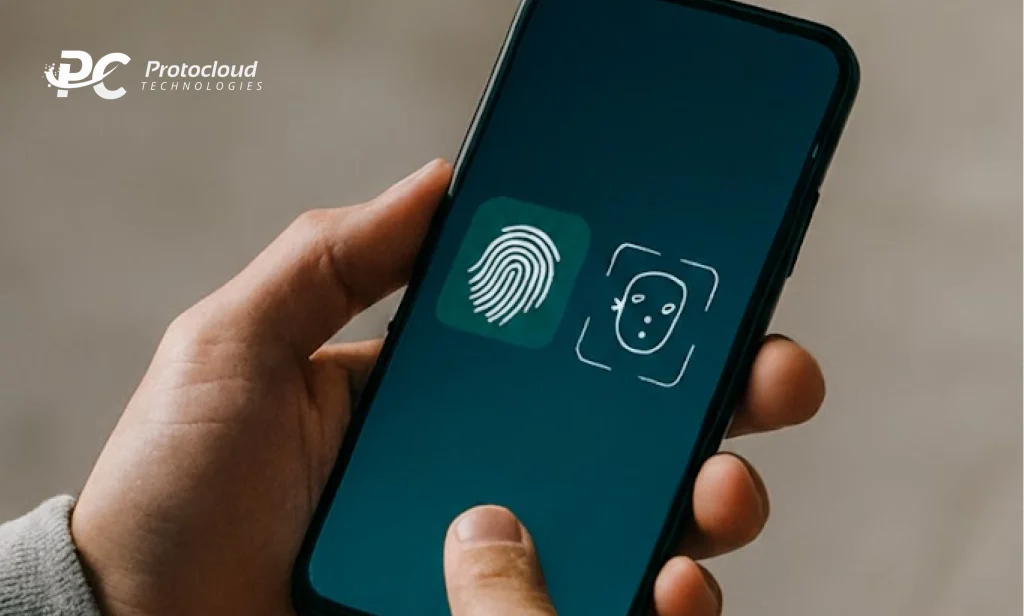
Passwords and PIN codes are gradually becoming an anachronism. The latest trends in mobile banking clearly point toward multimodal biometric authentication. Apple Pay and Google Pay have already proved that users are happy to switch to fingerprint and facial recognition. The next step is behavioral biometrics.
Mastercard is testing technology that analyzes the unique way a person holds their phone, types, and even walks with the device in their pocket. The system builds a digital “behavioral fingerprint” that is extremely hard to fake. If someone steals your phone and tries to make a payment, the app immediately detects the difference in behavior and blocks the operation.
Security and convenience at the same time
Chinese banks have gone even further and are implementing palm vein recognition. This technology can outperform fingerprints because the vein pattern inside a hand is practically impossible to replicate. Hitachi has already installed such scanners in ATMs across Asia.
What is interesting is that trends in mobile banking in the security space are not only about technology. A new concept called “invisible authentication” is gaining ground. the customer barely notices that any verification is happening. The app constantly analyzes dozens of parameters in the background, such as:
- Geolocation and typical routes.
- Time of day when transactions usually occur.
- Devices commonly used for login.
- Typing speed and rhythm.
- The angle at which the phone is held during use.
Open banking and super apps
Open Banking APIs are radically changing the financial landscape. In the past, banks zealously guarded customer data, but regulations in many countries now require them to provide secure access to this information (with the customer’s consent, of course). This has created an ecosystem where one app can aggregate accounts from dozens of different banks.
Revolut and N26 have shown how this works in practice. Users can see all their finances in a single interface, regardless of where their accounts are held. On top of that, these platforms allow instant transfers between accounts, currency exchange at competitive rates, and even investing — all within one app.
Asian super apps like WeChat Pay have gone even further. Inside one app, people can pay, transfer money, order taxis, buy movie tickets, pay utilities, and even book doctor appointments. Financial operations become just one layer in a much broader digital ecosystem.
Embedded finance — banking everywhere
Perhaps the most intriguing of the future trends in mobile banking is the gradual disappearance of banking apps as a standalone destination. Financial services are being embedded directly into other platforms. When you buy sneakers in the Nike app, you may immediately see an installment plan from a partner bank. While ordering food via Uber Eats, you can open a savings account right in the checkout flow.
Shopify already allows merchants to accept payments, issue credit to customers, and manage cash flows without involving a traditional bank in the classic sense. Tesla has launched its own in‑app auto financing for purchasing cars directly through its mobile ecosystem.
Blockchain and decentralized finance
Cryptocurrencies are only the visible part of the story. Blockchain technology is slowly but steadily entering mainstream banking. JPMorgan has launched its own stablecoin, JPM Coin, for instant settlements between corporate clients. Transactions can be processed 24/7, including weekends, without intermediaries or delays.
Central banks around the world are experimenting with central bank digital currencies (CBDCs). China has already rolled out a pilot of the digital yuan, where users can pay via a dedicated app even without an internet connection — transactions synchronize later when the device comes back online.
Smart contracts are opening the door to automating complex financial operations. Imagine a mortgage where all payments, insurance, and even transfer of property rights are executed automatically as predefined conditions are met. Platforms like Ethereum already enable such contracts, and banks are actively experimenting with these capabilities.
DeFi for everyday users
Decentralized finance is still mostly a playground for technically savvy enthusiasts, but that is changing. New mobile apps are emerging that simplify access to DeFi protocols:
- Yield farming for beginners: the ability to earn returns by providing liquidity to pools without needing to understand the underlying mechanics.
- Decentralized lending: taking out loans secured by cryptocurrency without traditional credit checks.
- Multi‑asset wallets: storing fiat, crypto, and tokenized assets in one place.
Projects such as Aave and Compound are making steps toward integration with traditional banking. In the near future, hybrid products may appear that combine the advantages of both worlds — the stability of regulated banks and the flexibility of decentralized platforms.
Voice assistants and conversational banking
Siri, Alexa, and Google Assistant are turning into full‑fledged banking consultants. You can simply say, “Alexa, send 5,000 hryvnias to my mom,” or “OK Google, how much have I spent on restaurants this month?” — and the transaction will go through without touching the screen.
Capital One has integrated its services with Amazon Alexa, letting clients check balances, pay bills, and receive alerts about suspicious transactions through smart speakers. For millions of users, this no longer feels like science fiction but an everyday banking channel.
The next stage is contextual conversations. Systems will understand not just commands but intent and nuance. If you ask, “Do I have enough money for a new MacBook?”, the assistant will analyze your budget, upcoming expenses, and savings goals and then suggest several options: take an installment plan, wait a month, or choose a previous‑generation model on discount.
Augmented and virtual reality
AR and VR may seem far removed from banking, but future trends in mobile banking definitely include these technologies. Axis Bank in India has launched virtual branches where clients can meet with advisors in a VR space. This format is especially useful for complex products like mortgages or investment portfolios, where customers need detailed consultations.
Augmented reality has even more practical use cases. Imagine pointing your smartphone camera at a restaurant and instantly seeing how much you usually spend there, whether there are loyalty discounts available, and what your current card balance is. Commonwealth Bank is already testing AR features to locate nearby ATMs with real‑time navigation overlays.
Visualizing money
People process visual information better than raw numbers. That is why new apps are experimenting with more engaging ways of presenting financial data instead of plain charts. Some offer interactive 3D models where you literally watch your savings “grow” or your entertainment spending “melt away.”
BBVA is experimenting with gamification. the app rewards users with virtual badges for reaching financial goals. Save a certain amount, and you receive a “gold medal” along with a real bonus in the form of a higher interest rate on your savings account.
Quantum computing and security
Quantum computers are still at an early stage, but banks are already preparing for their arrival. The concern is simple: quantum machines could, in theory, break today’s encryption methods in minutes.
JPMorgan is working with IBM on quantum‑resistant cryptographic algorithms, while Barclays is investing in research on quantum key distribution to secure data exchange between servers.
There is also an upside. Quantum computing will make it possible to run extremely complex financial models in seconds. Credit risk assessment, portfolio optimization, and fraud detection could all become dramatically faster and more accurate.
Financial education inside the app
Banks are starting to understand that financially literate customers are more loyal and less risky. As a result, mobile apps are evolving into educational platforms:
- Interactive courses on investment basics directly in the interface.
- Simulators for practicing stock trading without real losses.
- Personalized tips based on analysis of a user’s financial mistakes.
- Reminders about important financial dates such as tax payments or deposit maturity.
Ally Bank, for example, has created a series of short video lessons that appear contextually. If the system notices that a user often overdrafts their account, it offers a quick budgeting tutorial rather than just another warning.
5G and cloud technologies
Fifth‑generation mobile networks are not just about faster internet. 5G is the foundation for services that were simply impossible before. Latency drops to around 1 millisecond, which is crucial for high-frequency trading and instant payments.
Cloud technologies let banks scale without huge investments in hardware. Goldman Sachs, for instance, has migrated a significant part of its infrastructure to Amazon Web Services, which allows it to launch new products much faster and serve millions of users without overloading servers.
Edge computing is another important development. Instead of sending every request to distant data centers, more processing happens directly on the user’s device or at a nearby node. This improves app responsiveness and adds another layer of privacy protection.
Regulatory challenges and compliance
Technology is moving faster than the law. Regulators are trying to keep up, but new rules often appear only after an innovation has already gone mainstream. In Europe, PSD2 forced banks to open up their APIs, yet implementation standards still differ from country to country.
GDPR imposed strict requirements on personal data protection, pushing banks to invest billions in reworking their systems. Similar regulations are now emerging worldwide, from California’s CCPA to Brazil’s LGPD.
Biometric data raises separate questions. Who owns your digital faceprint? What happens if a biometric database is compromised? Unlike a password, you cannot simply change your fingerprints or facial features.
Balancing innovation and safety
Banks find themselves between a rock and a hard place. Customers demand new features, but any mistake can cost an institution both its reputation and millions in fines. That is why many players choose a “fast follower” strategy — letting fintech startups test bold ideas first and then adopting the ones that prove successful.
Regulatory sandboxes help innovative companies experiment in controlled environments. In the UK, the FCA, and in Singapore, MAS, have created spaces where startups can test new products without full regulatory burden, provided they ensure transparency and protect consumers.
What’s next?
Mobile banking five years from now will look radically different from what we see today. The very notion of a dedicated “banking app” might fade as financial services blend into everyday applications. Or, conversely, a few global super platforms could emerge and dominate the market.
One thing is clear: the winners will be those who align technological innovation with real human needs. AI and blockchain are impressive, but if the app is clumsy or confusing, people will simply abandon it. Security is crucial, yet if verification takes a full minute, users will switch to a more convenient competitor.
Overall trends in mobile banking point toward the democratization of financial services. Tools once reserved for wealthy private banking clients are now accessible to anyone with a smartphone. Investments, loans, insurance. all of this can be arranged in a few taps while sitting in a café.
Banks are no longer just places to store money. They are becoming financial partners that help plan budgets, reach goals, and make smarter decisions. And future trends in mobile banking promise to make these services even more intelligent, faster, and more widely available than ever before.