Introduction
The demand for fast delivery is rising fast. People want groceries at their door in 30 minutes. They want a smooth checkout. They want live tracking.
That is why Instant Delivery App Development is one of the hottest opportunities in 2026.
Startups are building instant grocery delivery platforms. Retail stores are going online. Investors are backing quick commerce startups. If you build it right, you can create a powerful revenue machine.
In this guide, you will learn how to plan, design, and launch your app the smart way. We will cover features, cost, tech stack, and monetization. You will also understand how to attract real users and serious investors.
Let’s get started.
What Makes InstaShop Successful?
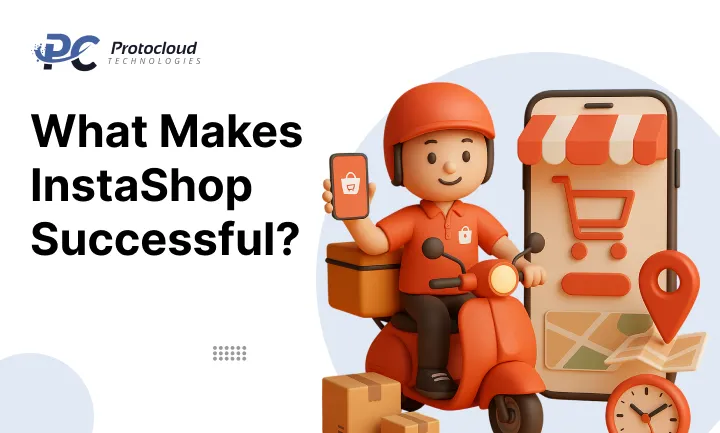
InstaShop became popular because it solved one simple problem. People needed groceries fast. The platform connected users with nearby stores and delivered within 60 minutes.
Its success depends on three core pillars:
- Speed
- Convenience
- Strong logistics
A well-built same-day delivery app must focus on these three things. If your product feels slow, users will uninstall it.
That is why serious founders invest in proper Instant Delivery App Development from day one.
Step 1: Choose the Right Business Model
Before you start coding, define your revenue model. This step decides your long-term growth.
There are two proven models in the Quick commerce business model space.
Marketplace Model
This is a Marketplace delivery app solution where you connect customers with local stores. You do not own inventory.
Revenue comes from:
- Commission per order
- Delivery charges
- Sponsored store listings
- Surge pricing
This is also called a commission-based marketplace model. It works well for startups because investment stays low.
Inventory Model
This follows the Dark store delivery model. You own or rent warehouses. You control inventory.
Revenue comes from:
- Product margins
- Express delivery fees
- Subscription plans
This model gives better control. But it needs more capital.
Most startups begin with a marketplace setup and later scale into dark stores.
Step 2: Core Features You Must Build
Features decide user experience. And user experience decides growth.
When planning Instant Delivery App Development, build three systems: customer app, delivery app, and admin panel.
Customer Application
The Features of grocery delivery app should include:
- Simple registration
- Smart product search
- Category filters
- Real-time stock display
- Secure payment gateway integration
- Live order tracking system
- Push notification system
- Ratings and reviews
If your app does not offer real-time tracking delivery app functionality, users will not trust it.
For strong 30-minute delivery app development, GPS accuracy is critical. Use live tracking to show exact delivery movement.
Delivery Partner Application
Strong Delivery partner app development improves speed.
Essential tools include:
- Rider onboarding
- Order alerts
- Route optimization
- Earnings dashboard
- In-app chat
- Delivery proof upload
Your delivery team is your brand face. Build tools that make their work easy.
Admin Dashboard
An advanced Admin panel for delivery app controls everything.
It should manage:
- Store onboarding
- Order tracking
- Commission settings
- Offers and coupons
- Analytics dashboard
- Customer complaints
Without a powerful backend, scaling becomes difficult.
Step 3: Choose the Right Tech Stack
Your technology choices affect speed, cost, and scalability.
For smart Tech stack for delivery app planning, use proven frameworks.
Frontend Options
- Flutter grocery app
- React Native delivery app
Both support cross-platform development. They reduce cost and speed up launch.
Backend Options
- Node.js backend for delivery app
- Django
- Laravel
A strong backend ensures smooth order processing and database control.
Database
- PostgreSQL
- MongoDB
Tracking and Maps
- Google Maps API
- Firebase
These tools power your hyperlocal logistics platform and live tracking system.
Choosing the right stack improves performance and reduces future errors in Instant Delivery App Development.
Step 4: Understand the Grocery Delivery App Development Cost
Cost matters. Especially for startups.
The Grocery delivery app development cost depends on features, region, and team size.
Basic cost structure:
- UI/UX design
- Customer app
- Delivery app
- Admin panel
- Backend system
- Testing
Total investment usually ranges between $40,000 and $100,000.
Your final startup app development cost depends on complexity. If you add AI suggestions, warehouse automation, or advanced analytics, cost increases.
Plan your app development timeline carefully. Launching an MVP in 90 days is possible with focused execution.
Step 5: Monetization Strategy That Attracts Investors
Revenue clarity builds investor trust.
Strong App monetization strategies include:
- Commission on each order
- Delivery charges
- Subscription plans
- Featured store listings
- In-app advertising
Many successful platforms use free delivery above minimum order value. This increases average cart size.
If you position your product as a full Food delivery app solution, revenue potential grows faster.
Investors look for scalable margins. Show them clear numbers.
Step 6: Launch and Growth Strategy
Building the app is only half the job.
Marketing drives growth in Instant Delivery App Development projects.
Pre-Launch
Create hype before launch.
- Build a landing page
- Collect early signups
- Partner with local influencers
- Offer free first delivery
Post-Launch
After launch, focus on retention.
- Referral programs
- Google Ads targeting local users
- App Store Optimization
- WhatsApp marketing
- Push notification campaigns
Position your app as a powerful e-commerce delivery solution in your city.
Strong branding builds trust fast.
Step 7: Legal and Operational Setup
Never ignore compliance.
You need:
- Business registration
- GST registration
- Vendor contracts
- Delivery partner agreements
- Privacy policy
Security builds trust. Always use secure payment gateway integration. Protect user data with encryption.
Reliable systems increase credibility. And credibility improves EEAT signals for your brand.
Step 8: MVP Strategy for Fast Execution
Do not build everything at once.
Start small. Test demand. Improve based on feedback.
Your MVP should include:
- Basic customer interface
- Limited product categories
- Single city operations
- 10 to 20 partner stores
This approach reduces risk. It also validates your instant grocery delivery startup idea.
Once traction grows, expand features and cities.
Why Now Is the Right Time
Quick commerce is growing fast in tier 2 and tier 3 cities. Customers expect speed. They expect convenience. They expect seamless digital experiences.
If you invest in professional Instant Delivery App Development, you can capture early market share.
Hyperlocal models work well in emerging markets. Competition remains lower than metro cities.
Speed wins this game.
Final Thoughts
Building a successful platform requires planning and execution.
You need:
- Clear business model
- Strong tech stack
- Smart monetization
- Effective marketing
When done right, Instant Delivery App Development can create a scalable digital asset. It can generate recurring revenue. It can attract investors. And it can dominate local markets.
Focus on value. Focus on speed. Focus on user experience.
That is how you build the next big delivery platform.
Protocloud Technologies — A Trusted Name in Custom Delivery App Development
Protocloud Technologies is one of the most trusted custom delivery app development companies in the world. With over 10 years of experience, they have helped businesses build powerful food delivery and grocery delivery apps that users love.
Their team has built all kinds of delivery apps — from small local delivery platforms to large multi-vendor delivery solutions. They know exactly what features make a delivery app fast, reliable, and easy to use.
Every app they build is secure, scalable, and works smoothly for customers, delivery drivers, and business owners.
Visit Protocloud Technologies to learn more or explore their dedicated Custom Delivery App Development services today.
FAQ’s
1. How much does Instant Delivery App Development cost?
The cost of Instant Delivery App Development usually ranges between $40,000 and $100,000. The final price depends on features, tech stack, app complexity, and development team location. Adding real-time tracking, multi-vendor support, and advanced analytics can increase the budget.
2. How long does it take to build an instant delivery app?
A basic MVP can be developed in 3 to 4 months. A fully featured grocery platform with delivery partner app development and admin panel integration may take 6 to 9 months. The timeline depends on project scope and customization level.
3. What are the must-have features of a grocery delivery app?
Key features include product search, live order tracking system, secure payment gateway integration, push notification system, delivery partner tracking, and a powerful admin panel for delivery app management. These features ensure smooth operations and better user retention.
4. Which tech stack is best for delivery app development?
Popular choices include Flutter grocery app or React Native delivery app for frontend, and Node.js backend for delivery app development. PostgreSQL or MongoDB works well for database management. This combination ensures scalability and performance.
5. How does a quick commerce business model generate revenue?
The quick commerce business model earns through commission per order, delivery charges, subscription plans, and featured store listings. Many platforms use a commission-based marketplace model to reduce inventory risk and scale faster.