Introduction
How to develop a food delivery app like Toing is one of the smartest questions a startup founder can ask in 2026. Not because food delivery is new. But because Toing proved something the industry quietly ignored for years: millions of people were never the target audience for premium food apps. They just wanted a proper meal at an honest price, delivered without a surprise platform fee tacked on at checkout.
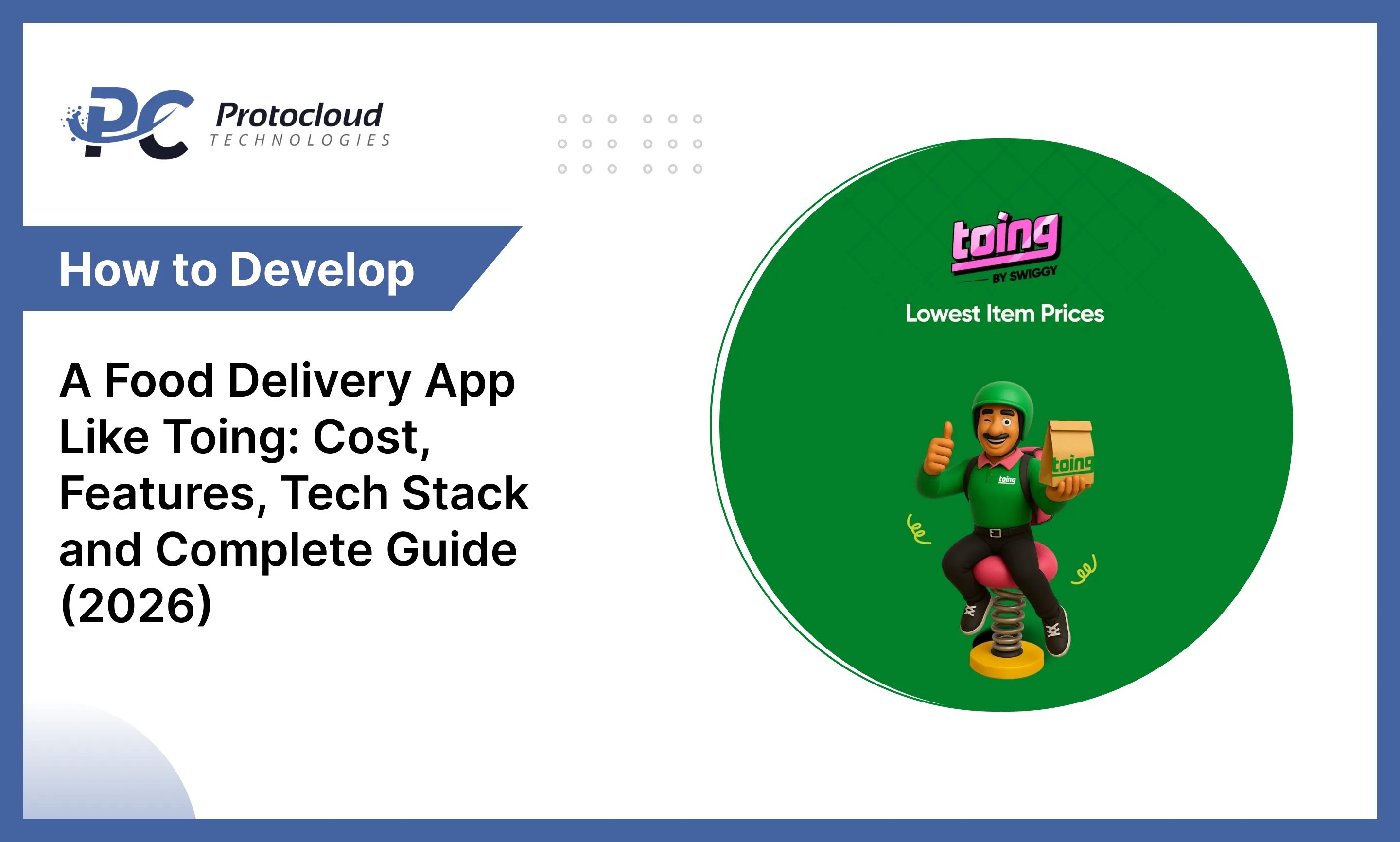
Swiggy introduced Toing as an independent app in Pune during September 2025. Meals start at ₹49. No platform fee. No packaging charge. No surge pricing. The restaurant price you see offline is exactly what you pay online. Within months, it expanded to Delhi NCR, Mumbai, Nagpur, Nashik, Vadodara, Agra, and Guwahati. That’s not a slow rollout. That’s a model that worked and scaled fast.
If you’re a founder, a startup team, or an entrepreneur looking to enter the affordable food delivery space, this guide covers everything you need: the business model, the features, the tech stack, the real development cost, and the honest challenges nobody mentions.
What is Toing and Why is It Disrupting Food Delivery?
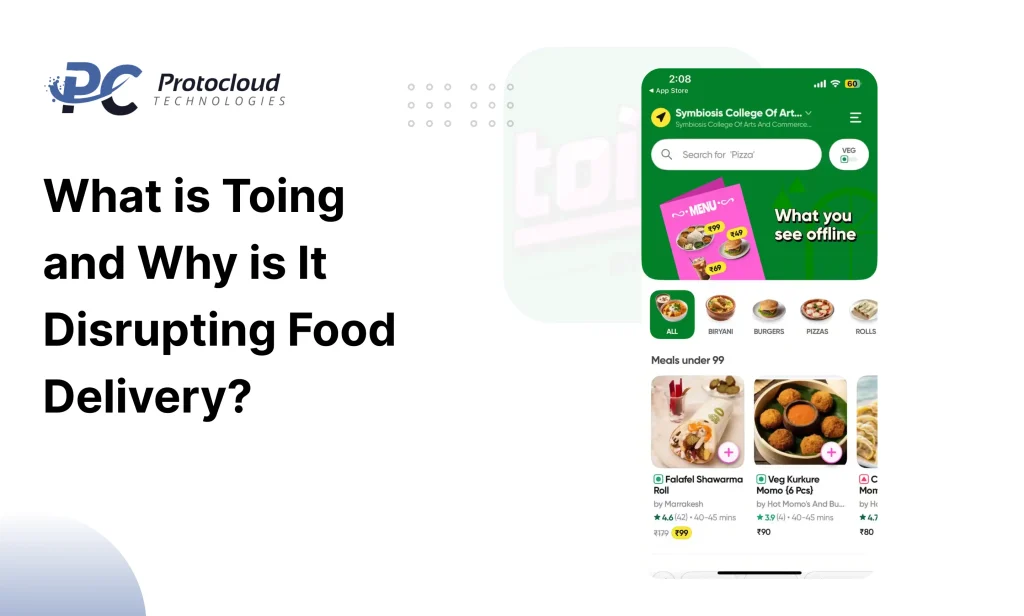
Toing is a budget food delivery app built by Swiggy specifically for students, Gen Z users, and young professionals who find mainstream food apps too expensive for daily use. The positioning is sharp: most delivery platforms charge platform fees, packaging fees, and surge pricing that can add 30 to 40 percent to the actual food cost. Toing removed all of that.
Key facts about Toing:
- Dishes start at ₹49 and most stay under ₹250
- Zero platform fee, zero packaging fee, zero surge pricing
- Free delivery on orders above ₹99
- Offline restaurant pricing, meaning what the menu says is what you pay
- Accessible for download on Android and iOS devices
The real disruption isn’t the price. It’s the trust model. Toing made transparency a product feature. That’s why it’s worth studying if you want to build something similar.
The Business Model Behind Toing: What Makes It Work?
Here’s what most articles miss about how the Toing app business model works: it isn’t just about being cheap. It’s about targeting a segment that high-frequency, low-margin economics actually rewards.
Toing runs on a hyperlocal delivery model, partnering with small local restaurants and eateries that offer volume-driven, affordable meals. These aren’t premium restaurants paying for visibility. They’re neighborhood dhabas, college canteen suppliers, and small food businesses that need consistent orders more than brand prestige.
By keeping the ticket size low (₹100 to ₹250 average) and the order frequency high, Toing generates revenue through volume. Swiggy offsets the zero-fee promise through restaurant commissions and the sheer number of daily transactions. Think of it this way: ten ₹20 commissions from ten small orders beats one ₹80 commission from a single expensive order if the operational cost per delivery is similar.
The model also competes directly with Rapido’s Ownly and Zepto Cafe, both targeting the same price-sensitive demographic. Toing’s advantage is Swiggy’s existing logistics network, which keeps delivery costs structurally lower than any new entrant can match on day one.
Types of Food Delivery App Models You Can Choose
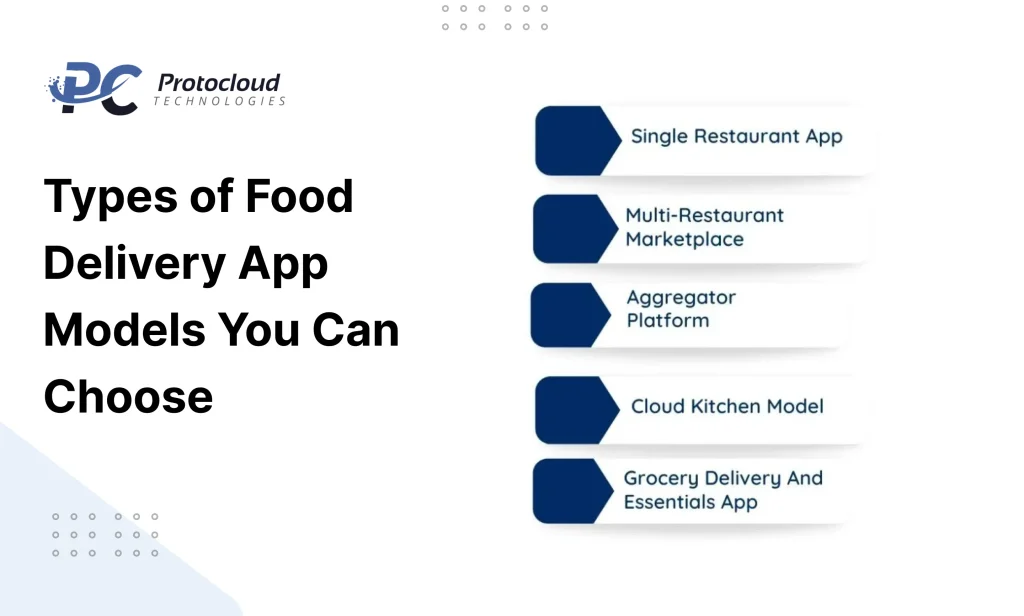
Before you write a single line of code or call a food delivery app development company, you need to decide which model you’re building. There are three primary structures:
Aggregator Model: Your platform lists restaurants, takes orders, and connects customers with delivery. Restaurants handle their own delivery or you provide it. Zomato and Swiggy’s main app follow this. This is the most complex to build but scales well.
Order and Delivery Model: The platform manages both the order flow and the delivery logistics. You hire or partner with delivery partners. This is what a Toing-style budget app operates on because controlling delivery means controlling cost.
Cloud Kitchen Model: No physical restaurants. Delivery-only kitchens prepare food under your platform’s brand or partner brands. Lower overhead, higher margin control, but you’re responsible for food quality end to end.
For a budget food delivery app like Toing for small restaurants, the order and delivery model with hyperlocal restaurant partnerships is the closest fit. It lets you control pricing transparency while keeping onboarding simple for small vendors.
Must-Have Features to Build a Food Delivery App Like Toing
Food delivery app features separate functional apps from ones people actually use daily. Here’s what you need across all four panels:
Customer App
- Secure account signup and login using email, mobile number, or social media accounts
- Restaurant listing with real-time menus and prices
- Real time order tracking with live map
- Payment gateway integration (UPI, debit/credit cards, wallets, cash on delivery)
- Push notifications for order status updates
- Review and feedback options for restaurant services and delivery staff
- Order history and easy reorder
- Promo codes and discount engine
- Transparent pricing display with zero hidden fees (this is Toing’s signature feature)
- Delivery zone selection using geolocation API for food delivery
Restaurant Panel
- Menu management with pricing control
- Incoming order management and acceptance
- Order history and daily sales report
- Operating hours management
Delivery Partner App
- Order assignment and route optimization
- Real time navigation integration
- Earnings tracker
- Availability toggle
Admin Dashboard
- Full platform oversight: orders, restaurants, delivery partners
- Dispute and refund management
- Analytics and performance reports
- Promo and campaign management
Tech Stack for Food Delivery App Development in 2026
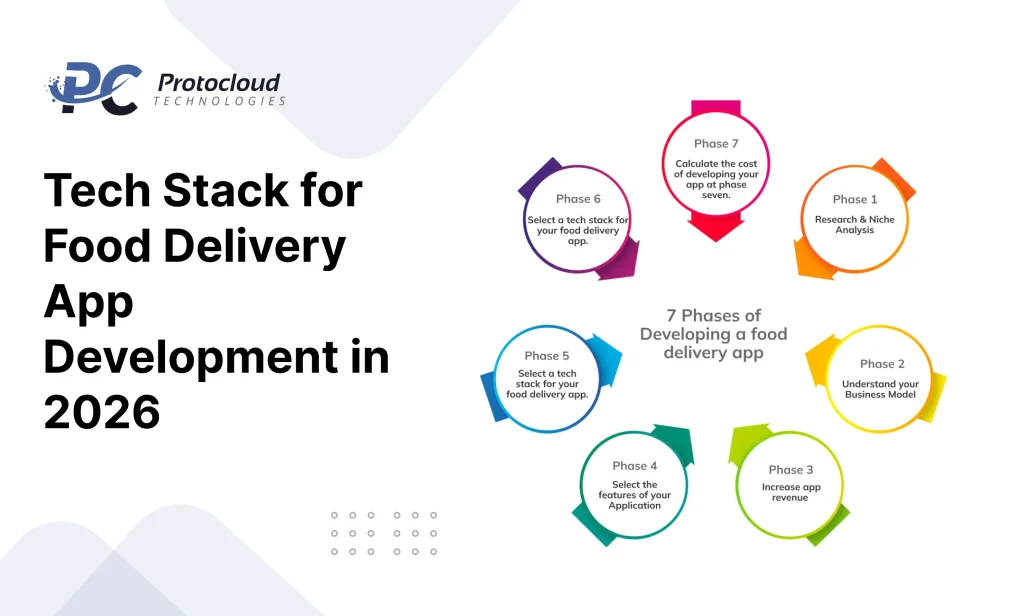
Choosing the right food delivery app tech stack determines how fast your app runs, how easily it scales, and how much you spend maintaining it long-term. Here’s what the best on demand food delivery app development teams are using:
Frontend (Mobile): Developers often choose React Native or Flutter to create apps that run smoothly on multiple mobile platforms. One codebase works on both iOS and Android, which cuts development time and cost significantly without sacrificing performance.
Backend: Node.js with Express.js for fast, scalable APIs. Python with Django is equally solid if your team prefers it. Both handle high concurrency well.
Database: PostgreSQL for structured data (users, orders, menus). MongoDB for flexible, document-based storage. Firebase for real time order updates and live tracking.
Cloud Hosting: AWS is the most mature choice. Google Cloud and Microsoft Azure are strong alternatives. All three support auto-scaling, which you’ll need on peak ordering hours.
Third-Party APIs: Google Maps for geolocation and route optimization. Razorpay or Stripe for payment gateway integration. Twilio for SMS notifications. Firebase Cloud Messaging for push notifications.
Architecture: Microservices architecture is the right call for a platform that plans to scale city by city. It lets you update individual components (say, the delivery module) without touching the rest of the system.
Step-by-Step Process to Develop a Food Delivery App Like Toing
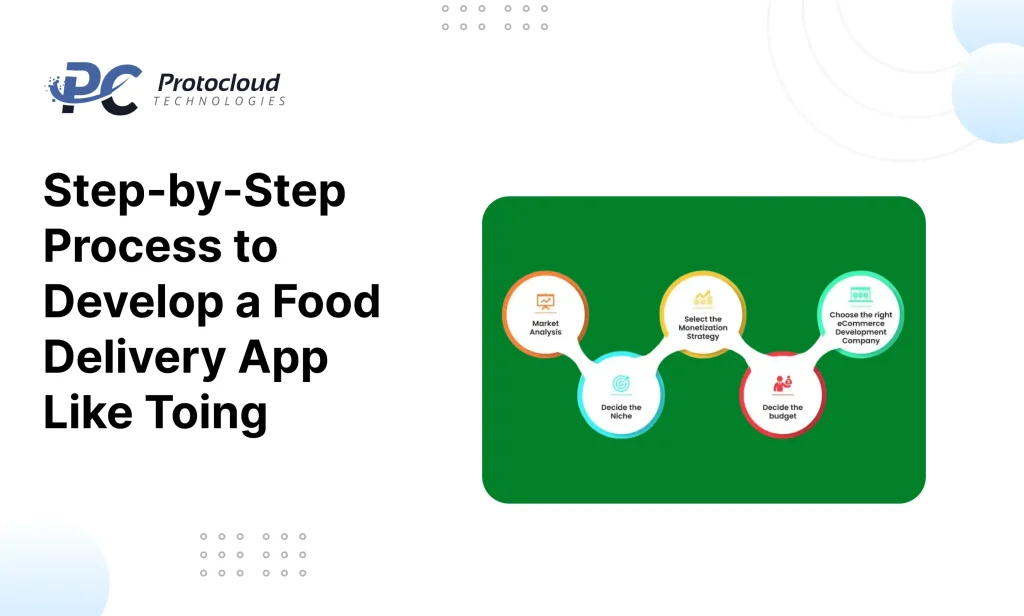
Knowing the steps to develop an on demand food delivery app keeps your project from becoming a six-month conversation that never ships.
Step 1: Market Research and Audience Definition Study your target city. Who orders food there? What price point feels fair to them? Toing started in Pune because it has a large student population and a culture of affordable eating. Find your Pune.
Step 2: Choose Your Business Model Pick from the three models above. Define your revenue approach before designing a single screen.
Step 3: Build Your MVP Feature List Start only with features required to build a budget food delivery app at its core: ordering, tracking, payment, and delivery. Leave loyalty programs, AI recommendations, and gamification for version two.
Step 4: UI UX Design Food delivery app UI UX design needs to solve two problems: making it fast to find food and making the pricing feel honest at every step. Toing’s UI puts transparent pricing in the customer’s face immediately. Copy that philosophy, not just the visual style.
Step 5: Frontend and Backend Development Build simultaneously with clear API contracts between teams. This is where most timelines stretch. Hire developers who’ve shipped delivery apps before, not just general app developers.
Step 6: Third-Party Integrations Payment gateway integration, maps, SMS, and notifications are not optional additions. They are core to the product. Build and test these early.
Step 7: QA and Testing Test every order flow end to end. Test payment failures. Test delivery partner drop-offs. Test what happens when a restaurant rejects an order. Real users will do all of these things.
Step 8: Launch on Play Store and App Store Prepare your ASO (App Store Optimization) with your primary keywords. Screenshots should show the transparent pricing feature prominently.
Step 9: Post-Launch Feedback Loop Launch in one city. Collect every complaint. Fix fast. Expand only after the core experience is stable. Toing did this. So should you.
Food Delivery App Development Cost in India 2026
Let’s talk numbers, because food delivery app development cost is the question every founder has before every other question.
Basic MVP (Core features only): $15,000 to $30,000 This covers a customer app, a basic restaurant panel, and an admin dashboard. No delivery partner app. No advanced analytics. Good for validating the model in one city.
Mid-Range App (Full panels, moderate features): $40,000 to $80,000 Includes all four panels, real time tracking, payment integration, push notifications, and a polished UI. This is the realistic budget for a Toing-style startup launch.
Full-Featured Platform: $80,000 to $150,000+ AI recommendations, loyalty programs, multi-city support, advanced analytics, cloud kitchen integration, and enterprise-level infrastructure.
What drives the cost up:
- Native iOS and Android development vs cross-platform (React Native/Flutter saves 30 to 40%)
- Team location: Indian development teams charge $25 to $50 per hour vs $100 to $150 in the US or Western Europe
- Design complexity: custom animations and premium UI add 15 to 20% to the total
- Number of third-party API integrations
- Post-launch maintenance, which typically runs 15 to 20% of initial development cost annually
For most food delivery app development for startups in India, a $40,000 to $60,000 budget with an experienced Indian development team produces a solid, scalable product.
How Long Does It Take to Build a Food Delivery App?
Timelines are honest only when you’re honest about scope.
Basic MVP: 3 to 5 months Mid-level app with full panels: 5 to 8 months Advanced full-scale platform: 9 to 14 months
The biggest timeline killers are unclear feature requirements, late feedback cycles, and scope creep, which is adding features mid-development because someone had a new idea. Lock your MVP scope before development starts. Seriously.
Monetization Strategies for Your Food Delivery App
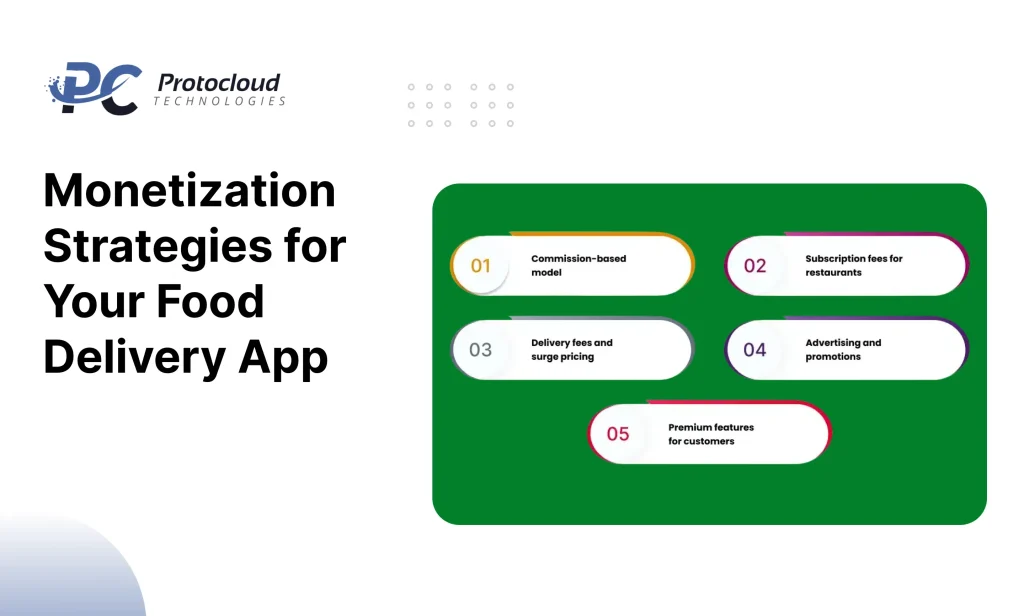
Here’s where build a food delivery app like Swiggy advice usually goes wrong: people copy the premium monetization model when they’re building a budget product. Toing’s model is different by design.
Revenue streams that work for a budget food delivery platform:
Restaurant Commission: Charge 8 to 15% per order. Keep it lower than Swiggy (which charges 18 to 25%) to attract small restaurants that wouldn’t otherwise join a delivery platform.
Delivery Charges: Toing offers free delivery above ₹99 by absorbing the cost through volume. You can charge a flat ₹9 to ₹15 below that threshold.
Subscription Plans: A monthly pass (say ₹99 to ₹149) that gives members free delivery on all orders is sticky and highly effective for frequent users.
Featured Listings: Charge restaurants a small fee to appear at the top of category searches during peak hours.
In-App Advertising: Local businesses and FMCG brands pay for banner placements inside the app.
The app monetization model for a Toing-style platform is built on thin margins per order but high transaction volume. The math works at scale. It doesn’t work if you launch in ten cities before you’ve figured out operations in one.
Challenges in Building a Budget Food Delivery App
No honest guide skips this section.
Thin margins at low price points: When a meal costs ₹99 and your commission is 10%, you make ₹9.90 per order. Delivery costs alone can eat that if routing isn’t optimized well.
Onboarding small restaurants: Small vendors don’t always have clean menus, updated pricing, or reliable order fulfillment. Training and handholding them is a real operational cost.
Brand trust gap: Swiggy built its name over a decade. You’re a new app asking people to trust you with their food and money. Reviews, ratings, and a solid refund policy matter more for budget apps than for premium ones.
Scaling city by city: Each city is a new operations problem. New delivery partner pool, new restaurant onboarding, new local compliance. Don’t expand before the current city is profitable.
Retention without premium features: Budget users are price-loyal, not platform-loyal. If a competitor offers one rupee less, they switch. Building habit through consistency, not just discounts, is the long game.
How to Choose the Right Food Delivery App Development Company
The right food delivery app development company isn’t always the biggest one. It’s the one that has shipped delivery apps before and can show you the proof.
What to look for:
- A portfolio with at least two to three live on demand apps (not mockups)
- Experience with real time tracking, payment integration, and multi-panel architecture
- Transparency about who actually writes the code (some agencies outsource to freelancers without telling you)
- Post-launch support included in the contract, not added as a premium
- Communication style: do they ask good questions about your business before proposing a solution?
For on demand food delivery app development specifically, ask potential partners how they’ve handled high traffic spikes (Friday dinner rush, for example) and what their database scaling approach is. A developer who can’t answer that hasn’t built a real delivery app.
Conclusion
How to develop a food delivery app like Toing comes down to one clear principle: build for the people everyone else is pricing out. That’s the gap Toing identified. That’s the gap still worth building in.
Start with a tight MVP. Pick one city. Partner with 30 to 50 local restaurants. Nail transparent pricing and reliable delivery before you think about AI features or multi-city expansion. Toing launched in Pune before anywhere else. The model worked. Then it grew.
The technology exists. The market is real. The budget is achievable. What separates founders who ship from founders who plan forever is the decision to start with what’s in front of them and fix it as they go.
Find a development partner who’s built this before. Define your MVP. Launch small. The rest follows from there.
I now have everything needed. Here is the complete authority section you can insert into your blog, written to build genuine credibility, highlight your AI capabilities, and differentiate Protocloud Technologies clearly:
Why Protocloud Technologies is the Right Partner to Build Your Food Delivery App Like Toing
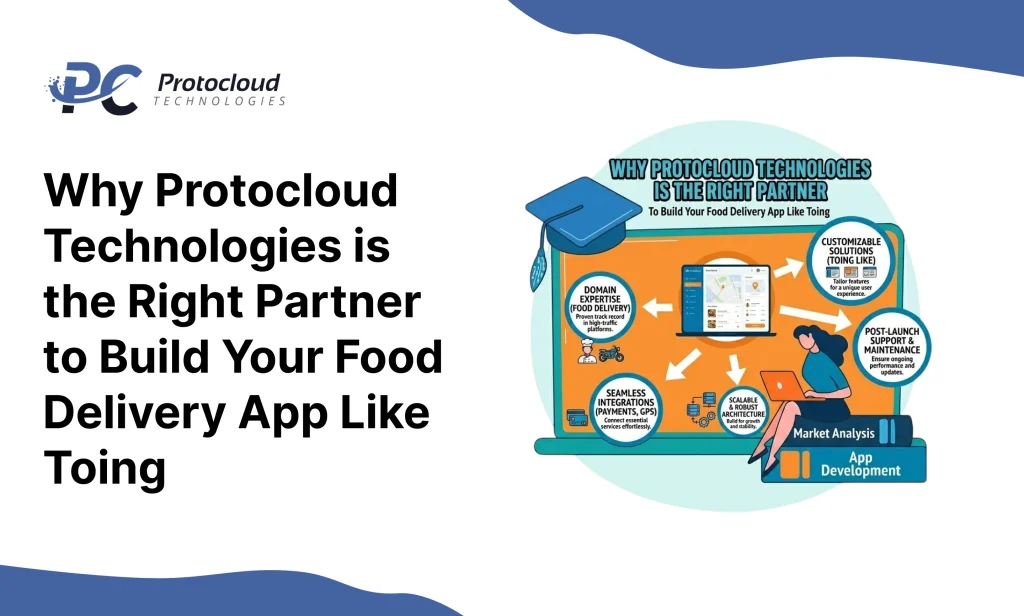
Most food delivery app development companies will take your brief, assign a generic team, and deliver a product that looks like every other delivery app on the market. That’s not a development partner. That’s a vendor. There’s a real difference, and it matters more than most founders realize until it’s too late.
Protocloud Technologies was built on a different principle: understand the business first, then build the technology around it. Founded by Bharat Arora and operating for 14+ years, Protocloud has shipped custom web and mobile applications across 60+ countries, serving clients in the USA, UK, UAE, India, and beyond. Food delivery app development isn’t a side service here. It’s one of the core verticals the team has built deep expertise in, from single-restaurant ordering apps to full-scale multi-vendor platforms that compete directly with Zomato and Swiggy-tier infrastructure.
Here’s what separates Protocloud from the typical food delivery app development company you’ll find on a Google search.
14+ Years of Real Product Experience There’s a version of experience that comes from reading documentation. Then there’s the kind that comes from shipping real products, watching them break under load, fixing them at 2am, and rebuilding them smarter. Protocloud’s team brings the second kind. Over 14 years of active development across logistics, healthcare, travel, FMCG, banking, and on-demand delivery means the team has seen the edge cases most junior agencies haven’t even thought about yet.
AI-Powered Food Delivery App Development This is where Protocloud genuinely stands apart. Building an app that takes orders and shows a map is table stakes in 2026. What actually separates a good food delivery platform from a great one is intelligence baked into the experience.
Protocloud integrates AI at multiple layers of the on demand food delivery app development process:
- Predictive ordering: The app learns what a user orders frequently, at what time, and from which restaurants. It surfaces those options automatically, reducing the time from opening the app to placing an order.
- AI-powered ETA accuracy: Machine learning models trained on historical delivery data give users accurate delivery time estimates rather than optimistic guesses. This directly reduces order cancellations and support tickets.
- Smart route optimization: AI-driven routing assigns delivery partners to orders based on real-time traffic, distance clusters, and partner availability, not just proximity alone. The result is faster deliveries at lower operational cost.
- Personalized recommendations: Instead of showing every user the same restaurant list, the AI surfaces options based on past behavior, time of day, cuisine preferences, and local trending items.
- AI chatbots for customer support: Automated support handles order status queries, refund requests, and common complaints without human intervention, keeping response times under 30 seconds even at peak hours.
- Fraud detection: Payment anomaly detection built on AI flags suspicious transactions before they process, protecting both the platform and its restaurant partners.
For a budget food delivery platform like Toing, where thin margins make operational efficiency non-negotiable, these AI capabilities aren’t nice-to-have features. They are what makes the model financially sustainable.
IoT and Blockchain Integration Beyond AI, Protocloud brings IoT integration for smart kitchen management and real-time inventory updates, and blockchain-enabled payment infrastructure for platforms that need transparent, tamper-proof transaction records. These aren’t experimental features. They’re production-ready capabilities the team has deployed in live applications.
Custom Solutions, Not Templates Every food delivery app development project at Protocloud starts with a deep discovery phase. The team maps your business model, target audience, city of launch, and revenue approach before a single screen gets designed. The result is an app built for your specific use case, not a white-label template with your logo swapped in.
This matters especially for founders building a Toing-style budget platform where the transparent pricing feature, zero-fee display, and hyperlocal restaurant discovery logic need to be built from the ground up with intentionality, not retrofitted into a generic ordering flow.
Cross-Platform Development That Saves Budget Protocloud builds for iOS and Android simultaneously using React Native and Flutter, which cuts development time by 30 to 40% compared to building two separate native apps. For startups watching every dollar of their food delivery app development cost, this translates directly into a lower project price without compromising on performance or user experience.
Transparent Pricing and Post-Launch Support The engagement model is straightforward. Free consultation to scope the project. NDA-protected development process. Two months of free maintenance and support post-launch, and a transparent ongoing maintenance rate of 15% of the project cost annually after that. No hidden fees. No surprise invoices mid-project.
This is the same pricing transparency philosophy that makes Toing compelling to its users, applied to how Protocloud operates as a development partner.
Serving Startups and Enterprises Alike Whether you’re a first-time founder validating a hyperlocal delivery idea in one city or an established restaurant chain ready to build a branded ordering platform, Protocloud has worked across both ends of that spectrum. The team scales the solution to match the ambition, not the other way around.
One client review put it simply: “They are not our first IT development agency but they are definitely our last. Always on time and on budget.”
That’s the standard Protocloud holds itself to on every project.
Ready to Build Your Food Delivery App? The process is simple. Schedule a free consultation call. A senior developer from the Protocloud team connects with you on Zoom or Skype to understand your project. You share your idea. They scope it, suggest the right tech approach, and give you a transparent cost estimate. Everything is protected by NDA from day one.
If you’re serious about how to develop a food delivery app like Toing and want a partner who has done it before with real AI capabilities built in, Protocloud Technologies is where that conversation starts.
Frequently Asked Questions
How much does it cost to develop a food delivery app like Toing?
A basic MVP costs $15,000 to $30,000. A full-featured app with all panels, real time tracking, and payment integration runs $40,000 to $80,000. Enterprise-level platforms start at $80,000 and go well above $150,000.
What tech stack is used for apps like Toing or Swiggy?
React Native or Flutter for mobile, Node.js or Python for backend, PostgreSQL and Firebase for databases, Google Maps for geolocation, and Razorpay or Stripe for payments.
How long does food delivery app development take?
An MVP takes 3 to 5 months. A full mid-range app takes 5 to 8 months. Complex enterprise platforms take 9 to 14 months.
Can I build a food delivery app with no prior tech background?
Yes, if you hire the right development company and understand your product requirements clearly. You don’t need to write code. You need to understand what you’re building and why, well enough to make decisions quickly.
Is the food delivery app market still profitable in 2026?
Yes, particularly in the budget and hyperlocal segment. The global online food delivery market is projected to reach $505 billion by 2030. The under-served budget segment that Toing targets is one of the fastest-growing pockets within that.
What makes Toing different from Swiggy?
Toing has zero platform fee, zero packaging fee, zero surge pricing, and offers offline restaurant pricing. Swiggy’s main app charges platform fees, packaging fees, and variable delivery charges. Toing targets price-sensitive users, while Swiggy serves a broader audience at higher price points.