Building a financial app is a huge move. In 2026, the FinTech app development cost is a top question for every founder. Why? Because the market is changing fast. Users want speed. Regulators want security. You want a product designed to make money, not just look good.
The truth is that FinTech app development costs in 2026 are rising. It’s no longer just about writing code. You have to deal with strict data laws. You need to fight off hackers. You might even want to add AI to help users manage their money. All of these things impact your FinTech app development budget.
This guide is for you if you are a startup founder or an enterprise leader. I will break down the cost to build a FinTech app from start to finish. You will learn about hidden fees. You will see how different regions charge different FinTech app development hourly rates. By the end, you’ll have a clear FinTech app development cost guide to help you plan your next big launch.
What Exactly Is a FinTech App?
Before we talk about FinTech app development pricing, let’s define what we are building. A FinTech app uses new tech to make money management better. It’s faster than a traditional bank. It’s smarter than a paper ledger. It’s accessible right from a smartphone. These apps help people send cash, trade stocks, or get loans in seconds.
The world of FinTech app development services is massive. You have mobile banking apps like Revolut. You have payment wallets like Stripe or PayPal. There are also lending apps that use AI to check credit scores. Each type has a different FinTech software development cost. A simple wallet is cheaper than a full-scale banking platform.
If you are looking for a FinTech app development company, you need to know your category. Are you building for personal finance? Or are you looking at the enterprise FinTech app development cost for a large bank? Knowing your niche helps you get a better FinTech app development cost estimation. It also enables you to choose the right tools for the job.
Average FinTech App Development Cost in 2026
Let’s get to the numbers. How much does it really cost? In 2026, most projects fall into three buckets. A basic app with a few features usually starts at $30,000. This is your FinTech MVP development cost. It covers the essentials like login, profile management, and basic transactions. It’s the best way to test your idea without spending a fortune.
A mid-level app costs between $60,000 and $120,000. This is the sweet spot for FinTech app development for startups. It includes better UI/UX and more integrations. If you want a complex app, the price goes up. We are talking $120,000 to $250,000 or more. This is typical for enterprise FinTech app development costs where security and scale are non-negotiable.
The FinTech app development timeline also matters. A basic app takes about 3 to 4 months. A complex one can take a year. Every extra month adds to the total FinTech app development pricing. You have to pay for developers, testers, and project managers. Time is literally money in the world of software.
App Complexity Estimated Cost (USD) Timeline
Basic (MVP) $30,000 – $60,000 3–4 Months
Mid-Level $60,000 – $120,000 5–7 Months
Advanced / Enterprise $120,000 – $250,000+ 8–12+ Months
Major Factors Affecting Your FinTech Budget
Why is the FinTech mobile app development cost so varied? It comes down to features. Suppose you want biometrics like FaceID, which costs more if you wish to have real-time stock charts, which adds to the FinTech app development budget. Every button and every screen has a price tag. You need to prioritize what your users actually need.
The platform you choose is another significant factor. You can build for iOS and Android separately. This is “native” development. It’s high quality but expensive. Or, you can look at the cross-platform FinTech app development cost. Using tools like Flutter or React Native can save you 30%. You write one code base for both platforms. This is a very popular choice for FinTech app development with Flutter.
Design isn’t just about looking pretty. In finance, design is about trust. A messy app feels unsafe. High-end custom FinTech app development includes deep UX research. You want users to feel calm when they move their money. Good design increases the FinTech app development cost, but it pays off in user retention. Your product should look professional from day one.
Then we have the ” under the hood ” stuff. Your tech stack matters. Using modern languages like Swift, Kotlin, or Node.js helps your app run fast. But you also need APIs. These are bridges that connect your app to banks or credit bureaus. Some APIs are free, but most charge a fee. This is a key part of any FinTech app cost breakdown.
The Cost of Security and Compliance
You cannot talk about FinTech app development cost without talking about security. This is where most people underestimate the budget. Finance is governed by strict regulations across the globe. You have to follow rules like GDPR in Europe or PCI-DSS for payments. These aren’t suggestions. They are the law. If you fail, you get fined.
Secure FinTech app development involves many layers. You need end-to-end encryption. You need multi-factor authentication. You also need regular security audits. These tasks can take up 20% of your total budget. It’s a lot of money, but it’s cheaper than a data breach. A single hack can ruin your reputation forever.
Compliance also requires constant updates. Laws change. You might need a legal expert to review your app. This adds to the FinTech app compliance and security costs. When you ask a FinTech app development company for a quote, make sure they include these costs. Don’t let security be an afterthought. It should be the core of your product.
Where You Build Matters: Global Hourly Rates
Location is the biggest “cheat code” for saving money. If you hire a team in the USA, expect to pay a lot. FinTech app development in the USA rates range from $100 to $150 per hour. It’s expensive because the cost of living is high. However, you get a team that is in your time zone and understands the local market well.
Many startups look at the FinTech app development outsourcing cost to save money. For example, FinTech app development in India is a massive market. Rates there are often $20 to $40 per hour. You can get a high-quality team for a fraction of the price. Eastern Europe is another middle ground, with rates between $40 and $70 per hour.
Choosing the right partner is about balance. You want a team that knows FinTech app development services inside and out. Don’t just pick the cheapest option. Look at their portfolio. Check if they have built financial apps before. A team that doesn’t understand banking will make mistakes. Those mistakes will end up costing you more in the long run.
Feature-Wise Cost Estimation
If you want a detailed FinTech app development cost guide, you have to look at the features. Each piece of the puzzle has its own price. Think of it like building a house. The kitchen costs one price, and the roof costs another. Here is a breakdown of standard features you might want to include in your 2026 app.
- User Login & Authentication: This typically costs between $3,000 and $6,000. It includes email login, social media sync, and biometrics.
- Payment Gateway Integration: Adding Stripe or PayPal takes work. Expect to pay $5,000 to $10,000 to make sure transactions are smooth and safe.
- AI Fraud Detection: This is a hot feature for 2026. It can cost $8,000 to $15,000, but it saves money by stopping bad actors.
- Blockchain Support: If you want crypto or decentralized ledgers, the price jumps. This can add $10,000 to $25,000 to your budget.
- Admin Dashboard: You need a way to manage users and see data. A good dashboard usually costs $4,000 to $8,000 to build.
Choosing the Right Pricing Model
When you talk to a FinTech app development company, they will offer different ways to pay. The fixed price model works best for small projects. You know precisely what you will pay. However, it’s not very flexible. If you want to change a feature halfway through, it can get complicated and expensive.
The “Hourly Rate” or “Time and Materials” model is more common for big apps. You pay for the hours worked. This is perfect for FinTech app development for startups because things change fast. You can pivot based on user feedback. It requires more trust, but it often leads to a better final product.
Finally, there is the “Dedicated Team” model. This is like having your own remote office. It is the best approach for enterprise FinTech app development cost management. You get a dedicated team focused only on your project. They learn your business deeply. It is very cost-effective for long-term growth and maintenance.
Don’t Forget the Hidden Costs
Most people forget about the ” extras.” Building the app is just the beginning. You also have to run it. One high hidden cost is third-party API fees. If you use a service to check credit scores, they will charge you per check. This can eat into your profit margins if you don’t plan for it in your FinTech app development pricing.
Cloud hosting is another ongoing cost. Your app needs a place to live on the web. Using AWS or Google Cloud is standard, but the costs grow as your users grow. You also have to pay for the App Store and Play Store fees. These small costs add up. Always set aside about 20% of your budget as a buffer for surprises.
Then there is the FinTech app maintenance cost. Software is never “finished.” You need to fix bugs. You need to update the app when Apple or Google releases a new OS Usually, maintenance costs about 15% to 25% of your initial development cost every year. If you spent $100,000 to build it, expect to pay $20,000 a year to keep it running perfectly.
How to Lower Your FinTech App Development Cost
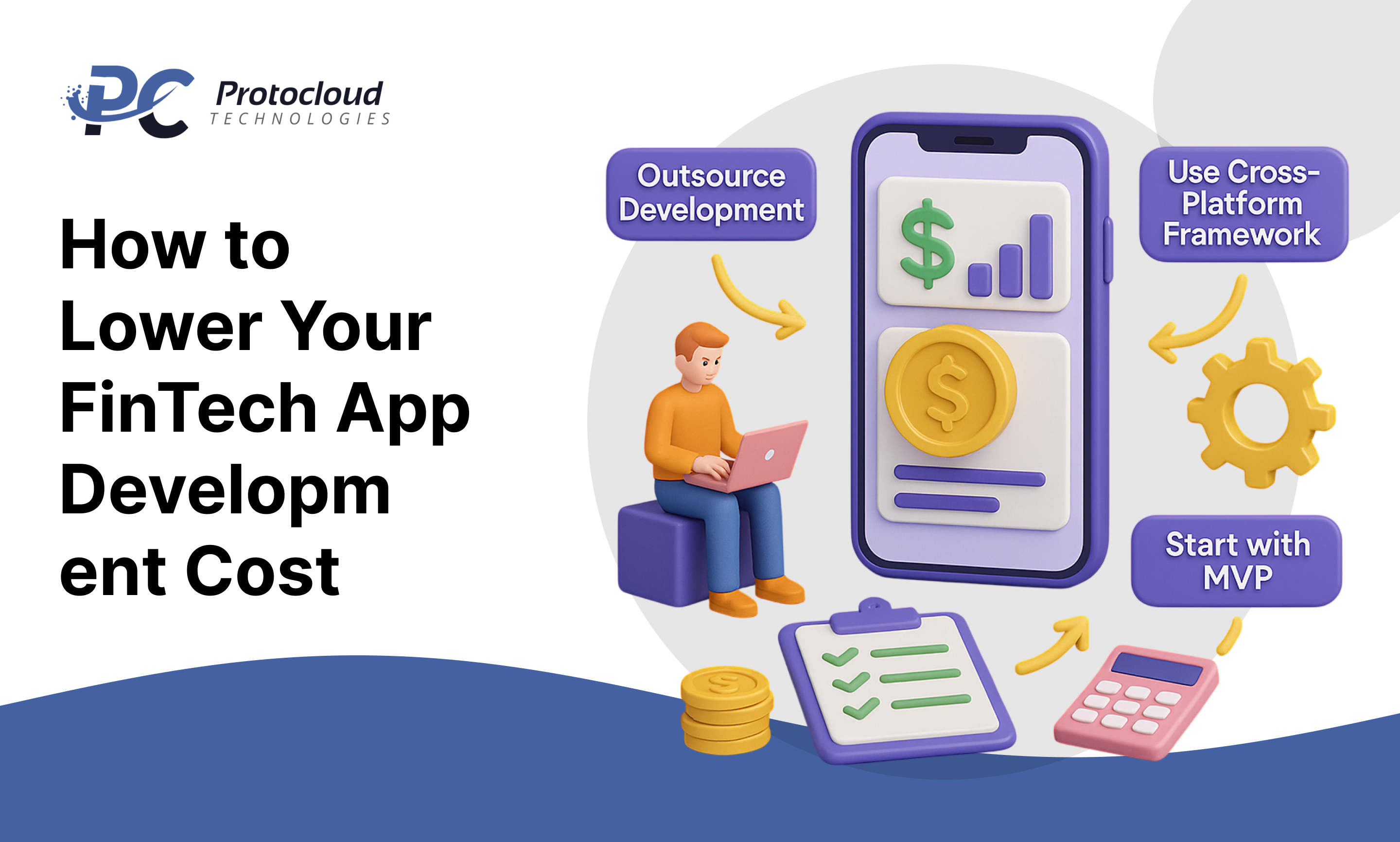
You don’t need to spend millions to start. The best way to save is to launch an MVP. Focus on one problem. Solve it well. Once you have users, you can raise money to build more features. This FinTech MVP development cost approach is how giants like Robinhood and Revolut started.
Another tip is to use open-source tools. You don’t always need to build everything from scratch. There are many secure libraries for encryption and data handling. Also, consider cross-platform FinTech app development cost savings. Building one app for both iOS and Android is a smart move for any budget-conscious founder.
Finally, be very clear about your requirements. Changes during development are expensive. Spend time on your “Product Requirement Document” (PRD). Show it to your FinTech app development services provider. When everyone is on the same page, there are fewer delays. Fewer delays mean a lower FinTech software development cost for you.
Summary of Pricing for Startups vs. Enterprises
Feature Startup (MVP) Enterprise (Scale)
Initial Budget $30k – $70k $150k – $500k+
Core Goal: Validate Idea, Market Dominance
Security Standard Compliance High-Level Audits
User Base 1,000 – 10,000 1M+ Users
Timeline 3-4 Months 12+ Months
Startups should stay lean. Focus on FinTech app pricing for startups that allows for quick changes. Enterprises need to focus on stability. They should look at custom FinTech app development that can handle millions of hits at once. Both paths lead to success, but the budgets look very different.
Frequently Asked Questions
1. How much does a FinTech app cost in 2026?
The FinTech app development cost in 2026 usually ranges from $30,000 for a basic version to over $250,000 for a complex enterprise system.
2. How long does it take to build a FinTech app?
A simple app takes 3 to 5 months. A complex banking app with AI and many integrations can take 9 to 12 months or even longer.
3. Can I build a FinTech app for under $50,000?
Yes. You can focus on a FinTech MVP development cost strategy. Build the core features first and use a team in a region like India to keep costs low.
4. Why is security so expensive in FinTech?
Security requires specialized engineers and constant testing. You have to follow laws like GDPR and PCI-DSS, which adds to the FinTech app compliance and security cost.
5. What is the cheapest way to develop a FinTech app?
The best way to save is to use cross-platform FinTech app development cost strategies (like Flutter) and hire an offshore development team.
Conclusion
The FinTech app development cost is a significant investment. But in 2026, it’s one of the best ways to build a valuable business. Whether you are looking for FinTech app development for startups or a massive corporate tool, the key is planning. Please don’t rush into it. Know your features, pick your team wisely, and never skip on security.
Remember, the cost to build a FinTech app is more than just a price tag. It is the cost of building trust with your users. If you make a fast, secure, and helpful app, they will stay with you for years. Start small with an MVP, listen to your users, and scale your FinTech app development budget as you grow.