Digital products are built to feel natural. A site opens instantly. Navigation feels obvious. Content appears exactly when it should. To the user, everything seems calm and intentional. But that calm is an illusion.
Behind every polished digital experience is constant movement. Ideas are questioned. Priorities shift. Decisions are re-examined at late hours and early morning. It is the hidden realm of web designers, web developers, project managers, and digital marketers, where nothing remains unchanged for a long time.
Online achievement does not come from a single ideal strategy. It is the result of constant adaptation. Work is actually done between jobs, through dialogues, tradeoffs, and momentum.
Web designers: crafting feeling before thought
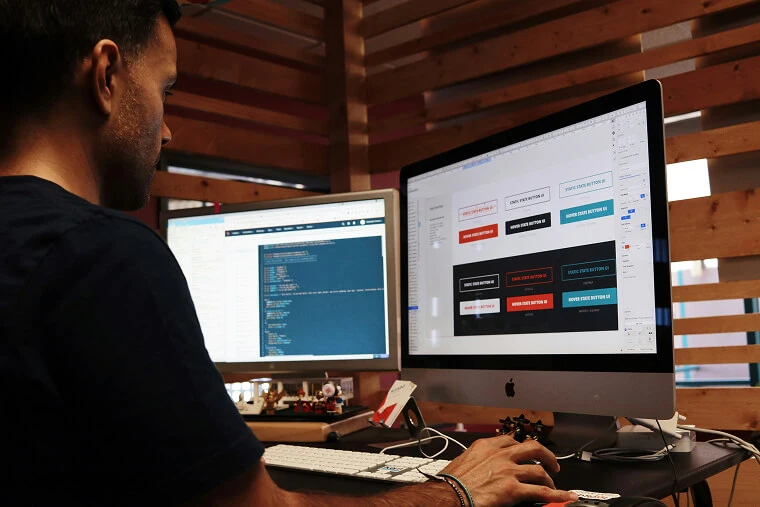
Web designers influence perception before logic can take centre stage. Users make decisions on whether something is clear, confusing, safe, or overwhelming in a matter of seconds. It is not a coincidence that reaction. It is constructed using spacing, color, hierarchy, and rhythm.
The best designers do not think like artists; they think like guides. They softly guide the focus, presenting the user with where to focus and what is most important. They reduce effort by removing noise. A clean layout can answer questions before they are asked.
Design is also about restraint. Knowing when to stop is a skill. Empty space creates focus. Simplicity creates trust. When design works well, users do not notice it; they simply move forward with confidence. Great design never demands attention. It earns it quietly.
Developers: making ideas survive reality
Developers take fragile concepts and force them to survive the real world. Their systems must handle growth, mistakes, updates, and unpredictable behavior without collapsing. When everything works, their effort disappears. When something fails, it becomes impossible to ignore.
Many projects grow into complex directions, such as IoT application development, where software must communicate with physical devices, sensors, and changing environments. In these scenarios, developers think beyond interfaces and visuals. Timing, accuracy, and reliability become critical.
What defines strong developers is discipline. They think ahead. They avoid shortcuts that create future problems. They write code that other people can understand and improve. Their goal is not speed alone, but stability over time. Their best work feels boring in the best possible way: nothing breaks.
Project managers: creating direction inside uncertainty
Project managers live where pressure gathers. Deadlines, expectations, budgets, and emotions all meet in one place. Their task is not to remove chaos, but to keep it productive.
Great project managers notice subtle shifts. A delayed reply. A vague comment. A sudden loss of energy. They step in early, before confusion turns into conflict. Instead of pushing harder, they clarify.
Their real strength is structure. They turn large, abstract goals into manageable steps. They turn scattered opinions into clear priorities. With effective project management, one gets the impression of progress being made, even in the event of complex work. When teams are not stressed, they operate at a faster rate.
Digital marketers: translating behavior into meaning
Digital marketers operate in a noisy environment. Attention is scarce, and everybody is competing to gain it. It is not about quantity, but about relevancy that leads to success.
Marketers study how people behave. What they search for. Where they pause. When they leave. These actions tell stories. The most effective marketers will listen to understand what to say.
When is everything as much as it is who? An elementary concept presented at the appropriate time gains more trust quicker than a smart campaign presented too soon or too late. Holdback frequently conquers extravagance. Messaging is natural when marketers are in line with designers and developers. It is an experience, rather than an experience that is superimposed.
Where roles blend, progress accelerates
The most successful digital teams allow roles to overlap. Designers who understand technical limits create smarter concepts. Developers who care about emotion build smoother journeys. Marketers who respect the product avoid empty promises. Project managers who protect creative space prevent burnout.
This overlap reduces friction. Feedback travels faster. Problems surface earlier. Ideas improve instead of stalling. The work stops feeling like a chain of handoffs and starts feeling like a shared mission.
Great digital products are rarely perfect at launch. They become great because teams evolve together.
Conclusion: the human core of digital excellence
Technology changes constantly. Tools improve. Platforms rise and fall. But the foundation of digital success remains human collaboration. The digital marketers, project managers, web designers, and developers perform at their best when they are connected as a single system.
Complexity is easier to deal with when communication flows and silos are replaced with trust. The last experience seems simple, not because it was simple to construct, but because it was moulded from numerous opinions.
It is this invisible coordination that is the real strength in a digital world that is already too crowded. It might never be visible to users, but they experience it in every interaction, every confident decision, and every moment of ease.