Introduction
Every year, businesses spend millions on enterprise AI projects. The goal sounds exciting. Automate workflows. Improve productivity. Reduce costs. Make smarter decisions faster.
But here’s the reality:
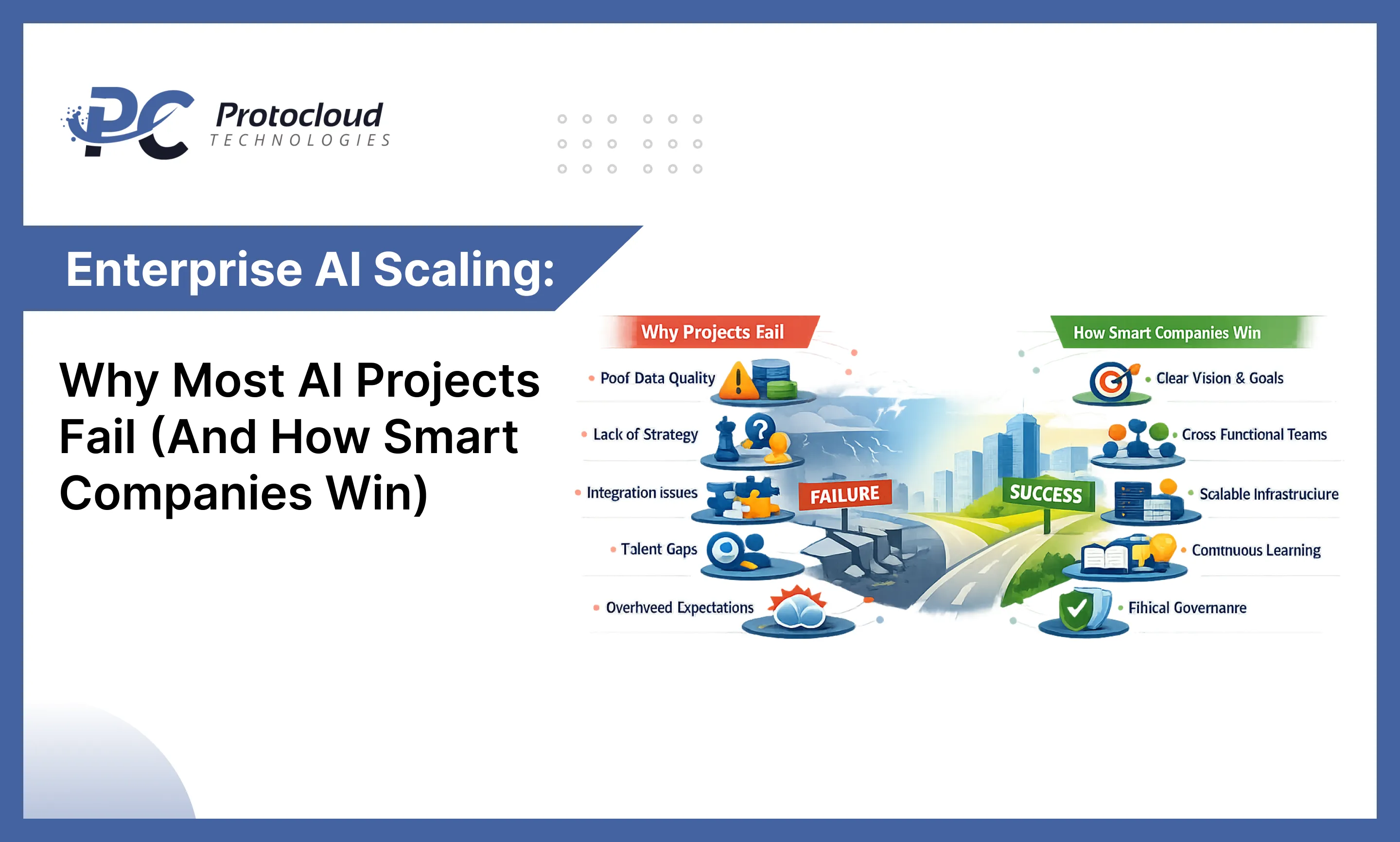
Most enterprise AI initiatives never reach full production. In fact, nearly 60% of AI pilots quietly fail before they scale across the organization.
And that’s a serious problem. Because the global enterprise AI market is exploding. It was valued at USD 23.95 billion in 2024 and is expected to reach USD 1,55,210.3 million by 2030.
The money is moving fast. But many companies still struggle with AI implementation in enterprises because they focus on tools instead of strategy.
Here’s the deal:
Successful enterprise AI scaling is not about buying more AI software. It’s about building scalable AI solutions that actually work inside real business operations.
And that requires the right AI infrastructure, AI governance, security planning, workflow ownership, and long-term AI adoption strategy.
In This Guide, You’ll Learn
- Why most AI pilots fail
- The biggest AI scaling challenges enterprises face
- How to build enterprise AI solutions that scale
- Best practices for AI governance and security
- Real-world lessons from companies using AI successfully
Let’s dive in.
Why Enterprise AI Scaling Is So Difficult
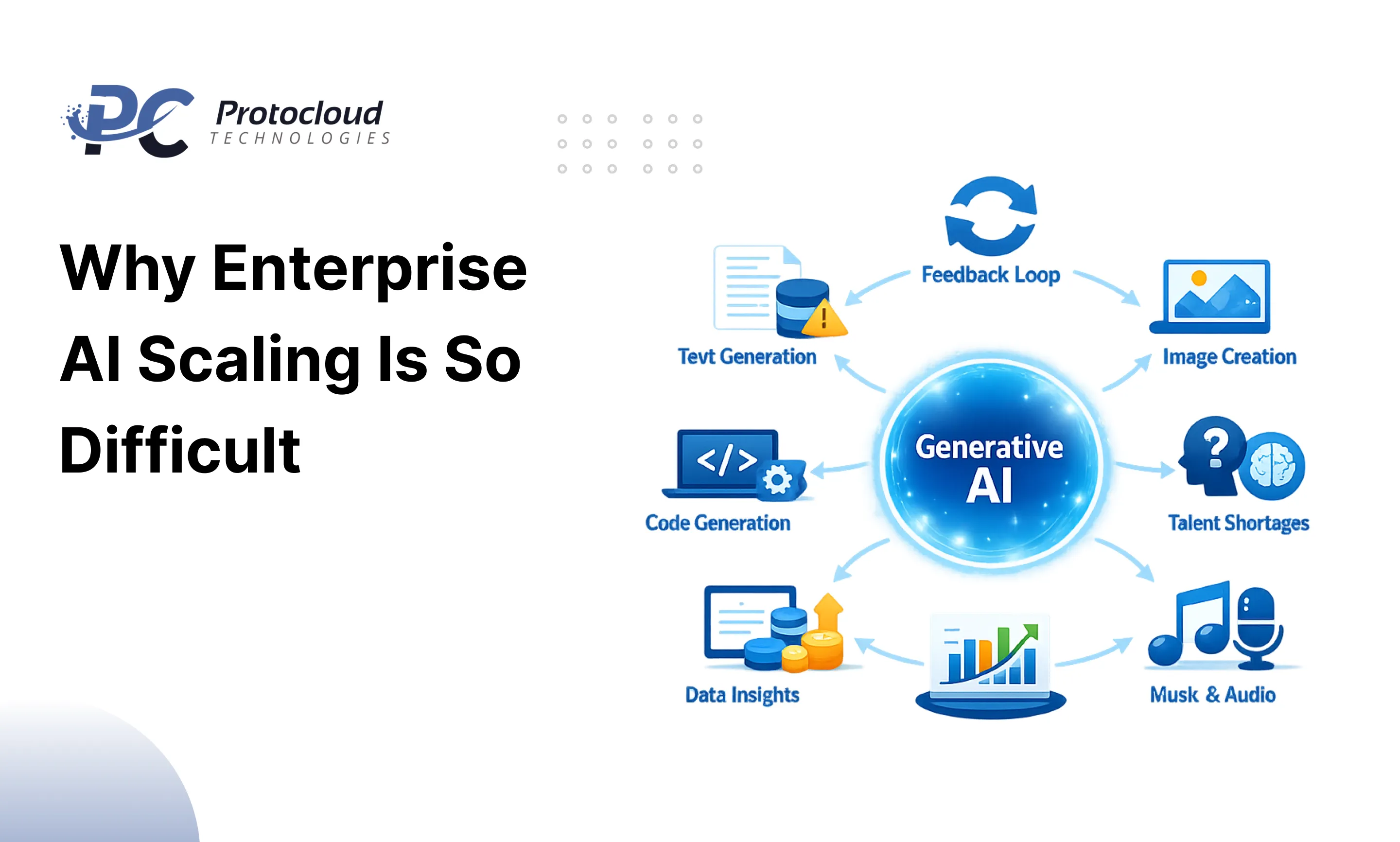
At first, AI looks easy.
A team tests a chatbot.
Marketing uses AI content tools.
Sales builds an AI lead scoring workflow.
Customer support experiments with AI-powered responses.
Things look promising.
But once companies try scaling those workflows across departments, problems appear fast.
Why?
Because most businesses were never designed for AI operational scalability.
Their systems, workflows, and data structures were built long before AI entered the picture.
And that creates friction everywhere.
The Biggest Problem: Poor Data Maturity
AI depends on clean and structured data.
Without it, even the best AI model fails.
Many organizations suffer from what experts call a “data maturity gap.”
In simple terms:
Their business data is scattered, outdated, incomplete, or disconnected.
One department stores data differently from another.
Teams use separate tools.
Important business information lives inside spreadsheets, Slack chats, emails, or disconnected apps.
The result?
AI systems cannot produce reliable outputs.
And when businesses lose trust in AI-generated decisions, adoption slows down.
This is one of the biggest AI implementation challenges companies face today.
Security And Cost Still Dominate Enterprise AI Conversations
For enterprise leaders, two concerns always come first:
- AI security
- AI cost optimization
And honestly, both concerns are valid.
Most enterprise AI solutions rely on third-party infrastructure.
That raises major questions around:
- AI data security
- Compliance
- Customer privacy
- Internal business confidentiality
No company wants sensitive business information leaking into external AI systems.
At the same time, enterprise AI scaling is expensive.
Infrastructure costs rise quickly.
Training models costs money.
Monitoring workflows costs money.
Hiring AI specialists costs money.
That’s why many executives hesitate before investing deeply into AI transformation.
But there’s a catch.
The companies that delay AI adoption too long often lose competitive advantage.
Because competitors are already improving operational efficiency with AI business automation.
The Real Secret Behind Successful AI Transformation
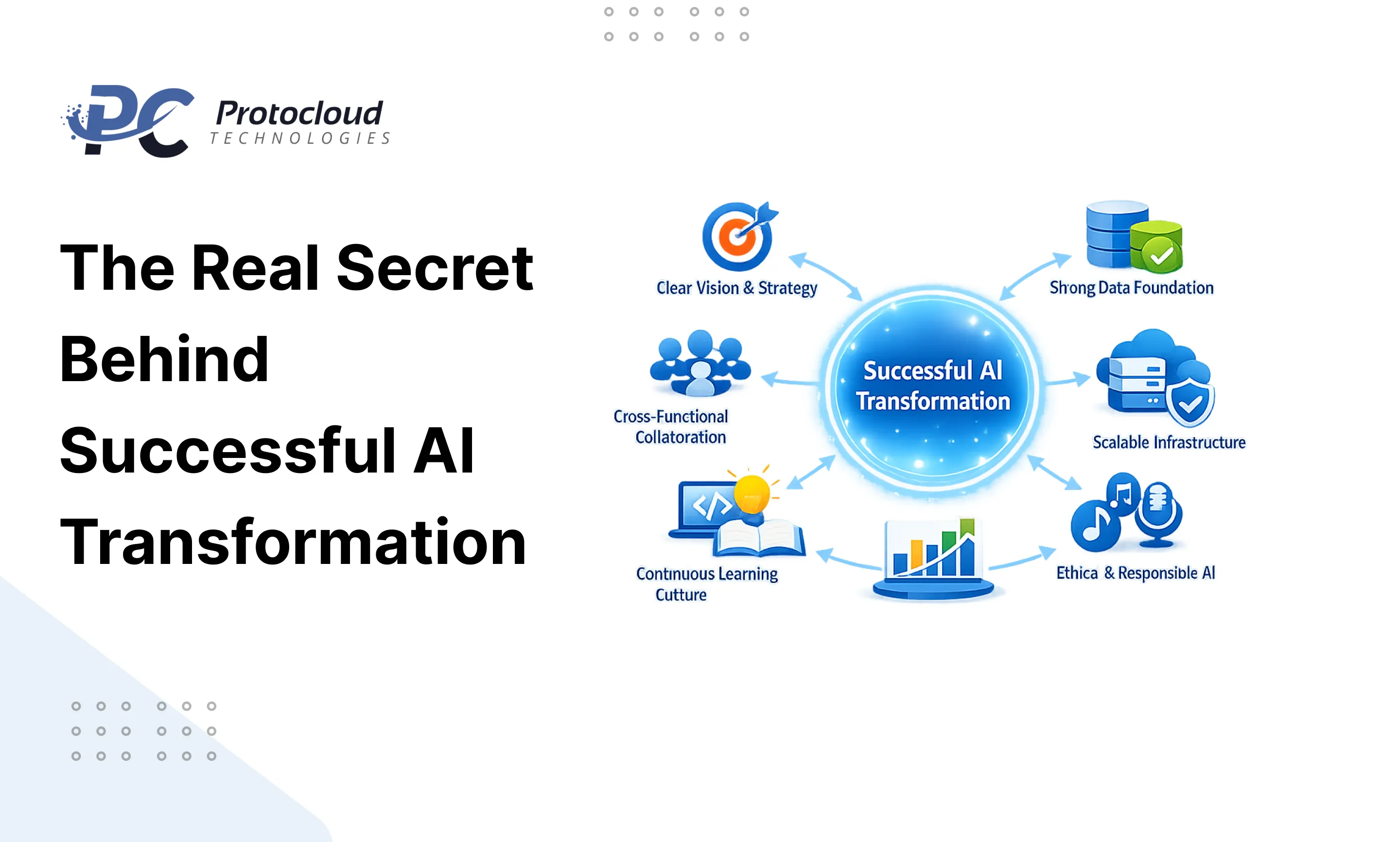
Most companies think AI success comes from advanced models.
It doesn’t.
The companies winning with enterprise AI focus on operational systems first.
They build:
- Strong AI governance frameworks
- Shared AI workflows
- Clear ownership structures
- AI approval workflows
- Human oversight systems
- AI monitoring systems
- Scalable AI infrastructure
In other words:
They treat AI as part of business operations, not as a side experiment.
That mindset changes everything.
6 Enterprise AI Scaling Mistakes Most Teams Make
1. Keeping AI Workflows Trapped Inside Individual Teams
This happens constantly.
Employees discover AI productivity tools and create useful automations for themselves.
One team builds reporting automation.
Another creates customer support workflows.
A third builds AI workflow templates for lead management.
The Problem
Nobody shares anything.
So teams waste time rebuilding workflows that already exist elsewhere inside the company.
This slows AI operational transformation dramatically.
How Smart Companies Fix This
Successful organizations encourage AI workflow sharing across departments.
They create centralized libraries for:
- AI prompts
- Workflow templates
- AI automation tools
- Internal best practices
This creates AI-enabled productivity at scale.
Employees learn faster because they build on existing systems instead of starting from scratch.
Companies like Zapier use internal AI collaboration tools to help teams share automation ideas and proven workflows across departments.
That approach increases AI operational efficiency while reducing duplicate work.
2. Nobody Owns The AI Workflow
This is one of the most dangerous AI scaling challenges.
A company launches an AI workflow.
It works well initially.
Then performance slowly declines.
Why?
Because nobody owns it.
No one monitors outputs.
No one updates prompts.
No one checks data quality.
Eventually, the workflow becomes unreliable.
How To Avoid This Problem
Every high-impact AI workflow needs two owners:
Business Owner
This person owns the business outcome.
For example:
- Conversion rates
- Customer satisfaction
- Revenue growth
Technical Owner
This person manages:
- AI workflow execution
- Prompt quality
- AI data management
- Infrastructure monitoring
This structure improves accountability and reduces AI operational risk.
It also makes enterprise AI integration far easier over time.
3. Applying The Same Governance To Every AI Workflow
Not every AI system presents the same level of risk.
That matters.
A simple AI meeting summary tool does not require the same oversight as an AI-powered customer support agent.
Yet many companies either:
- Over-govern everything
- Or govern nothing
Both approaches fail.
A Better AI Governance Strategy
Smart businesses classify workflows by impact level.
Low-Impact Workflows
Examples include:
- Meeting summaries
- Draft generation
- Internal productivity automation
These require light oversight.
Medium-Impact Workflows
Examples include:
- Reporting automation
- AI-driven decision making
- Prioritization systems
These need periodic reviews and anomaly alerts.
High-Impact Workflows
Examples include:
- Financial workflows
- Compliance systems
- AI-powered customer service
- Revenue-impacting automation
These require:
- Audit trails
- Escalation systems
- Human oversight
- AI governance policies
This layered AI governance framework improves safety without slowing innovation.
4. Failing To Define Human Oversight
Many AI workflows begin with human review.
But over time, employees stop checking recommendations carefully.
They trust the system too much.
That’s risky.
Especially for high-impact workflows.
Here’s The Smarter Approach
Classify each AI system into one of three categories:
Informing
AI generates suggestions or summaries.
Humans make final decisions.
Recommending
AI suggests actions.
Humans approve them.
Executing
AI acts automatically using predefined rules.
This framework creates stronger AI workflow governance.
It also helps businesses define escalation paths before mistakes happen.
And that’s critical for enterprise AI security and compliance.
5. Measuring AI Adoption Instead Of Business Impact
This mistake is everywhere.
Companies proudly report:
- “80% of employees use AI”
- “Our AI generated 500 reports this month”
But those numbers mean very little.
What Matters Is Business Impact
Did AI improve customer experience?
Did revenue increase?
Did response times decrease?
Did operational costs drop?
That’s what enterprise AI solutions should optimize.
How To Measure AI Success Properly
Before launching any AI workflow, establish a baseline.
Track metrics like:
- Conversion rates
- Customer satisfaction
- Resolution times
- Employee productivity
- Cost savings
Then compare post-AI performance against those numbers.
This creates measurable AI business intelligence instead of vanity metrics.
6. Rolling Out AI Without Clear Policies
This is one of the fastest ways to create chaos.
Many employees want to use AI.
But companies never define:
- Approved AI tools
- AI compliance rules
- Data restrictions
- Review processes
So employees either avoid AI completely or use random tools without oversight.
Neither outcome is good.
Build An AI Governance Roadmap Early
Your AI transformation roadmap should answer simple questions:
Which AI Tools Are Approved?
Create a clear list.
This reduces shadow AI usage.
What Data Can Employees Use?
Define boundaries clearly.
For example:
- Customer PII may be restricted
- Internal financial data may require approval
- Marketing drafts may be allowed
What Review Process Exists?
Customer-facing AI workflows should always require approval and monitoring.
Strong AI governance models create trust inside the organization.
And trust accelerates AI adoption.
Why Enterprise AI Infrastructure Matters More Than Most Companies Realize
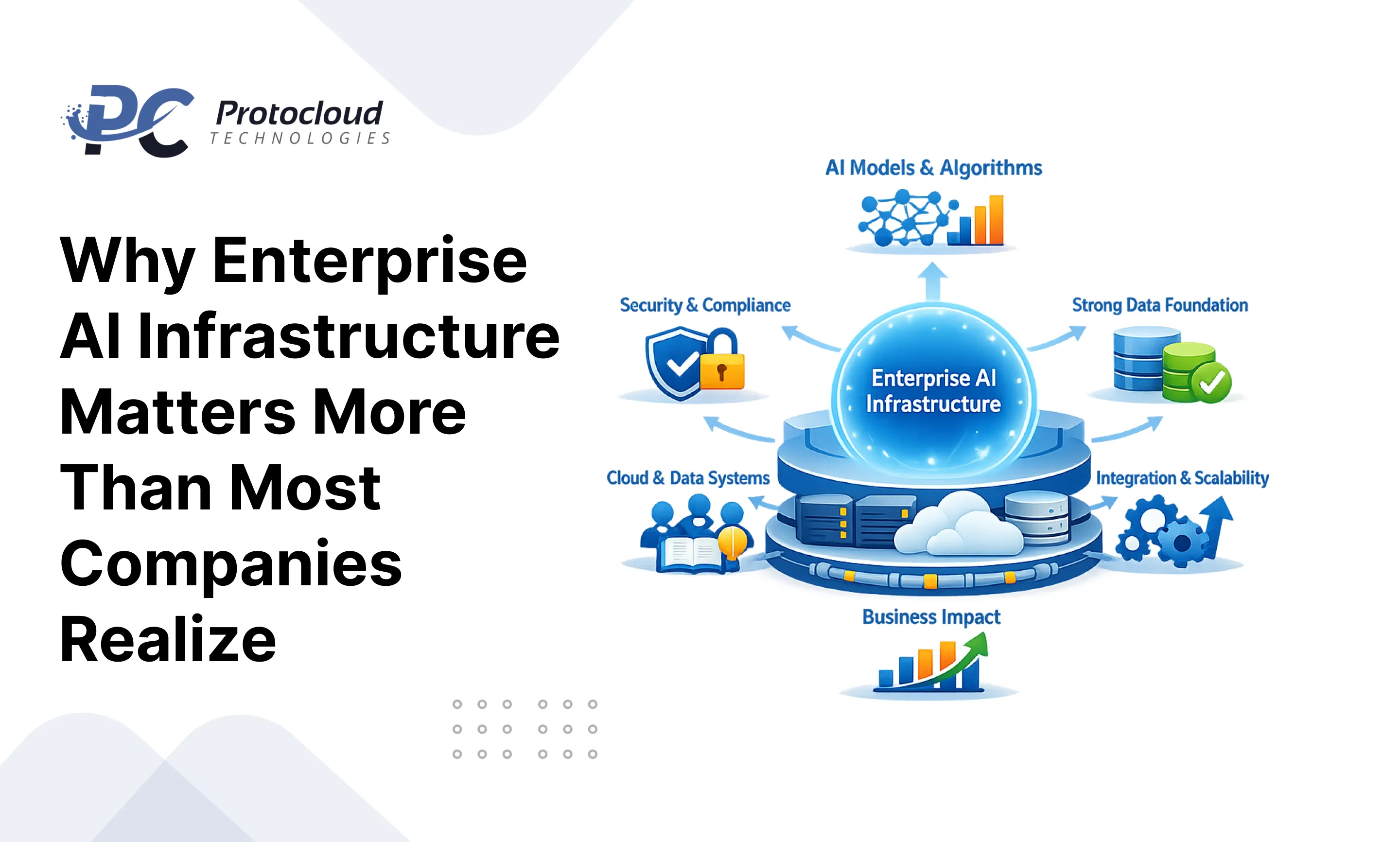
AI infrastructure scaling is often ignored during early pilots.
That’s a mistake.
Because small AI pilots rarely stress infrastructure.
Production-level AI does.
At scale, businesses need systems that support:
- AI workflow management
- Real-time automation
- Secure integrations
- High-volume processing
- Audit logging
- AI workflow approvals
Without modern infrastructure, AI systems become unreliable fast.
That’s why scalable AI solutions require long-term architectural planning.
Not just experimentation.
How Automation Platforms Help Enterprise AI Scale
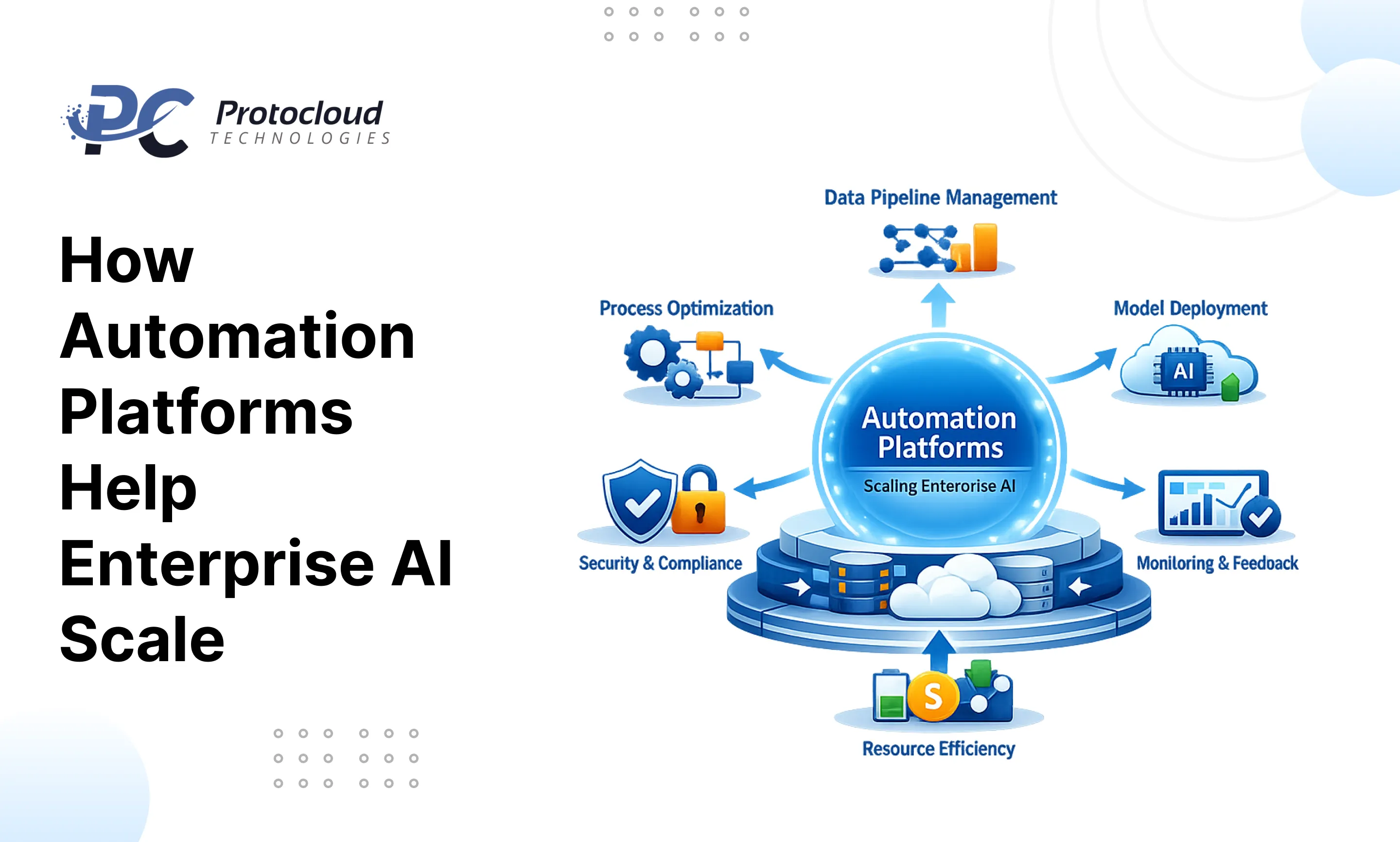
Modern enterprise automation platforms simplify AI deployment dramatically.
Platforms like Zapier help organizations connect workflows across thousands of tools.
That improves:
- AI workflow collaboration
- Workflow visibility
- AI-powered organizational workflows
- AI business automation tools
- Cross-team automation
More importantly, enterprise platforms help leadership maintain visibility and control.
Features like:
- Role-based permissions
- Audit trails
- Approval systems
- AI workflow approvals
- AI monitoring systems
make enterprise AI scaling much safer.
And safer systems scale faster.
Best Practices For Successful Enterprise AI Scaling
Start Small, Then Scale
Do not automate everything at once.
Start with one measurable workflow.
Prove value first.
Then expand.
Focus On Operational Efficiency
The best AI workflows solve real business problems.
They reduce friction.
They save time.
They improve customer experience.
That’s where AI-driven business growth happens.
Build Shared Learning Systems
Encourage AI team collaboration.
Document successful workflows.
Share prompt libraries.
Promote peer learning.
This accelerates enterprise AI adoption naturally.
Prioritize AI Governance Early
Do not wait for problems before building policies.
Strong AI governance policies reduce risk and improve trust.
Keep Humans In High-Risk Workflows
Human oversight still matters.
Especially in:
- Finance
- Compliance
- Healthcare
- Customer support
AI should assist humans, not replace accountability.
The Future Of Enterprise AI
Enterprise AI trends are moving fast.
But one thing is becoming clear:
The companies that scale AI successfully will dominate their industries.
Not because they have better AI models.
But because they build better systems around those models.
That includes:
- AI governance
- AI infrastructure
- AI workflow integration
- Human oversight
- Security
- Operational scalability
The future belongs to organizations that combine AI innovation with operational discipline.
Conclusion: Enterprise AI Scaling Is About Systems, Not Tools
Enterprise AI is no longer optional.
It’s becoming a core part of enterprise digital transformation.
But successful AI implementation in enterprises requires much more than experimenting with AI tools.
Companies must build scalable AI solutions supported by:
- Strong AI governance frameworks
- Clear workflow ownership
- Secure infrastructure
- Human oversight
- Business-focused measurement systems
The organizations that solve these challenges will unlock massive operational efficiency and long-term growth.
The ones that ignore them?
They’ll continue running expensive AI pilots that never scale.
Now is the time to build enterprise AI systems that are secure, scalable, and designed for real business impact.
FAQs
Why do most enterprise AI pilots fail?
Most AI pilots fail because companies lack clean data, scalable infrastructure, workflow ownership, and proper AI governance systems.
What is enterprise AI scaling?
Enterprise AI scaling means expanding AI workflows across departments and business operations while maintaining performance, security, and operational control.
Why is AI governance important for enterprises?
AI governance helps businesses manage risk, improve compliance, maintain security, and ensure AI systems operate responsibly.
What are the biggest AI scaling challenges?
The biggest challenges include poor data quality, weak infrastructure, unclear ownership, lack of governance, and difficulty measuring business impact.
How can companies securely scale AI?
Companies can securely scale AI by using approved AI platforms, implementing audit trails, defining access controls, using human oversight, and creating clear AI governance policies.