Imagine telling a computer, “Write a song for me.” Design me a logo. Find me a new drug compound.”
And it actually does it.
That’s not science fiction anymore. That’s generative AI — and it’s changing how businesses operate, create, and compete.
But here’s the thing.
Most people still don’t fully understand what generative AI is, how it works, or why it matters for their organization. They’ve heard the buzzwords. They’ve seen the headlines. But they’re still fuzzy on the details.
In this guide, I’ll break it all down clearly. You’ll learn what generative AI is, where it’s being used right now, why you should build with it, and exactly how to get started.
Let’s dive in.
What Is Generative AI?
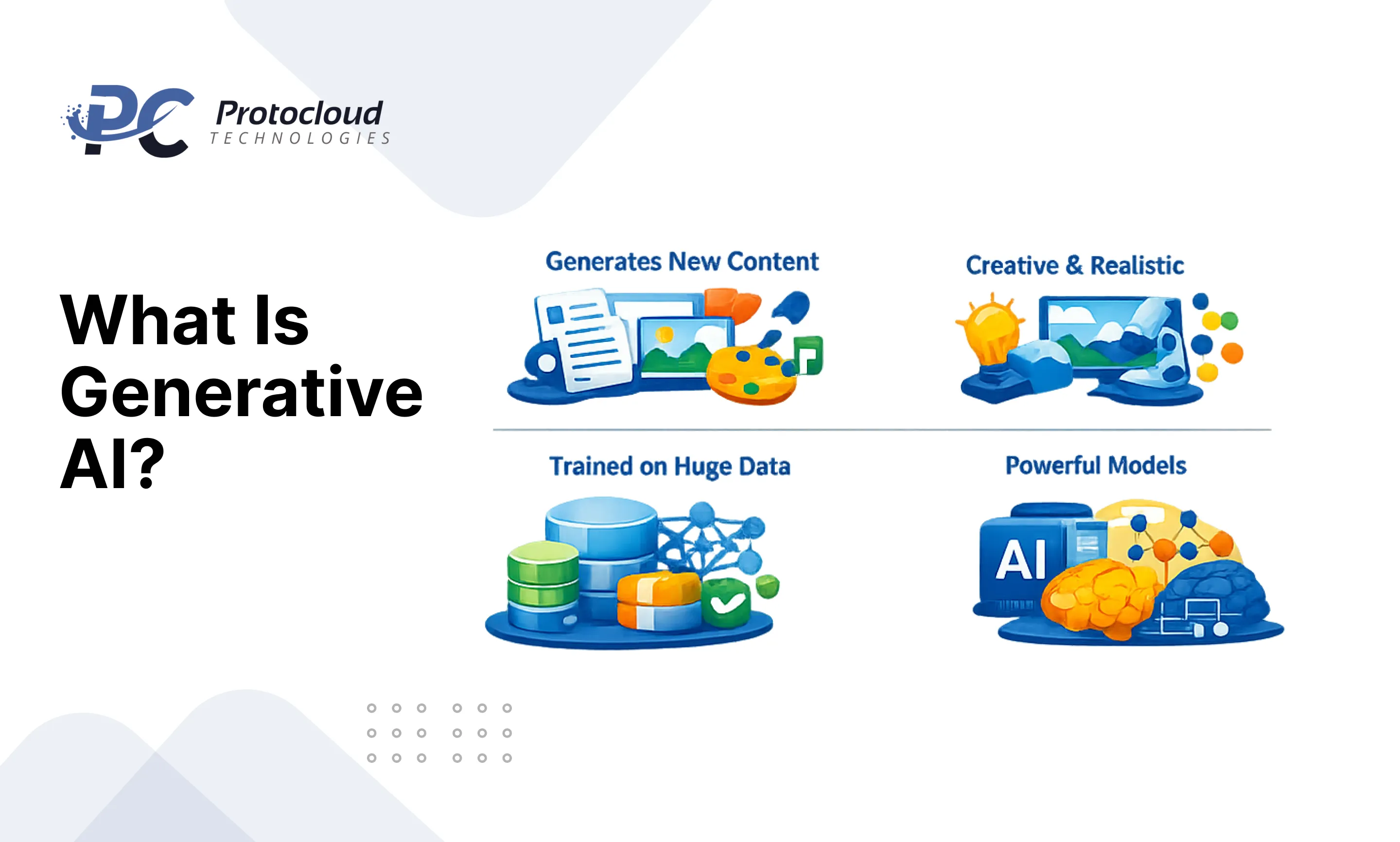
Here’s the deal: generative AI enables computers to create new content using existing data.
That content can be text, images, audio, video, code — you name it. The keyword is generate. Traditional AI analyzes data and makes predictions. Generative AI goes a step further. It learns the underlying patterns in the data and then produces something entirely new based on what it learned.
Think of it like this. You show a child thousands of paintings. Over time, they begin to understand color, composition, and style. Eventually, they can paint their own original work. Generative AI does something similar — just at a massive, lightning-fast scale.
The Technology Behind It
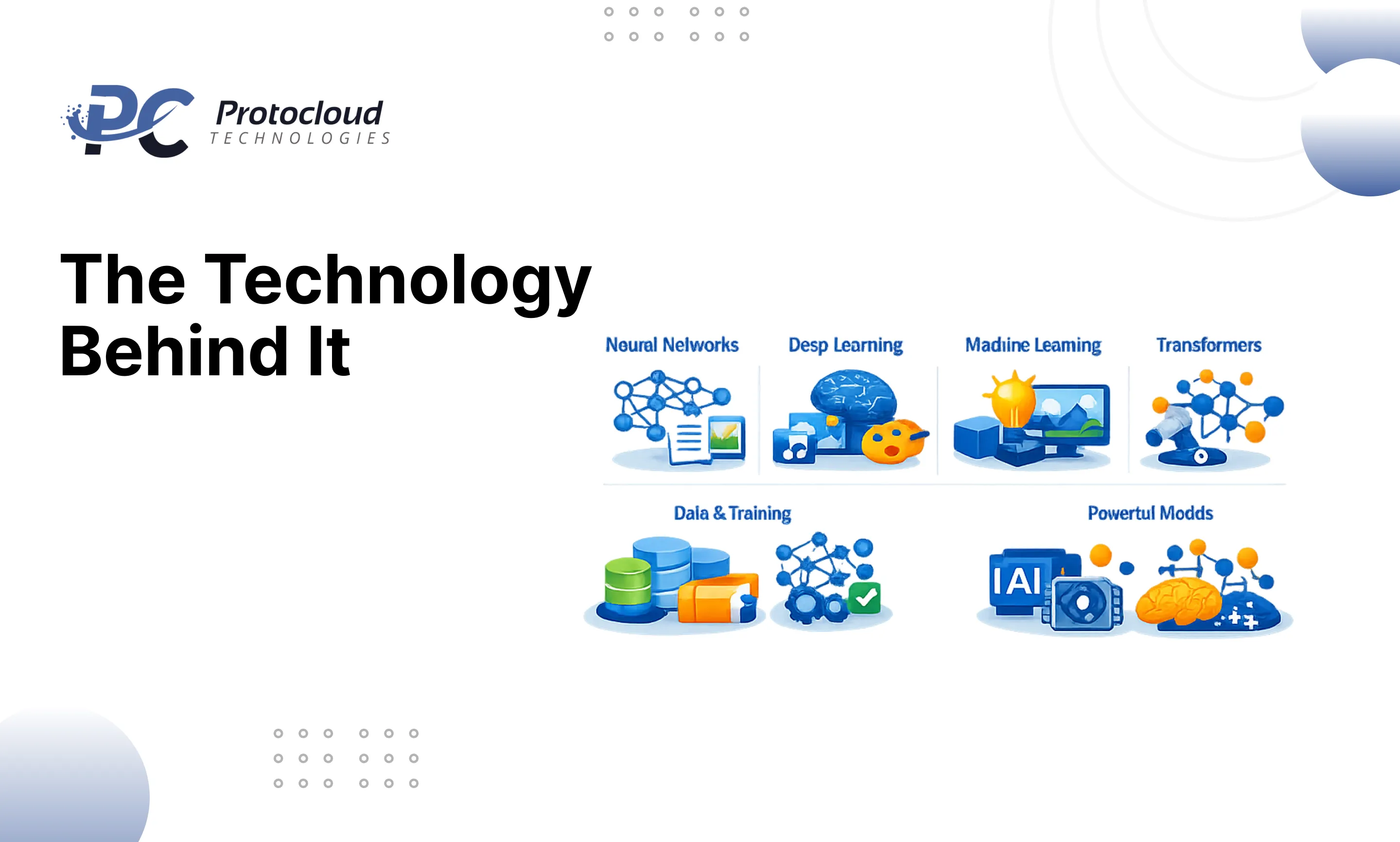
Several core techniques make generative AI possible.
Transformers are the most talked-about. Models like GPT-3, ChatGPT, LaMDA, and Wu-Dao are all transformer-based. They work by mimicking how humans pay attention — focusing on the most important parts of an input before generating a response. They’re trained on billions of text samples and can write, summarize, translate, and reason with startling accuracy.
Generative Adversarial Networks (GANs) work differently. They use two competing neural networks — one generates content, the other tries to detect whether it’s real or fake. Over time, the generator gets so good that the detector can’t tell the difference. This is how AI creates photorealistic images.
Variational Autoencoders (VAEs) are used for tasks like synthetic data generation and diverse content creation. They compress data into a compact representation, then reconstruct it in new and varied forms.
Together, these techniques power the generative AI tools that are reshaping industries today.
Generative AI Applications: Where It’s Being Used Right Now
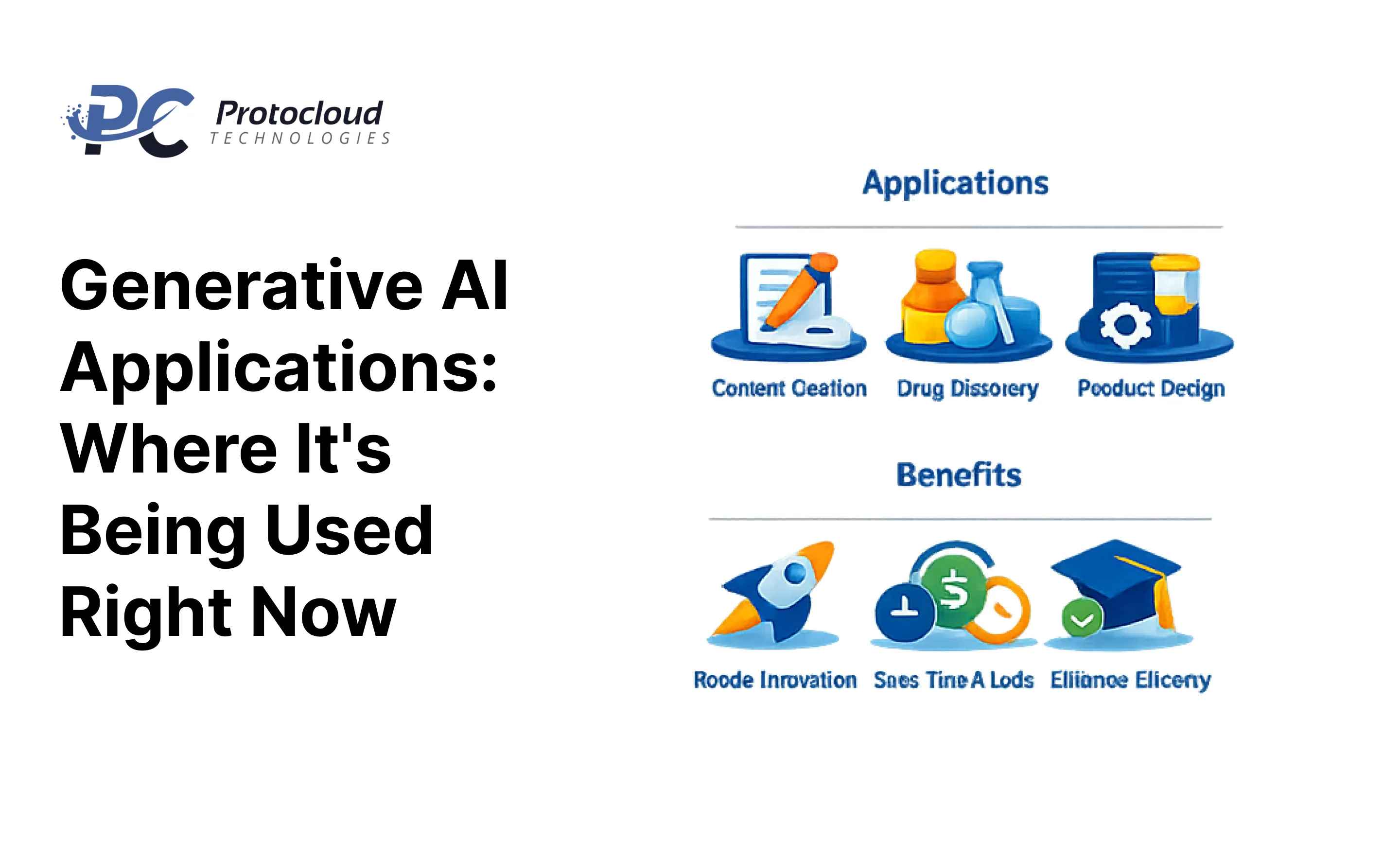
Generative AI isn’t a niche lab experiment. It’s already deployed across a wide range of industries. Here are some of the biggest real-world applications.
Art and Creativity
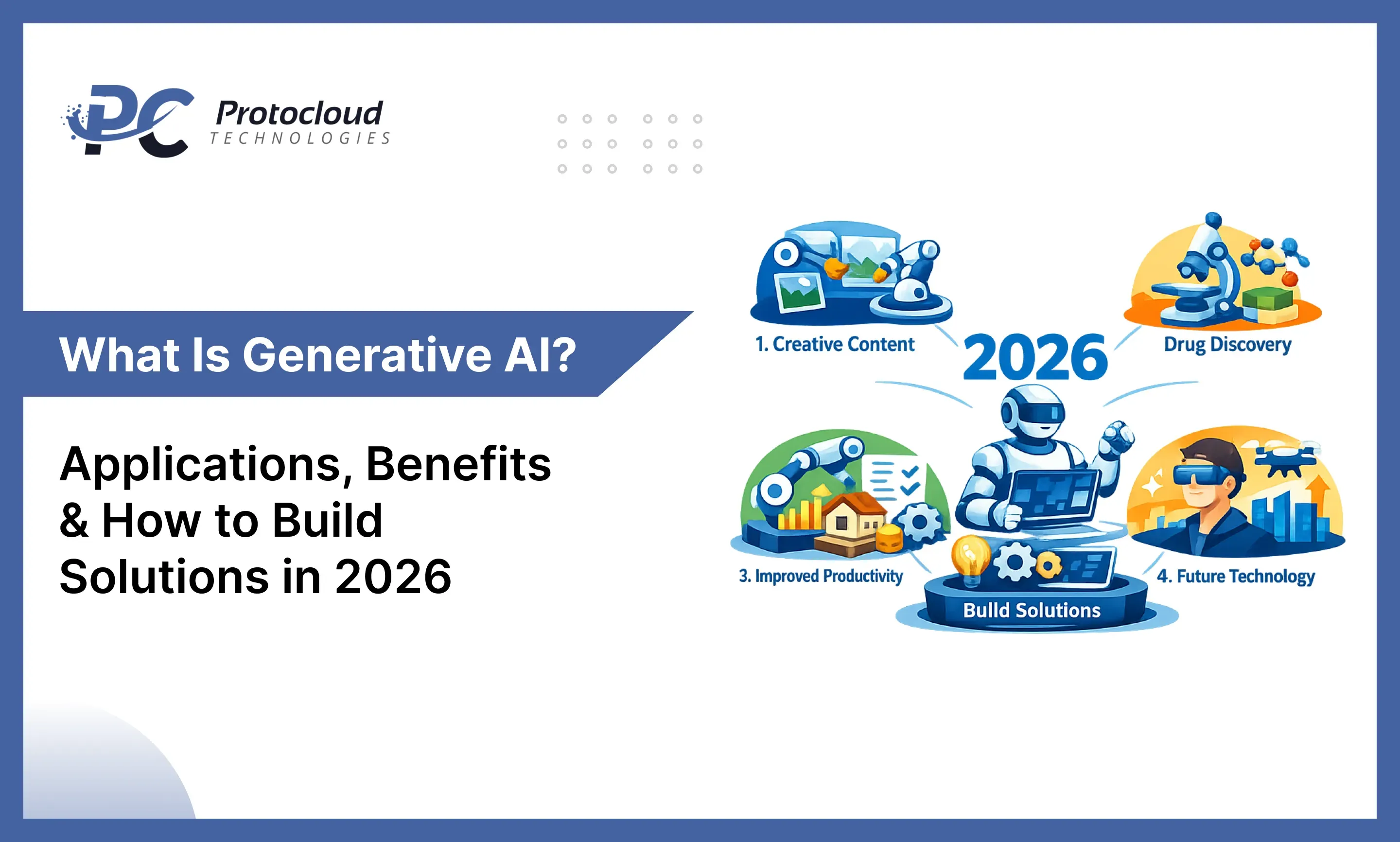
Artists are using generative AI to break creative boundaries. From generating unique digital paintings to composing original music, generative models act as creative partners. They don’t replace the artist — they amplify what’s possible. A designer can generate dozens of concept variations in minutes. A musician can explore entirely new sonic landscapes with a few prompts.
The result? Human creativity, supercharged by machine intelligence.
Content Generation
In the digital world, content is everything. And there’s never enough of it. Generative AI is changing that. Marketers, media companies, and advertisers use AI text generation and AI image generation to produce high-quality content at scale. Blog posts, ad copy, social media captions, product descriptions — generative models can handle all of it.
This doesn’t mean humans are out of the loop. The best results come from people and AI working together, with humans guiding, editing, and refining.
Healthcare
This is where generative AI gets truly exciting. In medical imaging, AI models generate synthetic data to train diagnostic algorithms — solving the problem of limited medical datasets. In drug discovery, generative models simulate molecular structures, helping researchers identify promising drug candidates far faster than traditional methods.
What used to take years in a lab can now be explored in days.
Gaming
Ever played a game where every world feels unique? Generative AI is behind that. Game studios use procedural content generation to build dynamic, ever-changing virtual environments. Landscapes, characters, storylines, quests — all generated on the fly. The result is an immersive, personalized gaming experience that keeps players coming back.
Finance and Trading
Generative AI plays a growing role in financial modeling and algorithmic trading.
In finance, models generate synthetic financial data to train risk prediction systems. Traders use AI to analyze market patterns, simulate scenarios, and make faster, smarter investment decisions. It’s not replacing financial analysts — it’s giving them a much sharper toolset.
Cybersecurity
Here’s a counterintuitive one. Generative AI helps fight cyberattacks — by simulating them first.
Security teams use generative models to create diverse, realistic attack scenarios. These synthetic datasets train intrusion detection systems, making them more robust against real-world threats. In a field where attackers are always evolving, this kind of proactive defense is invaluable.
Other Key Applications
Beyond the above, generative AI is also transforming:
- Education and training — through immersive simulations and virtual labs
- Fashion and design — by generating innovative patterns, styles, and trend forecasts
- Human-computer interaction — powering chatbots and virtual assistants that respond with natural, human-like language
- Environmental simulation — helping urban planners and autonomous vehicle developers model real-world conditions
The breadth of generative AI applications is remarkable. And we’re just getting started.
Why Build a Generative AI Solution?
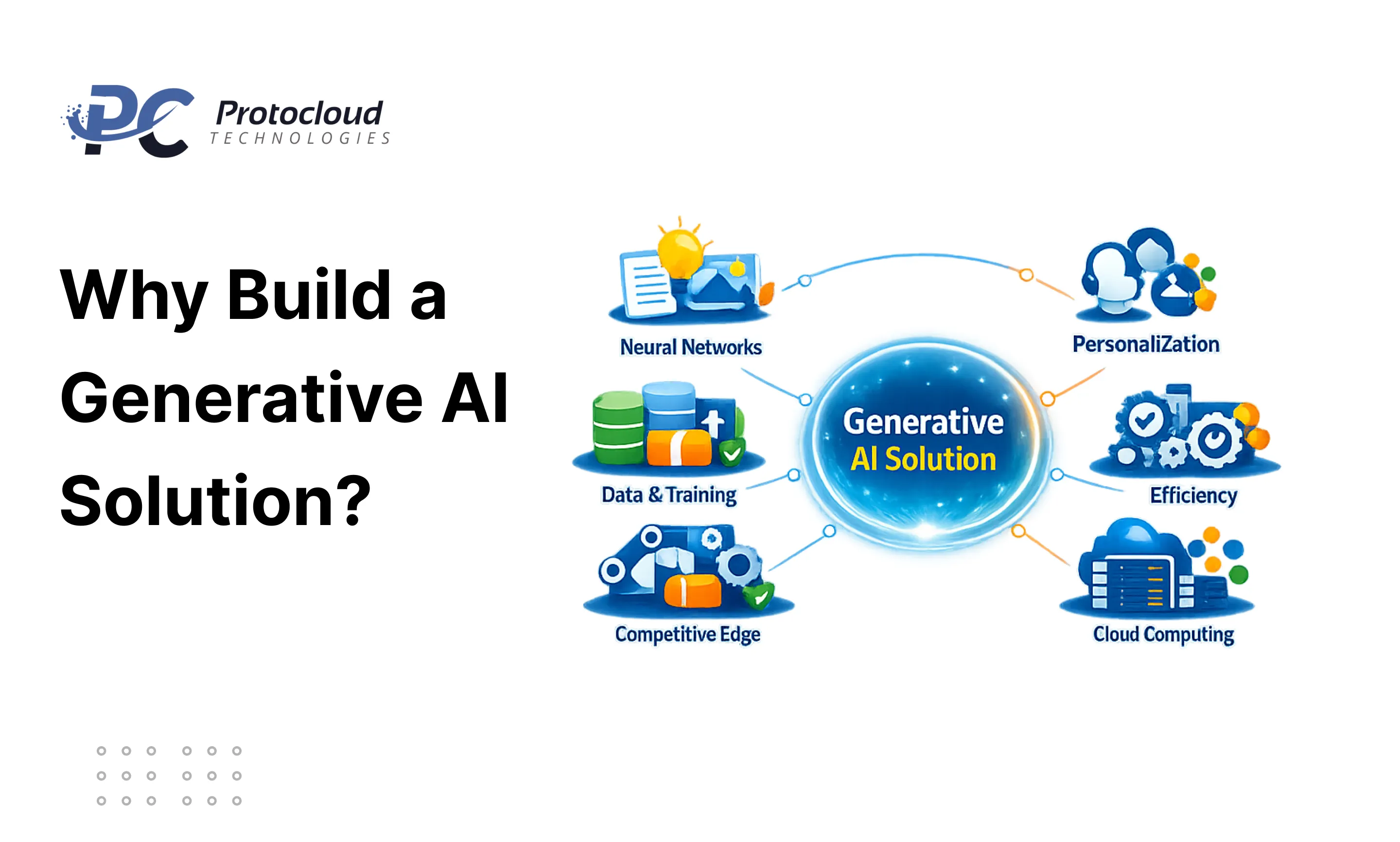
Now, let’s talk business. If you’re a leader or developer wondering whether to invest in generative AI, here are the most compelling reasons.
-
Increased Efficiency
Generative AI is highly effective at automating repetitive and time-consuming tasks. Your team stops wasting hours on manual work and focuses on higher-value activities instead. That’s a real, measurable boost to operational performance.
-
Enhanced Creativity
One of the biggest generative AI benefits is what it does for innovation. By surfacing ideas that human teams might never consider, AI acts as a creative engine. New products, new strategies, new solutions — all generated faster than before.
-
Boosted Productivity
Automation means your team can handle more projects simultaneously. Deadlines shrink. Output scales. With generative AI, your organization can genuinely achieve more in less time — not just theoretically, but in practice.
-
Cost Reduction
By automating tasks that previously required human labor, generative AI cuts costs. Those savings can be reinvested in product development, marketing, or hiring in areas where human judgment truly matters.
-
Improved Decision-Making
Generative AI processes vast amounts of data quickly and extracts actionable insights. Leaders stop making gut-feel decisions and start making data-driven ones. That shift alone can have a massive impact on long-term results.
-
Personalized Customer Experiences
Customers expect relevance. Generative AI helps deliver it by analyzing individual preferences and behaviors, AI tailors content, recommendations, and interactions to each user — driving satisfaction, loyalty, and retention.
The bottom line? Building a generative AI solution isn’t just a tech upgrade. It’s a strategic investment in your organization’s future.
How to Build a Generative AI Solution: Step-by-Step
Ready to build? Here’s exactly how to do it.
Step 1: Define Your Objective
Before you touch any technology, get crystal clear on what you’re trying to achieve.
Ask yourself: What problem am I solving? What type of content do I want to generate? Who is this for? A clear objective acts as your north star throughout the entire project.
Step 2: Collect High-Quality Data
Your generative AI model is only as good as the data you feed it. Collect a diverse, representative dataset relevant to your goal. Make sure it’s correctly labeled. Look for and address any biases that could skew your model’s outputs. This step is foundational — don’t rush it.
Step 3: Choose the Right Model
Different generative models are suited for different tasks. GANs are ideal for generating realistic images. VAEs work well for capturing diverse data distributions. Transformer-based models are best for text generation. Consider your content type, dataset size, and available computing resources before making a choice.
Step 4: Preprocess Your Data
Raw data is messy. Preprocessing cleans it up. Normalize and standardize your dataset. Handle missing values. Use data augmentation to increase variety and volume. Clean data leads to better AI model training — it’s that simple.
Step 5: Train Your Model
This is where the real work happens. Experiment with different architectures. Fine-tune hyperparameters. Monitor training closely and adjust as needed. Don’t expect perfection on the first try. AI model training takes iteration — patience pays off.
Step 6: Evaluate and Validate
Once your model is trained, test it rigorously. Use metrics appropriate for your content type. Split data into training and validation sets to test generalization. Iterate based on what the evaluation reveals. Skipping this step is one of the most common — and costly — mistakes teams make.
Step 7: Deploy and Maintain
You’re almost there. Now it’s time to go live. Choose a deployment environment that fits your needs. Set up monitoring for production performance. Plan for regular updates and maintenance. And critically — apply responsible AI practices from day one. Ethical deployment isn’t optional; it’s essential.
Best Practices for Building Generative AI Solutions
Here’s a quick checklist of AI best practices to keep in mind throughout your project:
- Define clear objectives before you write a single line of code
- Feed your model high-quality, relevant, preprocessed data
- Choose algorithms that fit your specific problem
- Build a scalable architecture using load balancing and distributed computing
- Optimize for performance with caching and asynchronous processing
- Monitor performance continuously using profiling tools and metrics
- Protect user privacy with encryption, access control, and data anonymization
- Test thoroughly across real-world scenarios
- Document everything — code, data, experiments
- Keep improving based on user feedback and new developments
Follow these practices, and you dramatically increase your odds of building a generative AI solution that actually works.
Choosing the Right Architecture
One more thing before we wrap up — architecture matters a lot. If you’re working with sequential data like text or speech, Recurrent Neural Networks (RNNs) — especially LSTM and GRU variants — are your best bet. They’re built to understand context and order.
If you’re working with spatial data like images, Convolutional Neural Networks (CNNs) are the go-to choice. They capture patterns and hierarchies within visual data exceptionally well.
For complex tasks, deeper architectures with more layers are often necessary. For simpler tasks, lighter models may be sufficient and far more efficient.
Also consider your compute resources. If you’re working with limited infrastructure, simpler models deliver solid results without demanding massive processing power. If resources are ample, you can go deeper and wider.
Match your architecture to your task — not the other way around.
Conclusion
Generative AI is no longer a future technology. It’s here. It’s being used in healthcare, finance, gaming, education, cybersecurity, and dozens of other fields — right now.
The organizations that understand it, invest in it, and build with it are pulling ahead. The ones waiting on the sidelines risk being left behind.
Whether you’re a business leader exploring how AI can drive efficiency and creativity, or a developer ready to start building, the path forward is clear.
Start with a clear objective. Use the right data. Choose the right model. Follow the best practices. And keep improving. Generative AI isn’t magic. But when you build it right, it comes pretty close.
Ready to get started? Share this guide with your team and take the first step toward building your generative AI solution today.
Frequently Asked Questions
-
What is generative AI in simple terms?
Generative AI is a type of artificial intelligence that creates new content — text, images, audio, or video — by learning patterns from existing data. Instead of just analyzing data, it generates something new based on what it has learned.
-
What are the most common generative AI applications?
Some of the most prominent generative AI applications include content creation, medical imaging, drug discovery, game development, financial modeling, cybersecurity simulation, personalized customer experiences, and AI-powered chatbots.
-
What are the main benefits of generative AI for businesses?
The key generative AI benefits for businesses include increased operational efficiency, boosted creativity and innovation, higher productivity, reduced labor costs, better data-driven decision-making, and more personalized customer experiences.
-
What techniques power generative AI?
The main techniques behind generative AI are transformers (like GPT-3 and ChatGPT), Generative Adversarial Networks (GANs), and Variational Autoencoders (VAEs). Each is suited to different types of content generation tasks.
-
How long does it take to build a generative AI solution?
It depends on the complexity of the project, data availability, and resources. A simple proof-of-concept can take a few weeks. A production-ready, enterprise-grade generative AI solution typically takes several months — including data collection, model training, evaluation, and deployment.