Augmented reality and virtual reality are changing how businesses work. A few years ago, most people linked AR and VR with gaming. Today, that has completely changed.
Companies now use mixed reality technology to fix real business problems. They use it to train staff, cut mistakes, boost output, and help teams work together better. And one device is driving most of this change, Microsoft HoloLens.
This mixed reality headset helps businesses interact with digital content in a brand new way. Companies no longer want technology that looks cool. They want technology that makes daily work easier and faster.
That is why enterprise AR/VR solutions are growing fast across all kinds of industries. From healthcare and manufacturing to business planning and education, Microsoft HoloLens is proving itself as a powerful business tool.
In this guide, you will learn:
- What Microsoft HoloLens is
- How mixed reality technology works
- Real-world AR/VR applications
- Which industries use HoloLens
- The key benefits of HoloLens 2
- AR/VR trends for 2026
- Challenges businesses should know about
Let’s get started.
What Is Microsoft HoloLens?
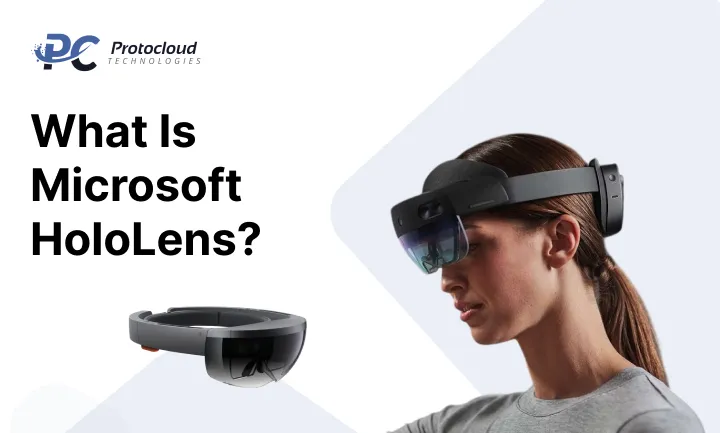
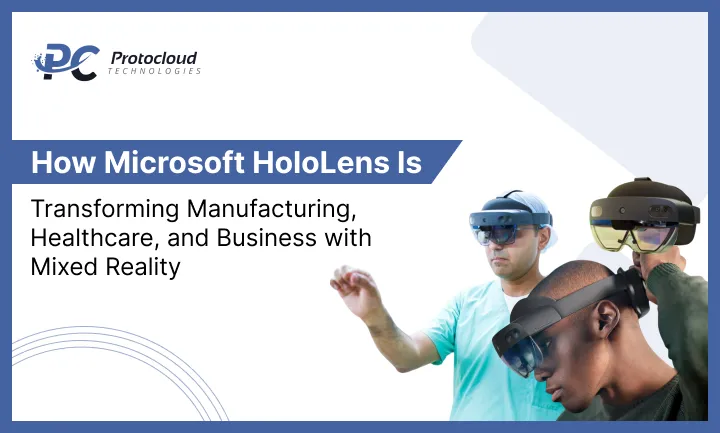
Microsoft HoloLens is a mixed reality headset built by Microsoft. It brings together augmented reality, virtual reality, and the real world into one experience.
Regular VR headsets block out everything around you. HoloLens works differently. It brings interactive digital content into your real-world environment. So you can still see your office or workplace while working with virtual objects at the same time.
In simple terms, HoloLens blends the digital world with the physical one. That is what mixed reality means.
How HoloLens Feels to Use
Many users say HoloLens feels like something from a sci-fi movie. You see holograms floating right in front of you. You can move them, resize them, rotate them, and control them with your hands or voice. It feels futuristic. But the real power shows up at work.
Why AR/VR Technology Matters in 2026
AR/VR is no longer just about entertainment. Businesses now use it to solve everyday problems.
These include:
- Training new staff
- Designing products
- Working with remote teams
- Keeping workers safe
- Servicing equipment
- Performing medical tasks
- Planning business projects
AR/VR adoption is growing every year. With the rise of the metaverse, demand for enterprise mixed reality is climbing even faster.
Why Companies Are Investing in AR/VR
Businesses want faster workflows and fewer errors. AR/VR helps them:
- Save time on tasks
- Improve team communication
- Work more efficiently
- Train workers in a safe environment
- Cut operational costs
These are not small wins. They help businesses improve profits and reduce costs. That is why more industries are taking AR/VR seriously.
How Microsoft HoloLens Works
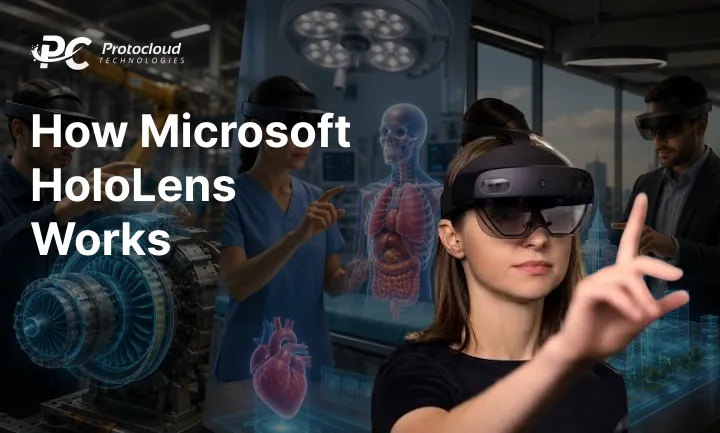
HoloLens has see-through holographic lenses. These let you see the real world while holograms appear on top of it. The headset uses smart sensors and software to understand your surroundings in real time.
Key Components Inside HoloLens
The device includes:
- Environment cameras
- Motion sensors
- Depth sensors
- Built-in microphones
- Spatial mapping technology
- Voice recognition software
All of these work together instantly. They help HoloLens understand:
- The layout of a room
- Where surfaces are
- How the user moves
- Hand gestures
- Voice commands
This makes using HoloLens feel natural, not robotic.
Real-Time Spatial Mapping
One of HoloLens’s best features is spatial mapping. The headset maps your surroundings in real time. Then it places holograms onto real surfaces in a way that looks natural.
For example, a designer can place a 3D model right on a table. An engineer can place a 3D machine model directly on the factory floor. This is one of the most useful real-world AR/VR applications available today.
Microsoft HoloLens 2: Key Improvements
The first HoloLens was impressive, but it had some limits. Many users felt the viewing area was too limited. Others said it was not comfortable enough to wear all day.
HoloLens 2 fixed most of these problems.
What HoloLens 2 Improved
HoloLens 2 offers:
- A wider field of view
- Better hand tracking
- Better eye tracking
- A lighter, more comfortable fit
- Faster processing
- Higher-quality holograms
- Improved gesture support
These upgrades matter a lot for enterprise use. When workers wear a device for hours, comfort and performance are critical. HoloLens 2 makes long daily use much more practical.
AR/VR in Manufacturing
Manufacturing is one of the top industries using industrial AR/VR. The results have been significant. Factories use HoloLens to improve safety, cut downtime, and speed up repairs.
How HoloLens Helps Factory Workers
Workers can instantly access:
- Live machine data
- Step-by-step repair guides
- Maintenance alerts
- Equipment performance stats
- Virtual training simulations
All of this information appears as holograms right in their line of sight. They no longer need to stop and check paper manuals or walk to a screen.
A Real Example
Picture a technician fixing a machine. Normally, they would have to stop and look up the repair steps. With HoloLens, those steps appear directly on top of the machine as a hologram. The worker follows along. This cuts errors and saves a lot of time.
IoT and AR/VR Working Together
When IoT connects with AR/VR, things get even more powerful. Machines can send live data straight into the headset. Workers see things like:
- Temperature readings
- Machine health status
- Performance data
- Warning alerts
This creates a smarter, faster way to run a factory.
AR/VR in Healthcare
Healthcare is another field where HoloLens is making a real difference. Doctors and surgeons are already using it in training and during procedures.
What HoloLens Shows Healthcare Workers
The headset can display:
- X-ray images
- MRI scans
- Ultrasound results
- 3D models of patient anatomy
- Live surgical guidance
Doctors can see all of this while still keeping their eyes on the patient. This leads to better decisions and fewer mistakes.
Better Medical Training
Medical training used to depend heavily on textbooks and limited hands-on practice. VR simulation changes that. Students can practice procedures in a safe, realistic virtual environment before working with real patients. They build skill and confidence much faster.
Why Hospitals Use AR/VR
Hospitals invest in AR/VR because it helps them:
- Improve accuracy during procedures
- Lower the risk of surgical errors
- Train staff more quickly
- Enable better specialist collaboration
- Visualize patient data in new ways
These are strong reasons. And they explain why HoloLens adoption in healthcare keeps growing.
AR/VR in Business and Collaboration
Mixed reality is also changing the way business meetings work. Standard video calls have limits. They feel flat, especially when teams need to review complex designs or spatial plans.
HoloLens creates a better kind of meeting. Teams can:
- Share 3D models in the same space
- Collaborate on live holographic plans
- Show products virtually
- Interact with shared data in real time
This works even when team members are in different countries.
A Better Way to Plan
Imagine reviewing a building design with your team. Instead of staring at flat drawings on a screen, everyone walks around a full holographic model. They can resize it, adjust it, and give feedback together. This makes decisions faster and clearer.
3D Design and Product Development
Product designers also benefit from HoloLens. They used to work mostly on flat computer screens. Now they interact with full-scale holograms of their designs.
They can:
- Rotate 3D models
- Zoom in on details
- Test ideas visually
- Spot design flaws early
- Collaborate with team members in real time
Faster, Cheaper Innovation
Companies no longer need to build expensive physical prototypes right away. They can test ideas as holograms first. This saves time and money. It also means better products reach the market faster.
AR/VR for Employee Training
Training staff is costly, especially in industries with heavy equipment or high-risk tasks. AR/VR training changes the equation. Workers practice in realistic simulations. They can make mistakes without any real-world danger. This helps them learn faster and retain more.
Industries That Benefit Most
AR/VR training is especially useful in:
- Manufacturing
- Oil and gas
- Healthcare
- Aviation
- Construction
Workers train for real situations before they ever face them on the job. They gain confidence and make fewer errors when it counts most. This is why AR/VR industrial training is one of the fastest-growing uses of this technology.
Choosing AR/VR Hardware: What Businesses Should Consider
Picking the right AR/VR hardware is not a simple decision. Every industry has different needs.
Key Factors to Evaluate
Before buying, companies should look at:
- How comfortable the device is for long use
- Whether it meets safety standards for that environment
- Battery life
- Software compatibility
- Processing power
- Long-term scalability
- Total cost
A hospital may care most about precision. A factory may need ruggedness and IoT integration. The priorities differ widely.
HoloLens vs Traditional VR Headsets
Traditional VR headsets pull users fully into a virtual world. HoloLens blends the digital and physical worlds. That makes it safer and more practical for most workplace settings. Workers stay aware of their real surroundings at all times.
Challenges of Microsoft HoloLens
HoloLens has a lot to offer. But it also has real challenges that businesses need to understand.
High Cost
The biggest barrier is price. HoloLens is expensive, especially when buying for a large team. This slows down widespread adoption for many organizations.
Learning Curve
Some users need time to get comfortable with the technology. AR/VR systems feel new and unfamiliar at first. Companies also need skilled developers to build or adapt apps for their specific needs. Without good planning, rollout can hit problems.
Hardware Limits
HoloLens 2 is a big step forward, but users still want more. Common requests include:
- A wider field of view
- Longer battery life
- Better display quality
- A smaller, lighter device
The good news is that AR/VR hardware is improving fast. These gaps are getting smaller with each new generation.
The Future of Microsoft HoloLens
The future of HoloLens looks bright. Businesses keep finding new ways to use it every year.
What Future Devices May Include
Expect to see:
- Smaller, lighter designs
- Sharper displays
- Longer battery life
- More lifelike holograms
- Faster processors
- Better spatial awareness
As performance improves, prices should also come down. That could open the door to much wider adoption.
Growing Competition
Microsoft is not the only company working on AR/VR. Many others are entering the market. Some reports even suggest Apple is developing an advanced AR headset. Competition drives innovation, and that benefits everyone using the technology.
Could Holograms Replace Monitors?
Some experts think holographic interfaces may eventually replace physical screens. Imagine working with floating displays instead of traditional monitors. We are not there yet, but mixed reality is heading in that direction.
Why Businesses Are Investing in Enterprise AR/VR Solutions
Businesses invest in AR/VR because it delivers real outcomes. Not just impressive demos.
The Key Benefits
Companies gain:
- Higher productivity
- Faster staff training
- Improved workplace safety
- Less equipment downtime
- Better team communication
- Stronger collaboration
- Faster product development
These benefits improve business results directly. That is why AR/VR digital transformation is becoming a top priority across industries.
Best Practices for Successful AR/VR Implementation
Moving too fast into AR/VR without a plan is a common mistake. A clear strategy matters from the start.
Tips Before You Invest
Companies should:
- Set clear goals for what they want to achieve
- Choose hardware that fits their industry
- Work with skilled AR/VR developers
- Start with a small pilot project first
- Train employees before full rollout
- Keep the user experience as a top priority
This approach lowers risk and increases the chance of long-term success.
Conclusion
Microsoft HoloLens is reshaping industries with mixed reality technology. What used to look like science fiction is now a real business tool. From manufacturing and healthcare to remote meetings and staff training, AR/VR is helping companies work smarter and faster. And this is just the beginning.
As AR/VR trends keep evolving through 2026 and beyond, businesses that adopt early will have a clear edge. The future workplace will be more connected, more visual, and more interactive than ever.
Companies that invest in enterprise mixed reality today are building the foundation for tomorrow’s industries.
If you want to improve how your team innovates, trains, collaborates, and produces results now is the right time to explore Microsoft HoloLens and modern AR/VR solutions.
FAQs
What is Microsoft HoloLens used for?
Microsoft HoloLens is used for mixed reality applications in industries like manufacturing, healthcare, business collaboration, education, and employee training.
Is Microsoft HoloLens a virtual reality headset?
No. HoloLens is a mixed reality headset. It overlays digital holograms onto the real world instead of replacing it with a virtual one.
Which industries use AR/VR technology the most?
Manufacturing, healthcare, retail, engineering, education, and oil and gas use AR/VR technology most widely today.
What are the benefits of Microsoft HoloLens 2?
HoloLens 2 offers better comfort, improved hand and eye tracking, a wider field of view, and stronger overall performance than the original model.
Is AR/VR technology the future?
Yes. Strong growth in enterprise adoption, immersive collaboration tools, employee training, and industrial applications all point to AR/VR playing a major role in the future of work.