Requirements management mistakes can derail software projects. Working with automotive requirements management tools or platforms like aqua cloud helps, but you need to avoid common pitfalls. This knowledge is essential for every tester and QA professional.
What Is Requirements Management?
Requirements management is the systematic process of documenting, analyzing, tracking, and controlling requirements throughout a project’s lifecycle. For testers, it forms the foundation of all QA activities. Requirements define what needs validation and provide the basis for test cases.
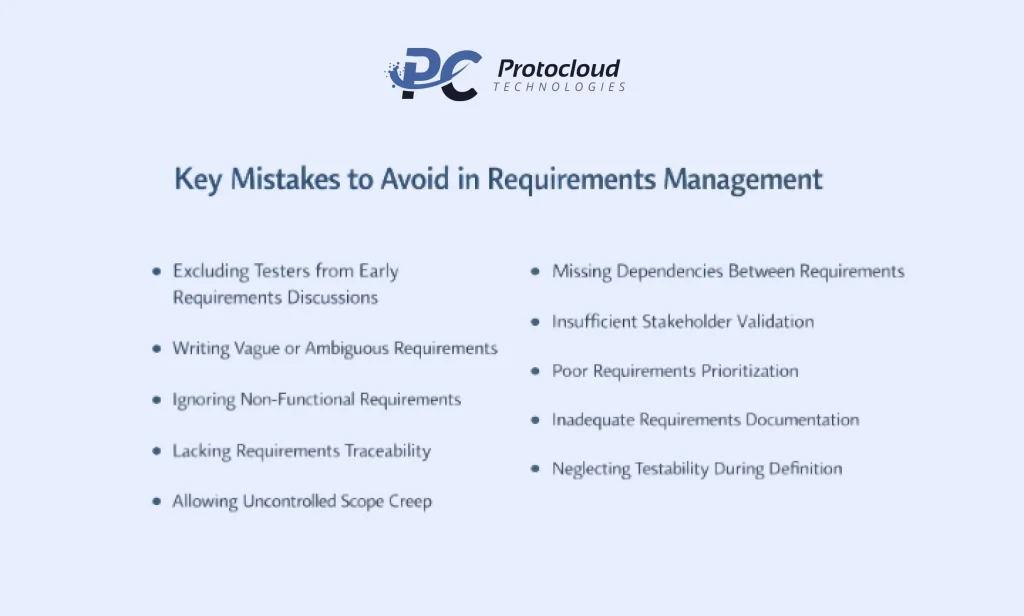
Effective requirements management involves collaboration between business analysts, developers, testers, and stakeholders. The goal is to ensure requirements are:
- Clear and unambiguous
- Testable and measurable
- Properly prioritized
- Traceable throughout development
When done correctly, it minimizes rework, reduces defects, and ensures the final product meets stakeholder expectations.
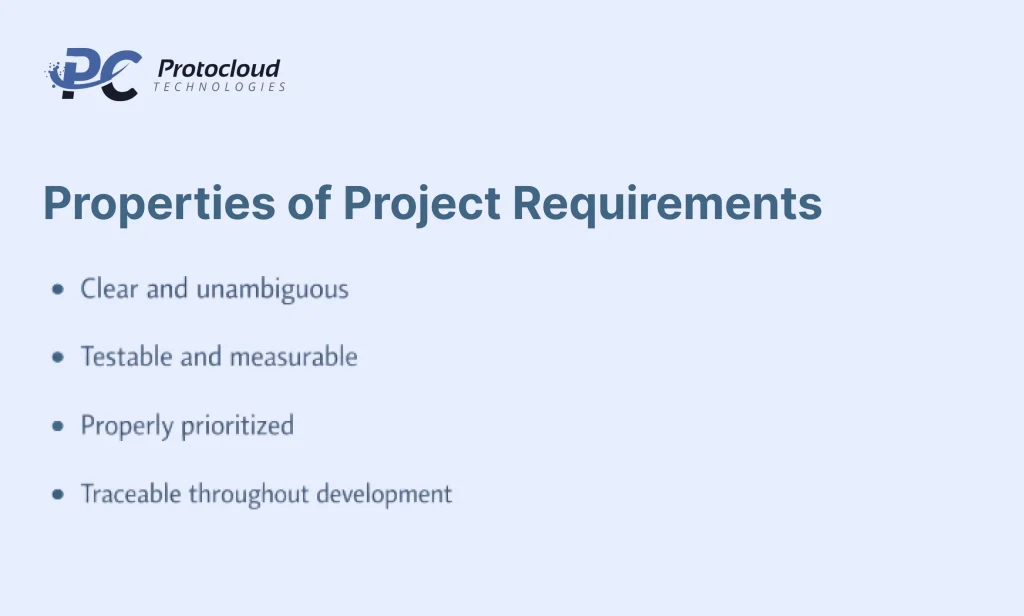
Key Mistakes to Avoid in Requirements Management
The challenges in requirements management are numerous. Understanding these common mistakes helps QA teams address issues before they impact quality and timelines.
1. Excluding Testers from Early Requirements Discussions
Many organizations treat testing as a downstream activity. They bring testers in only after they finalize requirements. This creates significant problems.
How to avoid it: Integrate testers into requirements workshops from day one. They can identify ambiguities, suggest measurable acceptance criteria, and flag untestable requirements before baseline. Early QA involvement includes:
- Participation in stakeholder meetings
- Review of requirement drafts for testability
- Input on acceptance criteria
- Identification of potential edge cases and failure scenarios
2. Writing Vague or Ambiguous Requirements
Requirements using subjective terms like “fast,” “user-friendly,” or “reliable” lead to different interpretations across teams. This is a major challenge in requirements management.
How to avoid it: Apply SMART criteria to every requirement: Specific, Measurable, Achievable, Relevant, Time-bound. Replace vague language with quantifiable metrics. For example:
- Instead of: “The system should respond quickly”
- Write: “The system shall display search results within 2 seconds for 95% of queries under normal load”
3. Ignoring Non-Functional Requirements
Teams often focus on functional features while treating performance, security, and scalability as afterthoughts.
How to avoid it: Review each functional requirement to identify associated non-functional needs:
- Performance thresholds and response times
- Security requirements and authentication
- Scalability targets and concurrent user loads
- Accessibility standards compliance
- Usability and user experience criteria
Ensure your tester has appropriate tools and expertise to validate these critical quality attributes.
4. Lacking Requirements Traceability
Poor traceability between requirements, test cases, and defects makes it impossible to assess test coverage or manage changes effectively.
How to avoid it: Implement bidirectional traceability with a requirements management tool. Each requirement should link to:
- Corresponding test cases
- Related defects
- Design documents
- Implementation code (where applicable)
Use traceability matrices to identify coverage gaps. Make informed decisions about regression testing when requirements change.
5. Allowing Uncontrolled Scope Creep
When stakeholders continuously modify requirements without impact analysis, project timelines become meaningless. Quality suffers as a result.
How to avoid it: Establish formal change control processes that require:
- Impact assessment on schedule and resources
- Risk analysis of the proposed change
- QA participation in change review boards
- Stakeholder approval before implementation
- Clear communication about the cost of changes
Set requirement freeze deadlines before major milestones. Require executive escalation for exceptions.
6. Missing Dependencies Between Requirements
Undocumented dependencies cause scheduling conflicts and blocking issues during development and testing.
How to avoid it: Create dependency diagrams that show which requirements must be implemented first. Your tester should review these dependencies to plan:
- Test data setup sequences
- Environment configuration requirements
- Test execution order
- Stub or mock requirements for dependent systems
7. Insufficient Stakeholder Validation
Requirements created without adequate stakeholder review often result in building the wrong solution. Teams discover this only during user acceptance testing.
How to avoid it: Implement structured validation sessions with actual end users, including:
- Requirement walkthrough meetings
- Prototype reviews and demos
- User story elaboration workshops
- Formal sign-off documentation
Testers can facilitate validation by presenting test scenarios. This helps stakeholders envision system behavior.
8. Poor Requirements Prioritization
Teams that treat all requirements as equally important make a critical mistake in requirements management. When politics drives prioritization rather than business value, projects suffer.
How to avoid it: Use frameworks like MoSCoW or weighted scoring models. MoSCoW stands for Must have, Should have, Could have, Won’t have. Testers should use priorities to guide test planning by:
- Allocating more thorough testing to high-priority requirements
- Using risk-based approaches for lower-priority items
- Ensuring critical paths receive appropriate coverage
- Adjusting test depth based on business value
9. Inadequate Requirements Documentation
Scattered, inconsistent documentation across emails, meeting notes, and multiple documents creates confusion and rework.
How to avoid it: Establish a centralized requirements repository with standardized templates. These should capture:
- Unique requirement ID
- Clear description and rationale
- Acceptance criteria
- Priority and dependencies
- Version history
Maintain this as the single source of truth. Assign clear ownership for documentation maintenance.
10. Neglecting Testability During Definition
Requirements written without considering verification constraints often prove impossible or prohibitively expensive to test.
How to avoid it: Introduce testability as an explicit quality criterion. For each requirement, identify:
- Testing approach and methodology
- Required test environments
- Test data needs and creation methods
- Special tools or skills required
- Verification success criteria
Flag testability concerns early. Refine requirements collaboratively to ensure they can be verified.
Conclusion
These mistakes in requirements management significantly impact testing effectiveness and project outcomes. Success requires testers and QA professionals to actively participate in shaping requirements rather than simply accept whatever they receive.
Involve QA early. Maintain clear documentation. Implement traceability. Ensure testability. Teams that follow these steps build a solid foundation for quality. Time invested in clarifying requirements upfront saves exponentially more effort during testing and production support.