Introduction
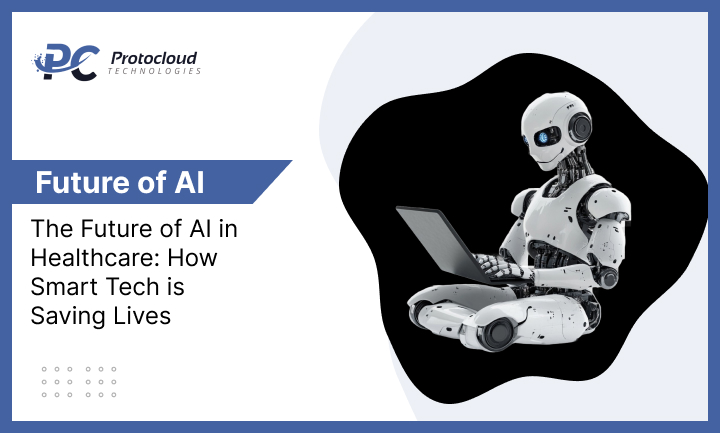
Healthcare is changing fast. If you’ve stepped into a hospital lately, you might have felt the tension. Doctors are tired. Waiting rooms are full. Costs are going up every single year. It feels like the system is stretched to its breaking point. But there is a massive shift happening right now. Artificial intelligence in healthcare is no longer a plot for a sci-fi movie. It is here. It is working. And it is reshaping how we stay healthy.
The future of AI in healthcare isn’t about robots taking over the world. It’s about tools that help humans do their jobs better. Think about a world where your doctor knows you’re getting sick before you even feel a symptom. Imagine a system where “human error” in medical records is a thing of the past. This is the promise of healthcare AI solutions. In this guide, we will break down exactly how this technology works and why it matters for you.
What exactly is AI in Healthcare?
When we talk about AI in healthcare, we mean computers that can “think” and “learn.” In the past, computers only did what we told them to do. If you didn’t program a specific rule, the computer was lost. Today, things are different. Modern AI-powered healthcare systems use something called machine learning. This means the software looks at millions of medical images or records. It finds patterns that no human could ever see.
This technology uses a few different tools. First, there is natural language processing (NLP). This helps computers read and understand handwritten doctor notes. Then, there is computer vision. This allows AI to “look” at an X-ray or MRI and spot a tiny tumor. These AI-driven healthcare solutions don’t get tired. They don’t need coffee breaks. They just keep getting smarter every time they see a new piece of data. This is why artificial intelligence in healthcare is so powerful.
How We Use AI in Medical Diagnostics Today
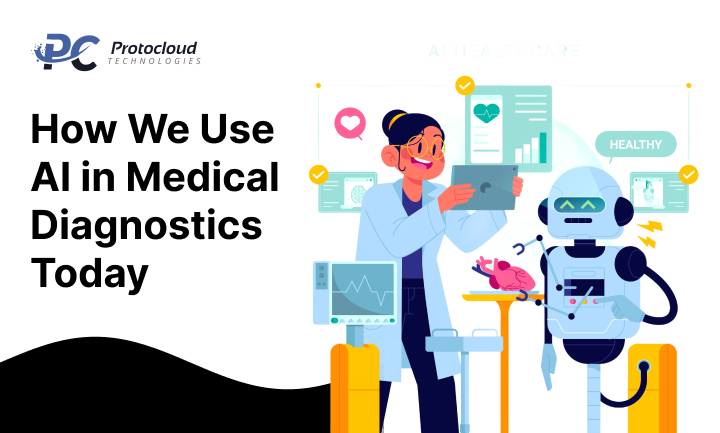
The biggest wins for AI in medical diagnostics are happening in the lab. Usually, a radiologist has to look at dozens of scans every hour. It is easy to miss a small detail when you are exhausted. But AI is different. It can scan an image in seconds. It flags the areas that look suspicious. This acts as a second set of eyes for the doctor. It ensures that patients get the right diagnosis the first time.
Beyond just looking at pictures, AI is great at spotting early warning signs. This is a huge part of the future of AI in healthcare. We are moving away from “reactive” care. Instead of waiting for you to get sick, AI looks at your history. It can predict heart disease or diabetes years before it happens. This AI healthcare technology gives doctors a head start. When you catch a disease early, the treatment is usually cheaper and much more successful.
AI-Powered Treatment and Personalized Medicine
Every person is different. So, why do we often get the same “one-size-fits-all” treatments? AI in personalized medicine is changing that. By looking at your specific DNA, AI can suggest a drug that works specifically for your body. This is a major part of healthcare AI solutions. It stops the “trial and error” phase of medicine. Doctors can know exactly which medicine will work and which one will cause side effects.
We are also seeing a rise in AI-enabled clinical decision support. This sounds fancy, but it’s quite simple. It is like a GPS for doctors. While a doctor is planning a surgery or a chemo session, the AI provides real-time data. It shows what worked for 10,000 other patients with the exact same condition. This level of digital transformation in healthcare makes the whole process safer. It ensures that every patient gets a world-class treatment plan.
Virtual Assistants and the New Face of Telemedicine
Have you ever tried to call a doctor’s office just to ask a simple question? It can take hours. This is where virtual health assistants come in. These are AI chatbots that can talk to patients 24/7. They can help you check your symptoms at 3:00 AM. They can remind you to take your pills. This is a key part of AI in telemedicine. It keeps patients connected to care without needing to drive to a clinic every single time.
In 2026, remote patient monitoring using AI will be the standard. Think about smartwatches that don’t just count steps. These AI-powered medical devices will track your heart rate, oxygen levels, and blood pressure. If something looks wrong, the data goes straight to your doctor. This is a huge win for the AI in healthcare industry. It allows elderly patients to stay in their homes longer while staying safe. It brings the hospital to the patient, instead of the other way around.
Improving AI in Hospital Management
Hospitals are basically giant puzzles. You have to manage beds, nurses, medicine, and thousands of patients. Most hospitals still use old-fashioned spreadsheets. This leads to long wait times and wasted money. AI in hospital management solves this by using predictive analytics. The AI can predict how many people will show up at the ER on a Friday night. It then tells the manager exactly how many nurses to schedule.
This kind of healthcare automation with AI saves a lot of money. When a hospital runs smoothly, the costs for the patient go down. It also helps with the boring stuff, like billing and insurance paperwork. By using AI healthcare applications for administrative work, we free up the staff. This means nurses can spend more time talking to patients and less time typing on a keyboard. This is a vital step for any AI-driven healthcare solutions strategy.
The Big Future: 2026 and Beyond
As we look toward the future of AI in healthcare, things get even more exciting. We are starting to see robotic surgery technology that is incredibly precise. These robots don’t replace the surgeon. Instead, they make the surgeon’s hands steadier. They allow for tiny cuts that heal much faster. This means less pain for the patient and a shorter stay in the hospital. It is a perfect example of how artificial intelligence in healthcare helps humans.
We are also seeing the rise of generative AI in healthcare. This tech can create synthetic data to help train new doctors. It can even help design new life-saving drugs in a fraction of the time it used to take. Another big trend is explainable AI in medicine. This is important because we need to know why an AI made a certain choice. For doctors to trust healthcare AI solutions, the system must be transparent. We need to see the logic behind the life-altering decisions.
The Main Benefits of AI Adoption
Why are so many clinics rushing to use AI in healthcare? The reasons are clear:
- Better Accuracy: Computers don’t get tired or distracted during a long shift.
- Faster Results: You don’t have to wait weeks for lab results when an AI can scan them instantly.
- Lower Costs: Automation cuts down on wasted time and expensive mistakes.
- Greater Access: People in rural areas can get expert advice through AI in telemedicine.
- Proactive Care: We can stop diseases before they even start.
These benefits are why AI-powered healthcare systems are becoming the backbone of the industry. When you combine human empathy with machine speed, everyone wins. It makes the future of AI in healthcare look very bright indeed.
Challenges and Staying Safe
Of course, we have to be careful with artificial intelligence in healthcare. The biggest concern is data privacy. Your medical records are very private. We must ensure that healthcare AI solutions are locked down tight. There is also the issue of “bias.” If an AI only learns from one group of people, it might not work well for others. We have to make sure our data is fair and balanced for everyone.
Another challenge is keeping the “human touch” in medicine. No one wants to be treated by a cold machine. The goal of AI healthcare technology is to support doctors, not replace them. We need to find the right balance between tech and empathy. As long as we follow strict regulations, these AI-driven healthcare solutions will be a force for good. It is all about using the right tools in the right way.
How to Get Ready for the AI Shift
If you run a clinic or work in medicine, you need to prepare for this digital transformation in healthcare. You don’t need to be a computer scientist. You just need to be open to new tools. Start by looking into smart healthcare solutions that can help with your daily tasks. Training your staff is also a huge step. When people understand how AI in healthcare works, they are less afraid of it.
Many people choose to work with AI development companies. these experts can help you build custom healthcare AI solutions that fit your specific needs. They can help with healthcare data analytics to find out where your hospital is losing money. By building a strong digital foundation today, you will be ready for the AI healthcare trends 2026 will bring. The future is coming fast, and it pays to be prepared.
Conclusion: A New Era of Care
The future of AI in healthcare is all about empowerment. It empowers doctors to be more accurate. It empowers patients to take control of their own health. We are moving away from a world where you only see a doctor when you are in pain. Instead, thanks to artificial intelligence in healthcare, we are entering an era of constant, quiet protection.
From AI in medical diagnostics to robotic surgery technology, the changes are massive. But at the end of the day, the goal remains the same: helping people live longer, happier lives. As AI-powered healthcare systems continue to grow, the quality of care will only get better. It is an exciting time for everyone involved in the AI in healthcare industry.
Frequently Asked Questions
How will AI change healthcare in the next 5 years?
You will see more predictive analytics in healthcare. This means doctors will focus on preventing sickness before it happens. You will also see more AI in telemedicine for easy check-ups from home.
Is AI safe for patients?
Yes, as long as there is human oversight. AI healthcare technology is a tool to help doctors make better choices. It is not meant to make final decisions without a human checking the work.
Can AI replace my doctor?
No. AI lacks empathy and bedside manner. The future of AI in healthcare is about a partnership. The AI handles the data, and the doctor handles the patient.
What is the biggest risk?
The main risks are data privacy and bias in the data. This is why explainable AI in medicine is so important. We need to make sure the systems are fair and secure for every single patient.
How can a small clinic start using AI?
Start with simple healthcare automation with AI. This could be an AI-based scheduling system or a simple chatbot for your website. You can also look into AI healthcare applications that help with digital record keeping.